The 2024 German Masters qualifiers are currently underway in Sheffield. I’ll probably only post about that at the end of this week, unless something really out of the ordinary happens.
Meanwhile here are some interesting snooker news published by WST and WPBSA in recent days.
Gary Wilson’s victory at the BetVictor Scottish Open saw him come from a lowly 61st place on the one-year ranking list to jump to tenth and earn a place at next month’s World Grand Prix in Leicester.
Wilson went into the tournament in Edinburgh knowing he had to at least reach the semi-finals to climb into the top 32, and he went two steps further by winning his second ranking title and £80,000.
The field of 32 players is now confirmed for the World Grand Prix to run from January 15 to 21 at the Morningside Arena, the first event in the 2024 Players Series. The first round draw is below and the format will be announced soon …
Judd Trump v Jamie Jones Lyu Hoatian v Chris Wakelin Mark Selby v Yuan Sijun Ali Carter v Wu Yize Barry Hawkins v Cao Yupeng John Higgins v Shaun Murphy Hossein Vafaei v Matthew Selt Mark Williams v Thepchaiya Un-Nooh Zhang Anda v Dominic Dale Mark Allen v Jack Lisowski Noppon Saengkham v Xiao Guodong Ding Junhui v Ricky Walden Tom Ford v Jordan Brown Gary Wilson v David Gilbert Zhou Yuelong v Stephen Maguire Ronnie O’Sullivan v Pang Junxu
Saengkham’s run to the final earned him £35,000, boosting him from 20th to 11th. After the World Grand Prix, there will be just two ranking events before the line-up of 16 players is confirmed for the Players Championship in Telford in February.
Big names to miss out on Leicester include Kyren Wilson and Luca Brecel, who both needed just one more win in Edinburgh, but fell at the last 16 and last 32 stage respectively.
Wilson moves up to third place in the BetVictor Series rankings, albeit still £114,000 behind runaway leader Judd Trump. There are just two counting events to go: the BetVictor German Masters and BetVictor Welsh Open, so Trump could wrap up the £150,000 bonus if no one gets within £80,000 of him by the end of the tournament in Berlin.
On the official two-year list, Wilson jumps from 20th to 17th while Saengkham is up from 26th to 22nd. Ronnie O’Sullivan will go into 2024 as the world number one with a lead of £113,500 over Trump. This list will now be used for seeding for the 2024 BetVictor Welsh Open and the 2024 World Open.
It’s early days in the Race to the Crucible, with six ranking events still to go, but Wilson has boosted his hopes of a place at the Theatre of Dreams, climbing to 13th, while Saengkham is among the chasing pack in 20th. Robert Milkins is in 16th spot, with Barry Hawkins just behind him, while former champion Neil Robertson is in 30th place, £116,000 behind Milkins.
Neil Robertson is currently in Australia, having a good time and playing exhibitions. I’m not sure that home sickness alone can explain his current dip of form and it’s hard to believe that he will very probably need to qualify for the Crucible but that’s how it is.
Global Q Tour Playoff to Be Held in Bosnia and Herzegovina
The World Professional Billiards and Snooker Association (WPBSA) has announced that the newly expanded WPBSA Q Tour Global Playoff will be held in Sarajevo, Bosnia and Herzegovina, from 13-15 March 2024.
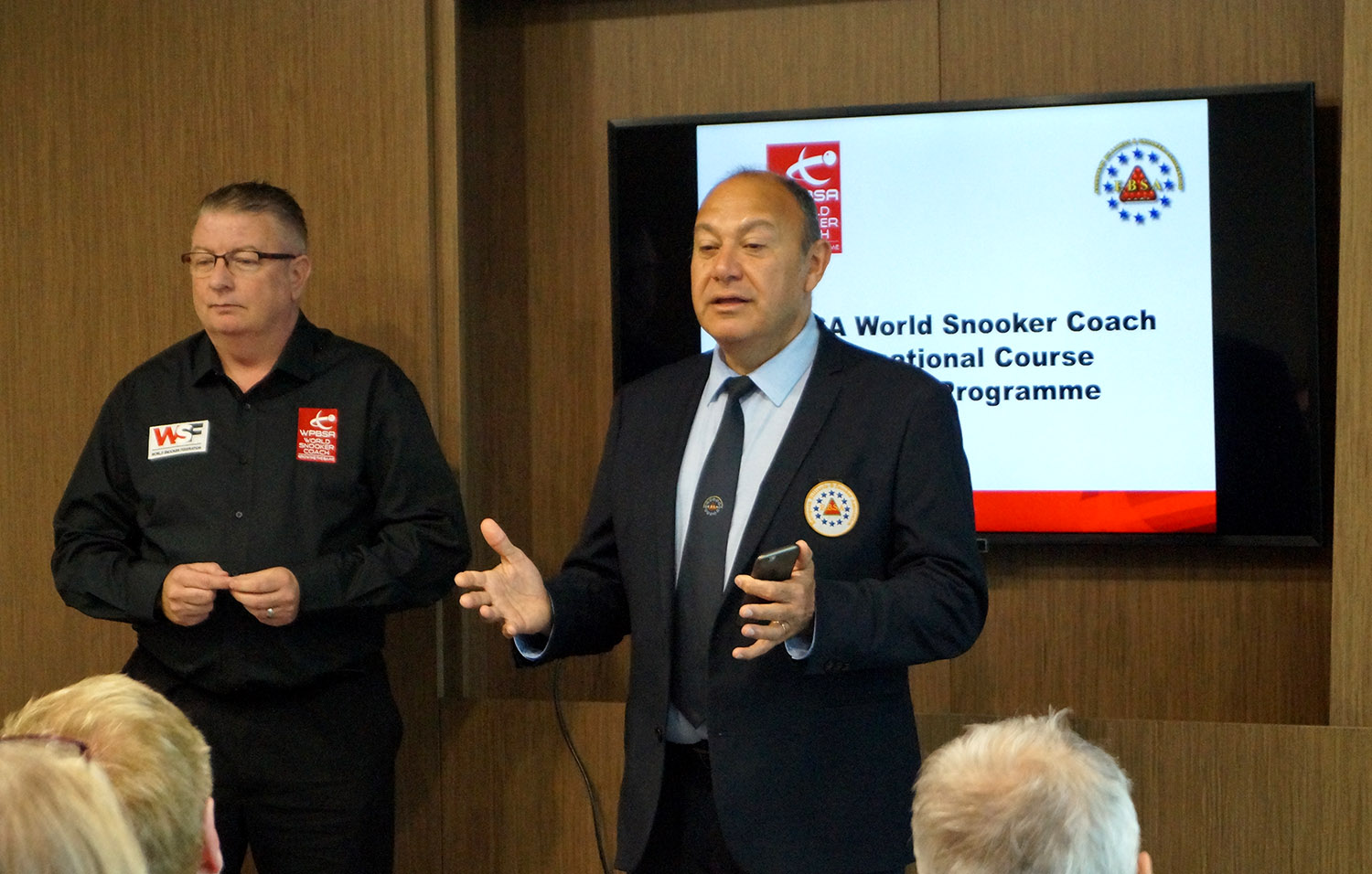
To be played at the Hotel Hills alongside the European Championships organised by the European Billiards and Snooker Association (EBSA), the relaunched Playoff will see three players earn a two-year World Snooker Tour card from the start of the 2024/25 season.
THE FIELD
The event will be contested by 24 players who will need to win three matches to secure a professional tour card.
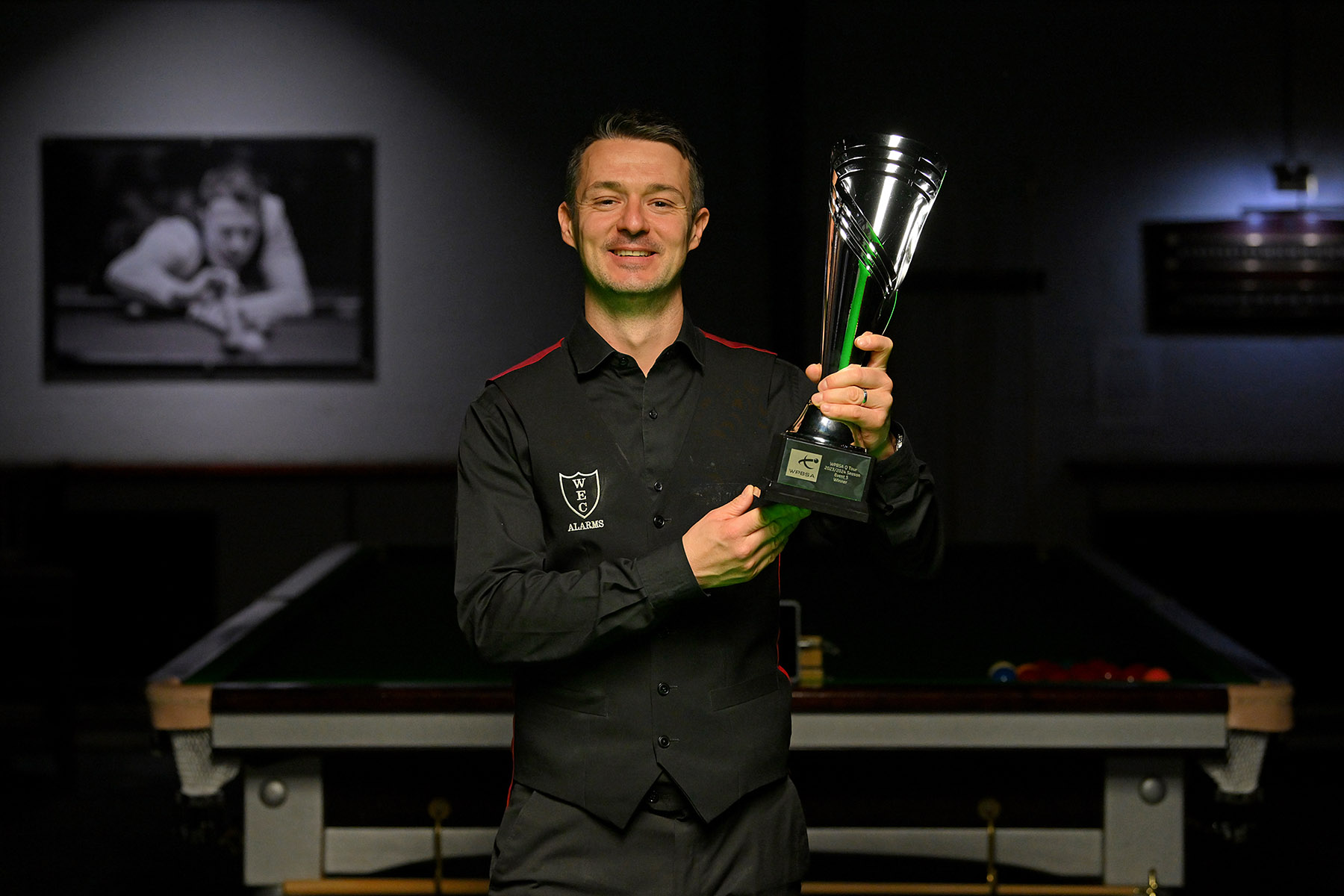
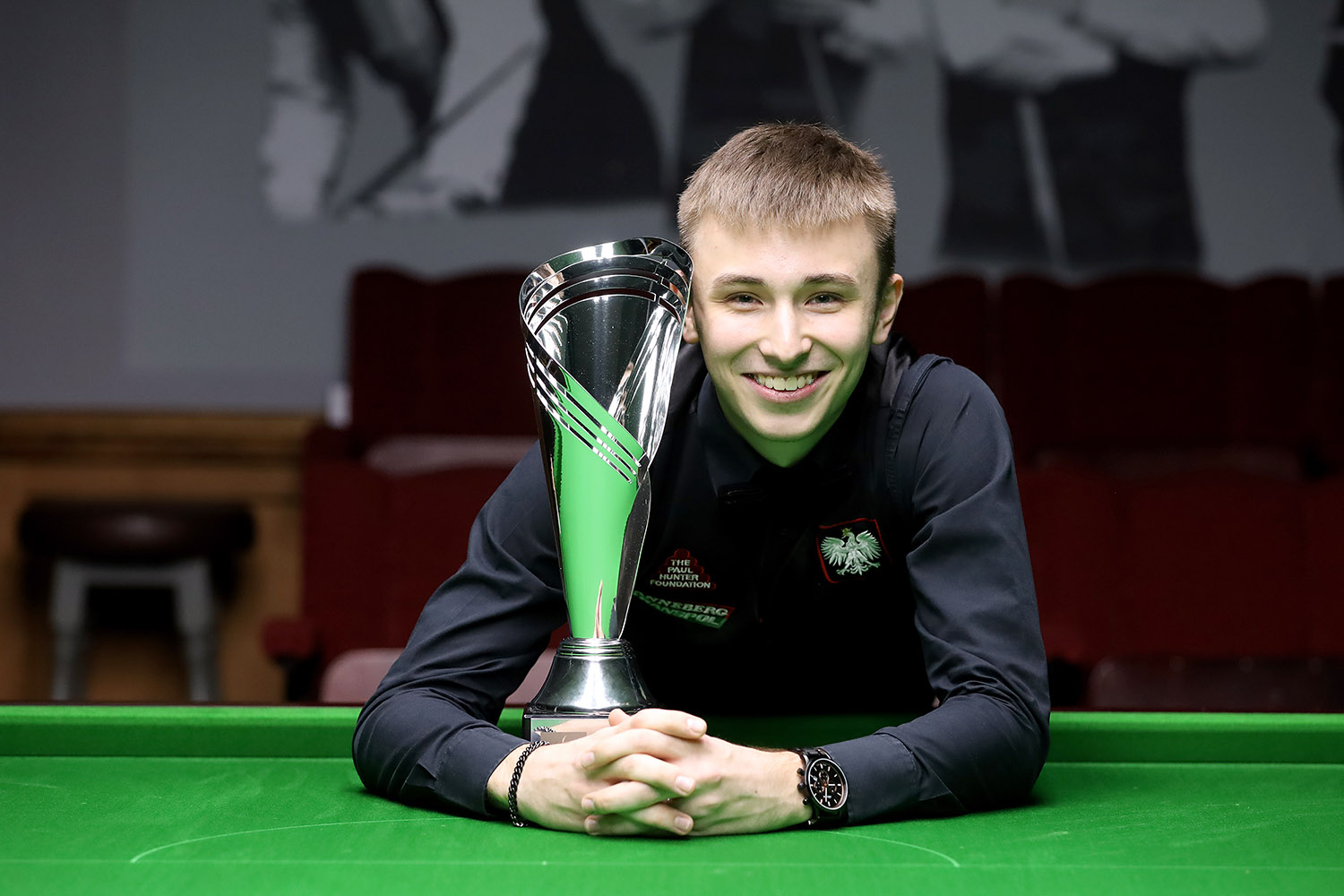
This will include a minimum of 16 players from the Q Tour UK/Europe Series, with Liam Davies, Michael Holt, Umut Dikme and Antoni Kowalski already guaranteed to qualify as event winners so far this season – unless one of them were to claim the automatic tour card for finishing in top spot.
They will be joined by up to eight players from regional Q Tour events held around the world. To date, Q Tours in the Americas, Asia-Pacific and Middle East Regions have already been announced, with outstanding performers based upon regional ranking lists set to qualify for the Global Playoff.
THE FORMAT
The three-day event will comprise three sections of eight players, to play quarter-finals, semi-finals and ultimately final qualification matches. These will be played under and expanded long format of best of 9, 11 and ultimately 19 frame matches respectively, to provide the ultimate test for aspiring professionals.
The Playoff will also carry a prize fund of almost £20,000 for the first time, with each of the 24 players guaranteed to earn prize money from the event.
“THE VERY BEST CONDITIONS”
Jason Ferguson, WPBSA Chairman said: “We are delighted to announce that this prestigious new Playoff will be held alongside the EBSA European Championships in Sarajevo next spring.
“The announcement of Q Tour Global last July has received a fantastic response from amateur players around the world and already this season we have seen record entry numbers as players aim to earn their place on the professional tour.
“Open to players of all nationalities, gender and ability, the WPBSA Q Tour is a truly inclusive and open tour, with more players able to compete internationally than ever before with the introduction of Q Tour Series’ in the Americas, Asia-Pacific and Middle East regions this season.
“I would like to thank our friends at the EBSA who I know will strive to deliver the very best conditions for the players in what are hugely important matches and I look forward to seeing who will emerge victorious from what promises to be a wonderful event.”
Maxime Cassis, EBSA President said: “On behalf of the EBSA I am delighted to be able to cooperate with the WPBSA to host this major event which will see three amateur players turn professional for the start of the 2024/25 season.
“Combined with the two players to be claimed by the winners of our European Championship and European Under-21 Championship tournament, this means that there will now be five players who will join the World Snooker Tour following this historic event in Bosnia and Herzegovina.”
There are some interesting infos in this announcement.
I have always been puzzled by how closely WPBSA worked with the English amateur snooker bodies but not so much other national and international bodies. This joint even is a step in the right direction.
The new format for the play-off, with proper, longer matches is a welcome move, as is the increased prize money.
I want to hope that these changes are paving the way to a true secondary tour and to a more truly international tour. By the latter, I also mean, a tour where the majority of events will be played outside the UK, and outside Englangd in particular and that goes for qualifiers – if any – as well. You know my stance: there should be no qualifiers for any flat-draw event.
The WPBSA seems to work very closely with the EPSB and hardly at all with even the other UK NGBs.
In fact, it wasn’t until recently that the WPBSA officially stopped running the EPSB.
A lot of the personnel of the EPSB are WPBSA employees as well.
This new look Q Tour is very welcome but Q School needs to be abolished as well in favour of more regional Q Tours to give better opportunities world wide.
I would go so far as to say that the Q Tour should be the one and only way to qualify for the main tour. One, open-aged, open-gender, tour, to select the best players on merit rather than on the basis of being the best of a very small group of players.
I would like to see the Q-Tour evolving into a proper secondary tour. With players being promoted/demoted to/from the main tour. The problem of course, as always is how you make it sustainable. For that to happen, it needs to be seen, at the very minimum it needs to be streamed, and it needs media coverage and prize money.. Reduce the main tour to 96, have a secondary tour with 96. Ditch the money list, move to an unified ELO type rating system. Involve the national bodies so that amateurs are included in the rating list. Every year promote the best 32 amateurs, demote the 32 “bottom” players off the secondary tour. Promote the top 32 to the main tour, from which you demote the “bottom” 32 to the secondary tour. No need for Q-schools, no need for qualifying events. More time for the season proper. No more “ranking and non ranking events”. Every game counts. A rating system as Lewis explained, offers a lot more flexibility. You can have events for specific groups, or simultaneous events without distorting the system.
Yes, but with such a ranking system, you don’t even need to have ‘primary tour’, ‘secondary tour’ or promotion and relegation. You just have tournaments. Why have any unnecessary structure to it all? Just because we are all used to having the concept of a ‘tour’ with X players doesn’t mean it’s the only way.
I know it isn’t necessary but I feel that this kind of structure, guaranteeing a certain stable field for a whole season may help the promotion work. Maybe I’m wrong. Also, as you mentioned previously, being part of a somewhat stable structure may help if players need a loan for instance.
I would go a bit further to be honest.
A tour of just 64 players would be more attractive to sponsors and broadcasters and could well attract better sponsors and command more money.
This money could be used not just to operate the main tour, but could support a secondary tour (ST) as well.
The ST could promote 8 players and take 8 from the main tour.
It doesn’t need to be a large number of players, but there could be, say 8, players promoted to ST from a Global Q Tour play-off type event each year.
Entry to the Global Q Tour play-off being by way of regional Q Tours.
A points system for the main tour and ST could be 1 point per match won and would remove the problem of the top-heavy money system.
There’s more than one way to provide a reasonable, professional, watchable main tour which would be the way to generate income.
What I like about a rating system is that points gained or lost don’t depend on the money or round, it solely depends on the respective ratings of the players before the match and on the scores. A top player losing heavily against a player rated much lower than them would see their rating seriously penalised, whilst their opponent would be rewarded with a good boost of their rating. The opposite result in the same match would barely influence the players ratings because it would be the “expected” outcome.
Whe problem with a rating system is that most wouldn’t be able to work out what was happening.
WST are often heard to say they prefer the money system because fans and players understand it.
Any new system would need to be very simple.
Live scores and schedules etc appear to be a struggle, so I doubt if they could handle the ELO rating system!
This type of rating system is what bookies use behind the scenes to calculate the odds and calibrate their offers. Programs exist to compute all those things. Every fan could easily have access to one on their phone…
Without a “tour” guaranteeing tournaments for all 128 players, the sponsors make (or break) the tournaments. These go for promotional value, and – I suspect – that means, in these celebrity-obsessed times, you get plenty of invitationals for the top 8, 16 or 32, with nice income opportunities for those fortunate enough, and a lumpenproletariat of lower-ranked players just shy of homelessness and starvation.
How, in these circumstances, it would be possible for the snooker scene to rejuvenate, to get young talents up to prime-time, I cannot see.
I agree and I don’t understand your comment. I’m not asking for the tour to be scrapped. I’m asking for a proper secondary tour. Tennis has a challenger tour. Moto GP has Moto 2, football, basketball, volleyball have several divisions. Where is your issue?
Sorry, Monique, I should have indicated that my comment was addressed at Lewis.
Yes I actually agree with that. Players do need some kind of contract, and guarantees of tournaments to play in. What I am firmly against is the idea of a ‘magic number’ of players, whether 128, 96, etc. Different tournaments will have different capacities. We know very well that some players will be missing sometimes, necessitating top-ups and wildcards. Also, some tournaments (particularly overseas events) will want to have local representation. Rigidity and inflexibility is the enemy of tournament growth. We lost the Turkish Masters because a sponsor pulled out and they could no longer support a full ‘ranking’ tournament with 128 players.
Having 128 players has some advantages, like being a feasible number of players to handle at a single tournament, and, via knock-out matches, reducing to two finalists, not three, or five.
I understand the point you are making. Yet, I find, WST should do ranking tournaments for the whole roster of players under their contract, exclusively. To treat the players differently, and doing so guided by their egregious, top-heavy prize money distribution, AND doing it to the effect of excluding those already at the bottom from earning opportunities, is an egregious injustice, in my view.
As to the Turkish Masters, I remember the last instance of it in particular for one player revealing himself to be an aggressive, loutish drunk. My memory of that tournament is so tainted by that, I didn’t mourn its demise. Anyway, if the money isn’t there, a tournament isn’t going to happen. Happens. My main concern rather is a tour that facilitates upward mobility for coming talent. They are the future, and they should have an environment that furthers their development. Throwing more and then even more money at a small set of already well-to-do players, isn’t going to achieve that.
A lot of it is dictated by the broadcasters and sponsors. BBC isn’t interested in showing 128 players. When the UK Championship went to a flat draw, they didn’t want to show the first round (Eurosport did) and they insisted on a strict ranking based seeding, in an attempt to make sure that the whole top 16 would make it to the last 64. ITV is the same, they only do the the World Grand Prix, the Players Championship and Tour Championship. Because of the money they inject in the game, and the UK centric nature of WST, they pander to those demands. Satisfying the British public and broadcasters is more important than expanding their audience outside the UK. The tiered UK Championship and World Qualifiers are extremely interesting events in their own right but only Eurosport shows them and actually does a great job with their coverage.
A rating system would allow to organise events for a subset of the players without distorting the ratings. It would be perfectly possible to have events run in parallel. The issue again would be the broadcasters. How to get them interested? Lewis suggested to run a “rookie cup” as the first event of the season. Introducing the new players to the fans. I like this idea, and , under a rating system, it would be perfectly possible without prejudice to the rest of the tour rating. BUT, the two main issues are broadcasting it and finding sponsors.
Admittedly, I am not really that familiar with the broadcasting side of the sport. What you say looks plausible enough to me, though. I still can’t figure out whether the broadcasters’ celebrity obsession is the main cause of, or rather a mere symptom caused by, the population’s celebrity obsession.
Anyway, there are, I think, just two ways of getting folks interested in snooker (which isn’t as easy to understand and to like as many other sports): You educate them on the game’s fine points furthering their understanding of it, or you help create celebrities for folks to identify with. In the latter case, the hard work of creating wide-spread understanding is superfluous. I fear, that latter case is where we’re heading, and the way matches are broadcast seems bespoke for that aim.
I am very much in favor of a rookie tour, comprising three or four rookie cups. Maybe not as the first event of the season, though, as some may still have to solve travel-related issues.
That celebrity obsession is nothing new in snooker. Think about the 80th and all Hearn did to create “characters”. Snooker loopy and all that sort of stuff. Alex Higgins antics, Kirk Stevens white suits, Bill Werbeniuk split trousers and heavy drinking… “interesting” Davis in the role of the boring kid… also WST has always tried to create good boys and villains in the sport. And BBC in particular also plays the nostalgia card a lot. How many times have we seen the 1985 black ball stuff? All that results in a huge but ageing fan base … not good but much easier than actually educating people to the sport’s finesses.
Yeah, I keep hearing about all that wild stuff, but that was all long before I was even aware “snooker” is a word. As I am generally disinterested in celebrity gossip, I couldn’t bring myself to read up on this, and hence I defer to your knowledge of all these matters.
All I know is, a few years ago, the broadcasting was considerably more game oriented, whereas now they are capturing “the drama” – endlessly staring into players’ faces (when did we forget how untoward such behavior is, really?) or cutting away to the gawkers while the balls are still rolling to demonstrate that these actually know how to clap, and are generally oh-so excited.
In response to your comment about ranking systems.
Currently WST have a 1-year list, a 2-year list, with seeding cut-off dates for both. Where draws are tiered, ranking points are not awarded for seeded players if they lose their first match. Each tournament has different prize-money per round. You have to consult all this to do any ranking calculations or projections.
Is this really simpler than a single formula whose inputs are two players and the score??
Barry Hearn’s comment about ‘the man in the street’ insults the intelligence of all snooker fans. And he was being dishonest: it wasn’t the real reason he went for money lists. It was a promotional thing.
I haven’t commented on the ranking system, but…
The current system is not that easy to understand. I suspect, most snooker fans don’t, and couldn’t properly explain it. It’s not just adding the right sum for every round of a tournament, it also requires going back two years and subtracting the right amounts at each cut-off point. I have pretty much given up trying to determine where in the ranking a player would end up reaching this or that round of a current tournament, much less would I invest the work to figure out the new ranking after the conclusion of it. But, and that’s crucial, most snooker fans probably think they understand the current system, and THAT, I suspect, is the reason why they would likely favor it.
I’d favor an Elo-type system, as proposed by you, but that also involves parameters more or less invented out of thin air, doesn’t it? Anyway, I don’t expect such a system to be introduced anytime soon. I also haven’t read about players lobbying for it.
The Q Tour progression a welcome development. There are some minor issues with the structure that I can live with – the knockout structure of the play-offs will undoubtably lead to an amount of luck involved. The best-of-19 is probably too much – there will be some very long matches! It’s likely the winners will be British players, who have so much more experience, and will have travelled to Europe for events so have some familiarity. There’s a small worry that non-European participants will have difficulty travelling.
Paradoxically, European snooker does need a boost. There are no Europeans in the World Grand Prix draw, and Luca Brecel is the only top-64 player. Only Ursenbacher is guaranteed to be on tour next season, but is currently at 99 on the 1-year list. The others (Mertens, Leclercq, Kleckers, Petrov, Kazakov, Hill, Doherty, O’Brien) are currently heading for relegation.
Also, the age distribution in the WGP is a source of concern for British snooker. The youngest is Chris Wakelin at 31. There are 7 players younger than him: an Iranian, a Thai and 5 Chinese. Hopefully, this is just a sign of a ‘missing generation’, and the likes of Moody, Pullen and Liam Davies will soon rise to contention.
Yes, European snooker needs a boost and there is no immediate answer. As it is European players have either to live in the UK as expats, or to travel to all UK events, which is what the Belgians do but it’s tiring. Living as expats is not easy and Brexit hasn’t helped. Of course culturally Europeans are closer to Brits than the Chinese, but they are more isolated as the Chinese now have a strong group of players in the UK. This should be helpful, although the match fixing scandal has shown that it can sometimes be for the worse. WST needs to invest more in mainland Europe. Our World Champion is Belgian but there is no event held in Belgium. I understand why they want to keep the Home Nations series, but then the World Grand Prix, Players Championship and Tour Championship should travel around mainland Europe. They are ideal events to promote snooker in new territories. Of course that won’t happen as long as ITV remains the main broadcaster.


 Ronnie O'Sullivan
The WPBSA seems to work very closely with the EPSB and hardly at all with even the other UK NGBs.
In fact, it wasn’t until recently that the WPBSA officially stopped running the EPSB.
A lot of the personnel of the EPSB are WPBSA employees as well.
This new look Q Tour is very welcome but Q School needs to be abolished as well in favour of more regional Q Tours to give better opportunities world wide.
I would go so far as to say that the Q Tour should be the one and only way to qualify for the main tour. One, open-aged, open-gender, tour, to select the best players on merit rather than on the basis of being the best of a very small group of players.
I would like to see the Q-Tour evolving into a proper secondary tour. With players being promoted/demoted to/from the main tour. The problem of course, as always is how you make it sustainable. For that to happen, it needs to be seen, at the very minimum it needs to be streamed, and it needs media coverage and prize money.. Reduce the main tour to 96, have a secondary tour with 96. Ditch the money list, move to an unified ELO type rating system. Involve the national bodies so that amateurs are included in the rating list. Every year promote the best 32 amateurs, demote the 32 “bottom” players off the secondary tour. Promote the top 32 to the main tour, from which you demote the “bottom” 32 to the secondary tour. No need for Q-schools, no need for qualifying events. More time for the season proper. No more “ranking and non ranking events”. Every game counts. A rating system as Lewis explained, offers a lot more flexibility. You can have events for specific groups, or simultaneous events without distorting the system.
Yes, but with such a ranking system, you don’t even need to have ‘primary tour’, ‘secondary tour’ or promotion and relegation. You just have tournaments. Why have any unnecessary structure to it all? Just because we are all used to having the concept of a ‘tour’ with X players doesn’t mean it’s the only way.
I know it isn’t necessary but I feel that this kind of structure, guaranteeing a certain stable field for a whole season may help the promotion work. Maybe I’m wrong. Also, as you mentioned previously, being part of a somewhat stable structure may help if players need a loan for instance.
I would go a bit further to be honest.
A tour of just 64 players would be more attractive to sponsors and broadcasters and could well attract better sponsors and command more money.
This money could be used not just to operate the main tour, but could support a secondary tour (ST) as well.
The ST could promote 8 players and take 8 from the main tour.
It doesn’t need to be a large number of players, but there could be, say 8, players promoted to ST from a Global Q Tour play-off type event each year.
Entry to the Global Q Tour play-off being by way of regional Q Tours.
A points system for the main tour and ST could be 1 point per match won and would remove the problem of the top-heavy money system.
There’s more than one way to provide a reasonable, professional, watchable main tour which would be the way to generate income.
What I like about a rating system is that points gained or lost don’t depend on the money or round, it solely depends on the respective ratings of the players before the match and on the scores. A top player losing heavily against a player rated much lower than them would see their rating seriously penalised, whilst their opponent would be rewarded with a good boost of their rating. The opposite result in the same match would barely influence the players ratings because it would be the “expected” outcome.
Whe problem with a rating system is that most wouldn’t be able to work out what was happening.
WST are often heard to say they prefer the money system because fans and players understand it.
Any new system would need to be very simple.
Live scores and schedules etc appear to be a struggle, so I doubt if they could handle the ELO rating system!
This type of rating system is what bookies use behind the scenes to calculate the odds and calibrate their offers. Programs exist to compute all those things. Every fan could easily have access to one on their phone…
Without a “tour” guaranteeing tournaments for all 128 players, the sponsors make (or break) the tournaments. These go for promotional value, and – I suspect – that means, in these celebrity-obsessed times, you get plenty of invitationals for the top 8, 16 or 32, with nice income opportunities for those fortunate enough, and a lumpenproletariat of lower-ranked players just shy of homelessness and starvation.
How, in these circumstances, it would be possible for the snooker scene to rejuvenate, to get young talents up to prime-time, I cannot see.
I agree and I don’t understand your comment. I’m not asking for the tour to be scrapped. I’m asking for a proper secondary tour. Tennis has a challenger tour. Moto GP has Moto 2, football, basketball, volleyball have several divisions. Where is your issue?
Sorry, Monique, I should have indicated that my comment was addressed at Lewis.
Yes I actually agree with that. Players do need some kind of contract, and guarantees of tournaments to play in. What I am firmly against is the idea of a ‘magic number’ of players, whether 128, 96, etc. Different tournaments will have different capacities. We know very well that some players will be missing sometimes, necessitating top-ups and wildcards. Also, some tournaments (particularly overseas events) will want to have local representation. Rigidity and inflexibility is the enemy of tournament growth. We lost the Turkish Masters because a sponsor pulled out and they could no longer support a full ‘ranking’ tournament with 128 players.
Having 128 players has some advantages, like being a feasible number of players to handle at a single tournament, and, via knock-out matches, reducing to two finalists, not three, or five.
I understand the point you are making. Yet, I find, WST should do ranking tournaments for the whole roster of players under their contract, exclusively. To treat the players differently, and doing so guided by their egregious, top-heavy prize money distribution, AND doing it to the effect of excluding those already at the bottom from earning opportunities, is an egregious injustice, in my view.
As to the Turkish Masters, I remember the last instance of it in particular for one player revealing himself to be an aggressive, loutish drunk. My memory of that tournament is so tainted by that, I didn’t mourn its demise. Anyway, if the money isn’t there, a tournament isn’t going to happen. Happens. My main concern rather is a tour that facilitates upward mobility for coming talent. They are the future, and they should have an environment that furthers their development. Throwing more and then even more money at a small set of already well-to-do players, isn’t going to achieve that.
A lot of it is dictated by the broadcasters and sponsors. BBC isn’t interested in showing 128 players. When the UK Championship went to a flat draw, they didn’t want to show the first round (Eurosport did) and they insisted on a strict ranking based seeding, in an attempt to make sure that the whole top 16 would make it to the last 64. ITV is the same, they only do the the World Grand Prix, the Players Championship and Tour Championship. Because of the money they inject in the game, and the UK centric nature of WST, they pander to those demands. Satisfying the British public and broadcasters is more important than expanding their audience outside the UK. The tiered UK Championship and World Qualifiers are extremely interesting events in their own right but only Eurosport shows them and actually does a great job with their coverage.
A rating system would allow to organise events for a subset of the players without distorting the ratings. It would be perfectly possible to have events run in parallel. The issue again would be the broadcasters. How to get them interested? Lewis suggested to run a “rookie cup” as the first event of the season. Introducing the new players to the fans. I like this idea, and , under a rating system, it would be perfectly possible without prejudice to the rest of the tour rating. BUT, the two main issues are broadcasting it and finding sponsors.
Admittedly, I am not really that familiar with the broadcasting side of the sport. What you say looks plausible enough to me, though. I still can’t figure out whether the broadcasters’ celebrity obsession is the main cause of, or rather a mere symptom caused by, the population’s celebrity obsession.
Anyway, there are, I think, just two ways of getting folks interested in snooker (which isn’t as easy to understand and to like as many other sports): You educate them on the game’s fine points furthering their understanding of it, or you help create celebrities for folks to identify with. In the latter case, the hard work of creating wide-spread understanding is superfluous. I fear, that latter case is where we’re heading, and the way matches are broadcast seems bespoke for that aim.
I am very much in favor of a rookie tour, comprising three or four rookie cups. Maybe not as the first event of the season, though, as some may still have to solve travel-related issues.
That celebrity obsession is nothing new in snooker. Think about the 80th and all Hearn did to create “characters”. Snooker loopy and all that sort of stuff. Alex Higgins antics, Kirk Stevens white suits, Bill Werbeniuk split trousers and heavy drinking… “interesting” Davis in the role of the boring kid… also WST has always tried to create good boys and villains in the sport. And BBC in particular also plays the nostalgia card a lot. How many times have we seen the 1985 black ball stuff? All that results in a huge but ageing fan base … not good but much easier than actually educating people to the sport’s finesses.
Yeah, I keep hearing about all that wild stuff, but that was all long before I was even aware “snooker” is a word. As I am generally disinterested in celebrity gossip, I couldn’t bring myself to read up on this, and hence I defer to your knowledge of all these matters.
All I know is, a few years ago, the broadcasting was considerably more game oriented, whereas now they are capturing “the drama” – endlessly staring into players’ faces (when did we forget how untoward such behavior is, really?) or cutting away to the gawkers while the balls are still rolling to demonstrate that these actually know how to clap, and are generally oh-so excited.
In response to your comment about ranking systems.
Currently WST have a 1-year list, a 2-year list, with seeding cut-off dates for both. Where draws are tiered, ranking points are not awarded for seeded players if they lose their first match. Each tournament has different prize-money per round. You have to consult all this to do any ranking calculations or projections.
Is this really simpler than a single formula whose inputs are two players and the score??
Barry Hearn’s comment about ‘the man in the street’ insults the intelligence of all snooker fans. And he was being dishonest: it wasn’t the real reason he went for money lists. It was a promotional thing.
I haven’t commented on the ranking system, but…
The current system is not that easy to understand. I suspect, most snooker fans don’t, and couldn’t properly explain it. It’s not just adding the right sum for every round of a tournament, it also requires going back two years and subtracting the right amounts at each cut-off point. I have pretty much given up trying to determine where in the ranking a player would end up reaching this or that round of a current tournament, much less would I invest the work to figure out the new ranking after the conclusion of it. But, and that’s crucial, most snooker fans probably think they understand the current system, and THAT, I suspect, is the reason why they would likely favor it.
I’d favor an Elo-type system, as proposed by you, but that also involves parameters more or less invented out of thin air, doesn’t it? Anyway, I don’t expect such a system to be introduced anytime soon. I also haven’t read about players lobbying for it.
The Q Tour progression a welcome development. There are some minor issues with the structure that I can live with – the knockout structure of the play-offs will undoubtably lead to an amount of luck involved. The best-of-19 is probably too much – there will be some very long matches! It’s likely the winners will be British players, who have so much more experience, and will have travelled to Europe for events so have some familiarity. There’s a small worry that non-European participants will have difficulty travelling.
Paradoxically, European snooker does need a boost. There are no Europeans in the World Grand Prix draw, and Luca Brecel is the only top-64 player. Only Ursenbacher is guaranteed to be on tour next season, but is currently at 99 on the 1-year list. The others (Mertens, Leclercq, Kleckers, Petrov, Kazakov, Hill, Doherty, O’Brien) are currently heading for relegation.
Also, the age distribution in the WGP is a source of concern for British snooker. The youngest is Chris Wakelin at 31. There are 7 players younger than him: an Iranian, a Thai and 5 Chinese. Hopefully, this is just a sign of a ‘missing generation’, and the likes of Moody, Pullen and Liam Davies will soon rise to contention.
Yes, European snooker needs a boost and there is no immediate answer. As it is European players have either to live in the UK as expats, or to travel to all UK events, which is what the Belgians do but it’s tiring. Living as expats is not easy and Brexit hasn’t helped. Of course culturally Europeans are closer to Brits than the Chinese, but they are more isolated as the Chinese now have a strong group of players in the UK. This should be helpful, although the match fixing scandal has shown that it can sometimes be for the worse. WST needs to invest more in mainland Europe. Our World Champion is Belgian but there is no event held in Belgium. I understand why they want to keep the Home Nations series, but then the World Grand Prix, Players Championship and Tour Championship should travel around mainland Europe. They are ideal events to promote snooker in new territories. Of course that won’t happen as long as ITV remains the main broadcaster.