Snooker is mourning one of his greatest champions in Ray Reardon who passed away yesterday, aged 91. Ray had a profound impact on the sport and inspired many snooker players, in Wales and well beyond. He was a mentor to Ronnie during some of the hardest times in his life and career. Ray helped him to turn his life around and win the 2004 World Championship.
I had the pleasure to meet Ray, albeit only briefly, at a Snooker Legends Exhibition nearly 10 years ago. Jason Francis had invited him without telling the players involved in the exhibition. I will always remember Ronnie’s joy when he found out that Ray was in the house. They embraced, laughed and chatted, clearly delighted to be together if only for a few hours. Ray was already an old man, but he had the wits, and the laugher of a young one! He also had an immense “presence” without saying or doing anything special.
My toughs are with his family and many friends in these difficult times. May he rest in peace.
Ray Reardon, widely regarded as one of the greatest snooker players ever and a six-time World Champion, has died at the age of 91.
Welshman Reardon, who dominated the World Championship in the 1970s in a similar manner to Steve Davis in the 1980s and Stephen Hendry in the 1990s, passed away on Friday night after a battle with cancer, his wife Carol confirmed.
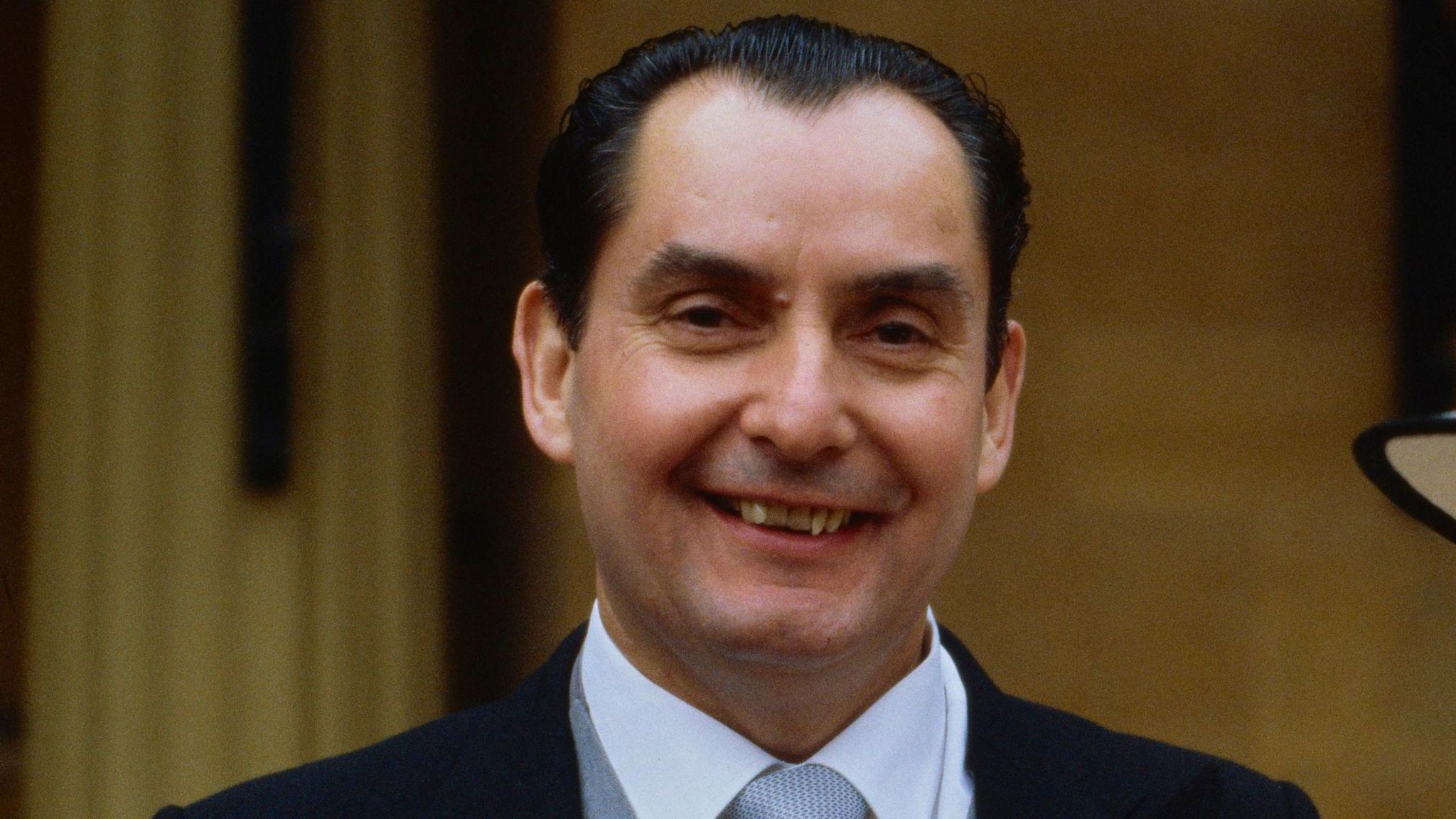
Nicknamed ‘Dracula’ due to his widow’s peak hairstyle, he was one of the most popular and charismatic figures of his era, loved by millions of fans for his brilliance on the table and good humour off it.
He was still playing snooker in recent months, and remarkably made a century break last November, a few weeks after his 91st birthday.
Leading the tributes, three-time Crucible king Mark Williams said: “Ray is one of the best sports people ever from Wales and the best snooker player. He’s one of the reasons why a lot of us started playing. He put snooker on the map, alongside Alex Higgins, Jimmy White and Steve Davis. Anyone playing now owes them a lot because they brought popularity to the game. He is a real inspiration.”
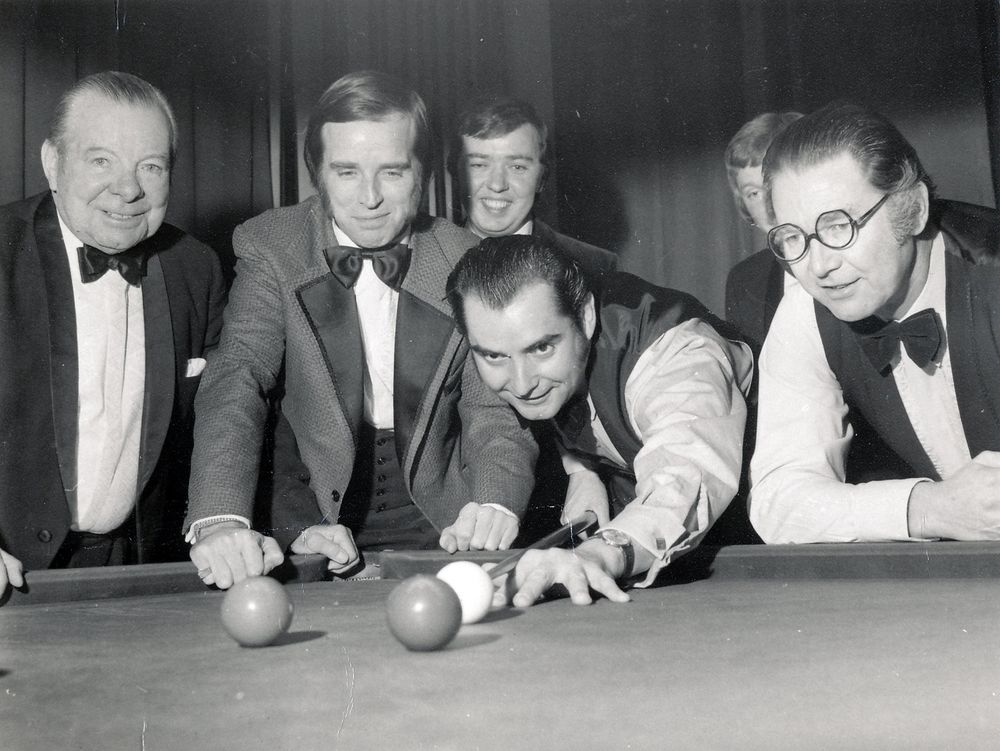
Reardon was born in 1932 in Tredegar and by the age of ten he was a keen snooker and billiards player. At 14, he followed his father’s footsteps and joined the mining community at Ty Trist Colliery. He wore cotton gloves, and while older men laughed at the habit, he was able to protect his hands enough to continue his hobby on the baize.
In 1957, after his family had moved to Stoke-on-Trent, Reardon was lucky to survive the collapse of a mine while he was working deep underground. He was buried in rubble for three hours, barely able to breathe. “I couldn’t move a finger,” he later told Michael Parkinson in a BBC interview. “It was amazing that with all the rubble and rock I was under, air still gets through. You have to keep perfectly still and not struggle, so I played thousands of games of marbles with my brother in my mind, until they came to my rescue.”
Soon afterwards, Reardon left the mines and became a police officer. During his seven years walking the beat around Stoke he won two awards for bravery – one for climbing across roofs to catch a robber, and one for approaching a man with a loaded shotgun in a crowded town centre and, in his usual calm manner, talking him out of using it.
Meanwhile on the table, Reardon’s reputation as one of the best amateur players in the UK was building. He won the Welsh Amateur Championship every year from 1950 to 1955, and the English equivalent for the first time in 1964, beating John Spencer in the final. In 1967, at the age of 35, he took the decision to quit policing and try his hand at professional snooker.
His timing was near-perfect, as in 1969 the BBC broadcast Pot Black for the first time, finding snooker an ideal showcase for the advent of colour television. This was a key moment in the sport’s history as, within a decade, it led to extensive live coverage of snooker on the BBC and the boom in popularity. Reardon was the first Pot Black champion, beating Spencer in the one-frame final, and won it again in 1979.
His first World Championship appearance in 1969 ended with a 25-24 defeat against Fred Davis in the quarter-finals, but a year later Reardon was holding the famous trophy for the first time. At the Victoria Hall in London, he beat John Pulman 37-33 in the final. That was the beginning of his dominant spell, as he went on to capture the world title in 1973, 1974, 1975, 1976 and 1978.
The last of those six victories was arguably Reardon’s greatest triumph as, at the age of 45, it made him the oldest World Champion, a record only beaten in 2022 by a 46-year-old Ronnie O’Sullivan. It was also Reardon’s only success at the Crucible, where the Championship had moved in 1977. He beat Perrie Mans 25-18 in the final and his modern-day record of six titles was not matched until Steve Davis reached that tally in 1989. Reardon reached one more Crucible final in 1982 when, age 49, he was beaten by Alex Higgins 18-15.
Higgins and Spencer were Reardon’s chief rivals for most of his hey-day, but he was without question the outstanding player of his era. Outside the World Championship, he won 16 other professional tournaments including the 1976 Masters. His highest break in competition was 146, made during the 1972 Park Drive event. In 1975 when the world rankings were conceived he was the first number one, and held that status until 1981, and then again during the 1982-83 season.
He remains the oldest winner of a ranking title, having beaten Jimmy White in the final of the 1982 Professional Players Tournament at the age of 50. A few months later he beat White again to win the 1983 International Masters, his last title.
He was ranked among the top 16 until 1987 and made his last Crucible appearance in the same year, losing in the last 16 to Steve Davis. Reardon retired in 1991 after losing to Jason Prince in the first qualifying round of the World Championship.
Though his peak as player came before the 1980s, Reardon’s fame grew in that decade as snooker became the most popular sport in Britain. He regularly appeared on TV shows such as A Question of Sport, Paul Daniels Magic Show and Big Break. Alongside Davis, White, Higgins, Cliff Thorburn and Dennis Taylor, he was a central character in the game described by Barry Hearn as ‘Dallas with balls.’ After retirement, he was in the public eye less, though he continued to play on the exhibition circuit.
He was always renowned as a great tactical player – indeed Davis learned much from Reardon during his early career in the late 1970s. In 2004, Reardon mentored Ronnie O’Sullivan, helping the Rocket to add strategic nous to his formidable break-building. The result was a Crucible title, and O’Sullivan always references Reardon as one of his great influences and friends. Shaun Murphy used one of Reardon’s cues to win the 2005 World Championship and received guidance from him in 2007.
Reardon was awarded the MBE 1985. He was inducted into the snooker Hall of Fame in 2011, and each year the winner of the Welsh Open is presented with the Ray Reardon Trophy. Throughout the snooker family, he was much loved and highly respected.
The father of two, who married his second wife Carol in 1987, lived for over 40 years in Devon, an area he had got to know through playing exhibitions. After retirement he continued to play snooker socially, as well as golf, becoming President of Churston Golf Club. In 2019 he survived a pulmonary embolism, and continued to approach life with enthusiasm.
In August 2023, in one of his last interviews, Reardon told David Hendon: “I still enjoy playing snooker. Some days you are in a little world of your own, you can pot anything and nothing distracts you. It’s fantastic, magic.”
How ‘Dracula’ the ex-miner became the snooker world’s best
20 July 2024
Ray Reardon was the first Welsh player to win the world title, with compatriots Terry Griffiths and Mark Williams subsequently lifting the trophy – Getty Images
Ray Reardon, who has died aged 91, dominated the sport of snooker for the best part of a decade as he won six world titles between 1970 and 1978.
The popular Welshman, who was nicknamed ‘Dracula’ because of his distinctive “widow’s peak” hairstyle, was soon a household name as the game became hugely popular on television.
He won the first Pot Black series on the BBC in 1969, and was made an MBE in the 1985 Queen’s Birthday honours.
As well as outstanding potting ability and tactical nous, Reardon also benefited from fortunate timing.
The introduction of colour television in the late 1960s allowed snooker to emerge from the smoky back rooms of clubs and into the living room, where it found a keen audience.
And as the best player of the time, Reardon was ideally placed to take advantage of the sport’s newly acquired profile.
Ray Reardon recalls how Pot Black – and the introduction of colour TV – boosted snooker
Born in Tredegar, Reardon worked as a coal miner and a police officer while building a reputation in the amateur game before turning professional at the relatively late age of 34 in 1967.
It was a major step to leave a secure job at a time when he did not own a home, but the gamble paid off handsomely as he quickly established himself as one of the most popular characters in the game.
His rivalries with John Spencer and the flamboyant Alex ‘Hurricane’ Higgins made for some of the most compelling sporting contests on television at the time.
His first world title came in 1970, when he beat John Pulman 39 frames to 34.
There followed a gap until 1973, when he beat Australian Eddie Charlton in the final. That was the first of four consecutive titles, culminating in his victory over Higgins in 1976 – the last championship before the move to the Crucible Theatre in Sheffield.
Reardon won the title again in 1978, and topped the world rankings until 1981, when the emergence of Steve Davis heralded a new era.
He reached the World Championship final again in 1982, but lost to Higgins.
Getty Images – John Spencer (left), Alex Higgins (third left) and Ray Reardon (far right) won 10 successive world titles between them, between 1969 and 1978; Eddie Charlton (second left) was twice a losing finalist
Reardon retired from the professional game in 1991 at the age of 58.
He was later hired by Ronnie O’Sullivan as a consultant and was credited with helping the unpredictable Londoner claim the world title in 2004.
In 2016, the trophy awarded to the winner of the Welsh Open was named the Ray Reardon Trophy in his honour.
In spite of the Dracula nickname, Reardon will be remembered for his ready wit and cheeky winks to the audience as much as the measured tactical play which made him the most consistent and successful player in the world for nearly a decade.
Ray Reardon playing in the Masters Snooker Championship at the Wembley Arena, London, in the 1980s. Photograph: Bob Thomas Sports Photography/Getty Images
Ray Reardon, who has died aged 91 from cancer, was snooker’s world champion six times in the 1970s, the decade in which the game was changing from subterranean folk sport into a TV attraction.
Always immaculately dressed, a highly popular and genial ambassador for the game, ever adept at engaging a crowd, he remains the oldest champion and, on the strength of his 18-15 defeat by Alex Higgins at the age of 49 in 1982, its oldest finalist. After his wins in 1970, 1973-76 and 1978 he was still good enough to reach the 1985 semi-finals, when he was 52, before Steve Davis, the dominant figure of the 80s, trounced him 16-5.
As a player, he transformed himself from brilliant young potter into supreme tactician. In later life his deep knowledge of the game was utilised by Ronnie O’Sullivan, who acknowledged him as a significant factor in capturing the 2004 world title.
Commercially, Reardon’s peak came too early; prize money of £7,500 for winning the 1978 world title, £12,500 for reaching the 1982 final and £20,000 as a 1985 semi-finalist looks like petty cash by today’s standards, although it did not seem too bad in those days, particularly as the snooker revival had started from a low base.
Reardon was born into a snooker family, to Cynthia and Ben Reardon, in Tredegar, south Wales, where he attended Georgetown secondary school. His father, a coalminer, played in the local league for the Miners’ Institute, as did his uncles. When Ray was 14, and after a brief stint as a motor mechanic, he became a miner himself. On his 17th birthday, in 1949, he made his first century break in the morning and won the first of six consecutive Welsh amateur titles in the evening.
In 1956, the family moved to Stoke-on-Trent, Staffordshire, in search of better job prospects. That same year he looked likely to become English amateur champion when he held a 7-3 overnight lead against Tommy Gordon in the final at Burroughes Hall in London, but his tip flew off with his first shot the next day, perhaps through the agency of a betting gang. Forced to play with an unfamiliar cue in those pre-superglue days, he lost 11-9.
Ray Reardon, left, with Ronnie O’Sullivan in 2004. Photograph: Trevor Smith/Alamy
Eleven years in the pits ended in 1957 after he was buried in a roof fall at the Florence Colliery in Stoke, unable to move a muscle for three hours. “I had to breathe through my nose,” he was to recall, “because if I opened my mouth I’d suffocate to death on the dust.”
With iron self-control he kept calm by imagining he was playing endless games of marbles with his eight-year-old brother, Ron.
After that he became a police officer in Stoke, earning a commendation for bravery for disarming a man who was brandishing a shotgun, and another for crawling across a frosty rooftop to drop through a skylight on to an unsuspecting burglar.
In 1964 he achieved his ambition of winning the English amateur championship, beating John Spencer, himself to become a three times world champion, 11-8 in the final at the Central Hall, Birmingham.
A professional career was hardly worth contemplating at the time, as the World Snooker Championship had lain dormant from 1957 until 1964. But after selection for an amateur tour to South Africa he was offered a return visit as a professional and in 1967 took the plunge at the age of 35, in time for the revival of the championship tournament and the advent of BBC Two’s Pot Black. This was a half-hour, one-frame competition that he won twice (1969 and 1979) and that introduced the game and its leading players to new audiences.
Then the world championship ran throughout an entire season of week-long matches, and in 1970 Reardon became champion for the first time by beating John Pulman 37-33 at the Victoria Hall in London. At the City Exhibition Halls in Manchester in 1973, the first time the championship was telescoped into a fortnight, he recovered from 19-12 down to beat Spencer 23-22 in the semi-finals and from 7-0 down defeated Australia’s Eddie Charlton 38-32 to regain the title.
He retained it a year later comparatively uneventfully, but in the 1975 final in Melbourne, Australia, had to make an epic recovery from 29-23 adrift to beat Charlton 31-30. He disposed of the mercurial Higgins 27-16 in the 1976 final at Wythenshawe Forum in Manchester, and in 1978 became champion for the last time at the age of 45 with his 25-18 victory over the South African left-hander Perrie Mans at the Crucible theatre in Sheffield.
He retired to Brixham, Devon, in 1991, later moving to Torquay, but having kept up with contacts on the club scene that had given him his staple income in his early professional days, he continued with exhibitions as well as his summer tours of Pontins holiday camps, a routine he much preferred to the unpaid slog of qualifying competitions.
He is survived by his second wife, Carol Covington, whom he married in 1987, and by two children, Darren and Melanie, from his first marriage, to Susan Carter, in 1959, which ended in divorce.
Ray (Raymond) Reardon, snooker player, born 8 October 1932; died 19 July 2024


 Ronnie O'Sullivan
Higgins-Trump exhibition:
https://www.huya.com/video/play/999549958.html?hyaction=recordedvideo&vid=999549958&fromMatch=1
Tipycal Shanghai with the 2 finalists:
https://www.ixigua.com/7394334913006141979?logTag=9b6e57605197f95840fa
+
looks like after the SM, an another exhibition event was held:
John Higgins v Jimmy White:
https://www.huya.com/video/play/999283222.html?hyaction=recordedvideo&vid=999283222&fromMatch=1
Judd Trump v Mark J Williams:
https://www.huya.com/video/play/999321996.html?hyaction=recordedvideo&vid=999321996&fromMatch=1
A sad day for snooker, rest in peace.
The Guardian had his picture with Ronnie in the obituary.
https://www.theguardian.com/sport/2024/jul/21/ray-reardon-obituary
Thank you for finding this Csilla, I’ll add it to the post.