Ronnie and Mark Selby … je t’aime, moi aussi!

Judging by this double interview by John Skilbeck in the Belfast Telegraph, long are gone the days when there was needle between Mark and Ronnie. Mutual respect and even friendship built up as they learned to know each other better.

Ronnie O’Sullivan: Mark Selby ‘is a good lad’

By John Skilbeck

ronnie-o-sullivan

Relationship between Ronnie O’Sullivan and Mark Selby has been strained in the past

Ronnie O’Sullivan has had a change of heart about Mark Selby after getting to know the man he labelled snooker’s “Torturer”.

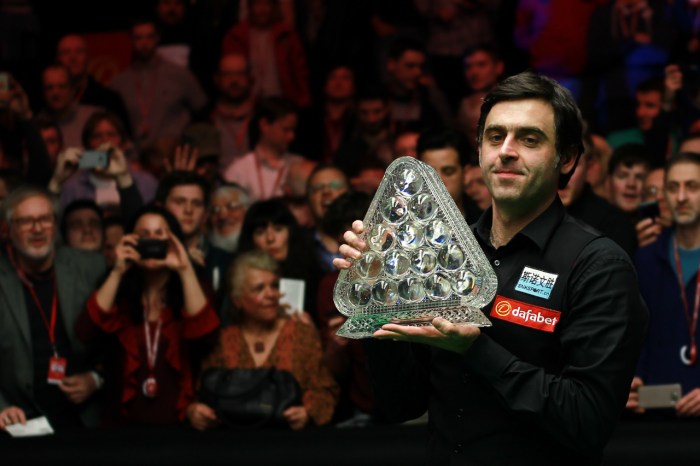
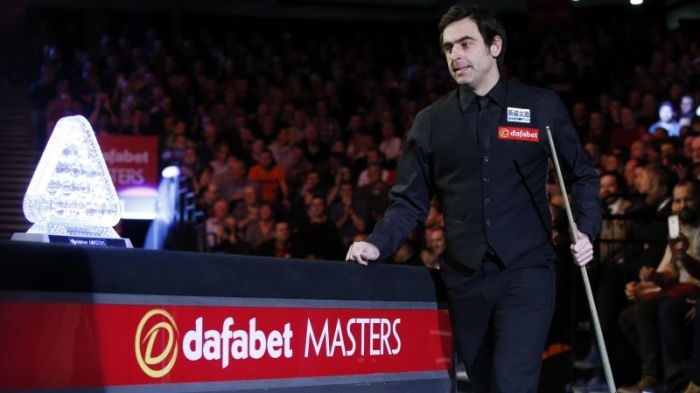
Defending champion O’Sullivan begins his bid for a seventh Dafabet Masters title when he faces Liang Wenbo on Sunday.

The dream ticket for many snooker fans would be an Alexandra Palace final between O’Sullivan and Selby, after their gripping UK Championship title match.

Selby triumphed in York, taking an afternoon stranglehold on the final before resisting a brilliant O’Sullivan fightback by producing spectacular snooker of his own.

The relationship between O’Sullivan and Selby has been strained in the past, with O’Sullivan’s attacking playing style countered by Selby’s more pragmatic approach. It led O’Sullivan to reveal in a 2013 memoir his scathing nickname for a player previously better known as the ‘Jester from Leicester’.

Such tags can stick, but the torture O’Sullivan has felt at the hands of Selby has given way to a better understanding between the pair, after they spent time in each other’s company during a run of exhibition events last autumn.

“We did a few nights and I like his mindset. I know he’s in the game for the right reasons and he’s a good lad,” O’Sullivan said.

“I know he’s a fierce competitor on the table and I know that if he does sometimes get a bit slow and play long, drawn-out frames, that’s not because he’s playing me. That’s just sometimes how it can go for him.

“I know it’s not intentional, he’s just a tough match player.”

O’Sullivan has suffered more painful defeats at the hands of world number one Selby than the setback in York.

In the 2010 Masters final, Selby charged from 9-6 behind to beat O’Sullivan 10-9, and four years later at the Crucible it was a similar story, the hot favourite seeing a 10-5 lead slip away as Selby scooped his first World Championship title.

Their conflicting ways of thinking make each clash between Selby and O’Sullivan an occasion to savour.

“I hit them with everything I’ve got, it’s like a wall and I try to walk right through it,” O’Sullivan said.

“Mark will try to defend and defend and make it difficult for you at times.

“I just want to get in there and eat the balls.”

While touring Bulgaria with O’Sullivan in the autumn, playing to new audiences, Selby welcomed the opportunity to forge a bond.

Selby, 33, knew all about O’Sullivan’s dislike for his methodical play, and it was a chance to show another side to his character.

“When he was making his comments I didn’t really know him – I had never gone out for food with him or anything,” Selby said.

“Then I did some exhibitions and shows with him around Europe, spent time with him and he is a great guy and it’s great he is still playing.

“Up until the World Championship final in 2014 when I beat him I probably still didn’t have his respect. But to beat him over that distance I think he knew it wasn’t a fluke.

“Also to come from 8-3 down and 10-5, since then I think I have won his respect and I hope it stays that way.”

Selby has replaced O’Sullivan as the man to beat, and he heads to north London as the holder of the World and UK titles.

His own campaign begins on Wednesday, with Selby aspiring to add to the Masters titles he landed in 2008, 2010 and 2013.

“It would be nice but you get four tough matches there,” Selby said.

“I’ve got Mark Williams, one of my good friends on tour, in the first round.”

Selby, in a typically self-deprecating style, is playing down his trophy prospects.

“It’s going to be tough,” he said, “but if I’m playing like I have been I’ll have an outside chance.”

Ronnie is looking forward to the Masters

The Masters 2017 starts on Sunday early afternoon, and Ronnie, the defending champion, is looking forward to the first event of the year. Here he is speaking to Worldsnooker and to Eurosport.

Ronnie speaks to Worldsnooker:

Thursday 12 Jan 2017 01:15PM

img_2986

O’Sullivan thrashed Barry Hawkins 10-1 in the final last year

Ronnie O’Sullivan believes his form has sharpened over recent months as he looks ahead to snooker’s Dafabet Masters, which starts on Sunday.

Last year, O’Sullivan won snooker’s biggest invitation event for the sixth time to equal Stephen Hendry’s record, and he is now aiming for a seventh crown.

The tournament at Alexandra Palace in London runs from January 15 to 22 with the world’s top 16 players contesting the trophy and a top prize of £200,000.

Masters match schedule

O’Sullivan made a slow start to the current season but feels he has since got close to his best form, particularly at the UK Championship where he reached the final before losing a classic match 10-7 against Mark Selby.

“My game is a lot better now than it was in September and October,” said the Rocket. “That was one of the toughest periods I’ve had in snooker. I didn’t really practise going into the start of the season and I paid the price for that.

“I had to be patient and wait for my game to come, and it has improved over the last few tournaments. At the UK Championship I thought I played very well, I just came up short in the final.”

Chigwell’s 41-year-old O’Sullivan will face China’s Liang Wenbo in his opening match on Sunday at 1pm in front of a capacity crowd of 2,000, the session having sold out several weeks ago. He has traditionally received enthusiastic support from the London fans but O’Sullivan does not feel that gives him an advantage.

“It can go both ways,” he added. “If it’s not going for me then it can put more pressure on me to make something happen. If things are going my way then I can feed off the crowd’s momentum. I have won a lot of tournaments away from London so it’s not that big a factor – what’s more important is whether my game is strong enough for the week.”

Tickets and fantastic VIP packages are still available for certain sessions including the quarter-finals on Thursday January 19 and Friday January 20. But fans MUST ACT FAST TO BOOK SEATS.

A NEW RECORD has already been set for the most tickets sold prior to the Masters starting and this could lead to another record, by the end of the event, for the most tickets sold in the tournament’s history.

For the latest availability call 0871 620 7052 or CLICK HERE

And you can listen to the interview here:

… yes he has a cold.

And he also to Eurosport about his hopes and his approach to the new year:

Ronnie O’Sullivan:

‘What boosted my frame of mind ahead of Masters defence’

Ronnie O’Sullivan begins his bid for a record seventh Masters title against Liang Wenbo on Sunday at London’s Alexandra Palace. Here the defending champion explains to Desmond Kane why time spent away from home since September has been kind to him ahead of his bid to move ahead of Stephen Hendry as the most prolific winner of snooker’s biggest invitational event.

ronnieesblogmasters2017-1

‘MASTERS IN LONDON A VERY SPECIAL TOURNAMENT’

I’m looking forward to the Masters in London as I always do. It will be tough, but that’s what makes it so special.

I’ve lowered my expectations since not focusing totally on snooker.

I now look to enjoy the events and if I win, great. If not it’s back to the pundit box, or doing some work on my new novels.

As Steve Davis has said, ‘don’t use that as an excuse if you don’t win’. That was a good bit of advice.

I don’t see myself as the favourite going there as there are top players doing better than me, and winning the big events.

Having said that, if my game comes together and I get a bit of luck, you never know.

‘GAME BACK TO WHERE IT SHOULD BE’

2000429-42004067-2560-1440

It was a good week for me at the UK Championship in York last month where I played some decent stuff in losing to Mark Selby in the final.

I’d say from the Northern Irish Open in Belfast in November onwards, my game has been back to where it should be.

I’ve still a few things to get right, but it’s not all bad. And it wasn’t just all good because of the snooker.

The main aim for me while I’ve been on the road, is it to find a way to make it fun and interesting. I’ve managed that. In some ways, it’s felt like an all-expenses paid holiday.

I met some great running friends in Belfast, and got some great runs in. That’s always a good thing for me to get done in my day.

It was the same in York when I met up with some nice people, talked a lot about running and enjoyed some amazing food.

The only drawback from York was that I missed Jimmy White and Neal Foulds in the studio, but I did get to spend time with the Eurosport guys in York, and we had a laugh.

Some of my friends from China came to York which was fantastic, too. They are the best.

‘I DON’T FEEL TRAPPED’

The weird thing is, I’ve only been home seven nights since September 8.

That’s seven nights in four months, and the only reason I’ve been able to hack it is because I’ve had other things to take my mind off the snooker.

The new book, my Eurosport ambassador work, the exhibitions and the snooker tournaments have been an add on.

I don’t feel trapped which is fantastic. Don’t get me wrong, I’m still highly competitive. But I believe I’m better when I have other things to take my mind off the pressure of having to perform to win events.

This way, I get to enjoy my time and what I do regardless of the results. It is a win-win situation I just hope we get to play in some more wonderful cities.

I’ve become more businesslike in my approach to what I do. And i suppose that is something that comes with age. I know my perspective has changed a lot from my early days, and I feel much better for it.

I’m really looking to the New Year, here’s hoping it is a good one for the sport and fans.


Ronnie speaking about the Irish Legends Cup 2017, his outlook on snooker and more

Ronnie spoke with rté about the Irish Legends Cup 2017, Goffs, his outlook on snooker and more

Here is the interview.

000d3dbc-800

Overall it’s a quite positive one, except for the fact that Ronnie doesn’t really see snooker nowadays as a rewarding career in sports. Considering that most players are indeed struggling badly financially, it’s hard to argue with what he says. Not everyone can be in the top 16 and you can’t build an entire sport around a handful of players.


Ronnie about Mark Selby

In this interview, published today by the Yorkshire Post, Ronnie speaks about rivalry, and speaks highly about Mark Selby.

Read the excerpt here:

O’Sullivan has a new-found respect for Selby after famously describing the world champion as the “torturer” such was his granite-like displays on the table.

Where O’Sullivan is the swashbuckling rebel who scores heavily and swiftly, Selby is more conservative and a master tactician.

But O’Sullivan – who threatened a comeback after clawing his way back from 7-2 to 8-7 at the York Barbican – has revealed time spent on tour with Selby, plus a spell as a TV pundit, has given him a new perspective.

We spent some time on the exhibition circuit, I like his mindset and I know he is in the game for the right reasons,” said O’Sullivan, denied the chance to equal Steve Davis’s record of six UK crowns. “He’s a good lad and a fierce competitor on the table. “I know if he does go a bit slow, with long drawn-out frames, it’s not just because he is playing me, that’s how it sometimes goes for him. “I know it’s not intentional, he’s just a tough match-player. “With me I just go out there and hit them with everything I have got, like a wall I just try to walk right through it. “With Mark, he will just try and defend, defend and make it difficult for you at times. “Equally, he can go for his shots and attack. He can adapt and play that game as well. I am not, I just eat the balls. “Mark’s done well to him so congratulations to him. I enjoyed my game, I just missed too many balls to win tournaments. “There were so many I should have got and probably two or three years ago would have got. In spells I was okay but ‘spells’ is not good enough. If you want to dominate and strike fear into your opponent you can’t afford to miss easy chances. “He’s a fantastic player, he’s won a lot of tournaments and he’s a very tough match player. He’s got the all-round game.

And read the original article too: there is more to it, including a video.

Big Interview with Ronnie in Big Issue

In this interview with Big Issue, Ronnie talks about his book, what inspired it, his life, past and present, and his attitude to it and his snooker.

RONNIE O’SULLIVAN INTERVIEW: “PEOPLE HAVEN’T REALISED WHAT’S REALLY GONE ON”

STEVEN MACKENZIE DEC 5, 2016

Snooker legend and now novelist Ronnie O’Sullivan talks addiction, prison – and whether he’ll go on Strictly
rexfeatures_2171880e_0

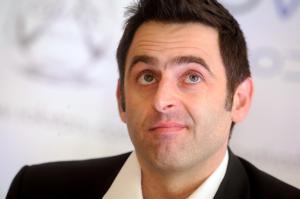
 “I’ve lived a parallel life,” Ronnie O’Sullivan says. “People have seen the story with the snooker but they haven’t realised what’s really gone on.”

O’Sullivan has been hailed the most naturally gifted snooker player of all time so often it’s become a cliché. But equally as famous as The Rocket’s prolific potting is the love/hate relationship he has with the game. It’s a subtle affair – sometimes he loves to hate it, but at the moment it feels like he hates to love it. He said last month he is “not good enough” to compete at the top level, then quickly proved himself wrong by reaching the final of the Champion of Champions tournament in Coventry.

Back in the 1990s, O’Sullivan’s talent on the table was matched only by his ability to court controversy. The press could not resist writing about the ‘Two Ronnies’; a mercurial yet fragile genius who could make a maximum break in five minutes and 20 seconds, only to be knocked out unceremoniously in the next round. He assaulted an official during the 1996 World Championships, was stripped of a title for failing a drugs test – but the parallel life O’Sullivan refers to is being a globally celebrated snooker superstar while never being able to escape the shadows of his past.

The next unpredictable step in O’Sullivan’s story? He has written a hardboiled crime novel called Framed (see what they’ve done there?), which draws extensively on his background and early life. Like O’Sullivan playing at his best, the book is tight, pacey and keeps you guessing. Set in the 1990s, as Britpop is breaking, the hero of the tale is Frankie, an alter ego for Ronnie, who has to fight to clear his brother’s name when he is wrongly accused of murder. The world of Soho gangsters and shady snooker halls is clearly one the author knows well.

Sitting in the office of his publisher, O’Sullivan is calm, composed, kind and keen.

The Big Issue: What appealed to you about the idea of writing a crime novel?

Ronnie O’Sullivan: Ehm… to be honest with you the idea was brought to me by Orion, who I’d written two autobiographies with. We sat down to discuss some of the experiences I’ve had, jazzing it up to become a bit of a page-turner.

Where does Frankie end and Ronnie begin? A lot of Frankie’s life is how my life was(1) – a very close relationship with my father, and although I don’t have a brother, I have a sister that I feel protective over, and there’s things that you do out of loyalty for your family whether you’re a snooker player or not. I’ve had to do things for my dad just because he’s my dad. I’ve been in situations that are in the book but I’m much more on a straight and narrow path. I know what goes on. I can’t mention names or situations but like a fly on the wall, I hear a lot of things.

How did things change when your father was sent to prison? I suppose I didn’t have any responsibility until my dad went away. There was always a safe place to go – home. Mum, dad, sister – everything was great. Then once he got taken off the streets, things turned. I was the man of the house, if you like, at 16, and I wasn’t ready. I was a young kid who just played snooker. That age where you’re just coming to be a man, all of a sudden – boom – you’ve got to deal with stuff you probably don’t want to deal with.

Was there a chance you would be drawn into a life of crime? Absolutely. When my dad went away he left quite a successful business. At the time I thought, rather than play snooker, why don’t I just take the business over? Someone’s got to do it. And my dad said to me: “Don’t be crazy. It’s not your world.” But I was itching to get out of snooker then because when my dad went away I lost my way. Mum and dad both going away had a massive affect on me(2). I lost myself for about five, maybe six years then realised I had to get my head down and be quite selfish. I had to kick the booze, get rid of a circle of friends and focus on trying to become a successful snooker player. Snooker was definitely the reason I stayed out of following in my dad’s footsteps, of running an adult bookshop business. Who knows where that could have took me, especially with the addictions I encountered.

Frankie seems to take a drink on most pages. Is that what life was like for you I only started smoking when I was 19, I only started drinking when I was 19. I know what addiction is like. I’d have a little drink when I chose to but quickly it became that I didn’t have that power of choice. I needed it to function. I couldn’t relax or socialise without having some form of chemical inside me, whether it was dope or alcohol. There was a period for four or five years where I was either topping up or obliterated because I couldn’t deal with what was going on. I was trying but it was a bit too much for me.

What helped you deal with addiction? I went to the Priory, I needed that little bit of support. AA has helped but now I choose to have a healthier lifestyle. I spend a lot of time running, in the gym, trying to eat right. So I don’t really do much AA but a lot of what I learned has helped me not turn back to drink. I know where it could lead for me.

Everyone experiences ups and downs, but are the highs higher and the lows lower because snooker is about two extremes of either winning or losing? No, because I’ve won tournaments and felt down and in bits because I’ve been beating myself up, doubting myself. The key for me is to know that even if you’re having a bad day it’s going to pass. Emotions are very fickle, they come and go. When the good emotion’s there, you roll with it; when the bad emotion’s there, you think – you know what, tomorrow morning when I wake up and have a run I’ll feel fantastic again. Let’s just get through this, try not to throw my toys out of the pram, which I’ve done in the past, walking out of matches, throwing tantrums. I’m trying to be the best I can be on any given day. Some days you’re not going to be at your absolute best but you can give 100 per cent and then at least you come off feeling no regrets.

Have the kind of snooker clubs you write about in Framed survived in a gentrified London? There are not as many – snooker was massive in the ’90s – but they still exist. Sometimes I just pitch up and play, giving them 100 start. It’s the game you get excited by, the opponent is irrelevant sometimes. It’s just that competitiveness you crave.

Do you still feel as competitive now as you used to? In a different sort of way. I’m not competitive where I think, I want to win this and I want to win that and I don’t care how I win it as long as I win it(3). Me, I want to master the game, I want to be the best that I can be. When I was growing up Steve Davis and Stephen Hendry were my heroes and I liked the way they won. I wouldn’t enjoy winning tournaments if it was the way Cliff Thorburn or one of the slow safety player types did. I like to go out there and grab the game by the scruff of the neck. My determination and drive comes from a different place. I’m not thinking, I want to beat Stephen Hendry’s record of seven world titles, I just want to play. How good can I be in my 40s? Can I still win a world title in my 40s(4)? It’s little challenges like that. I like to surprise people. That has always been a motivation for me. Whenever people have knocked me and said: “Oh he’s finished, he’s not the player he was,” I’ve always enjoyed coming back and showing them that I’m not done yet.

What advice do you have for people battling their own demons? Never give up. Never give up. Always have hope. I believe that running helped me find a purpose in life. It was another addiction but a healthy addiction(5). And if you don’t like running, I always think walking is just as good but try to get into nature, where you’re away from cars and buildings and the rat race. I always find getting out to the country, to the forest, getting into nature is something that makes me feel good to be alive. A lot of my life is based around that. I want to be happy. I’m not very good integrating with the human race. I have good friends but I think it’s important to slow down sometimes and enjoy the simple things in life.

Do you listen to music while running? Never – I always like to listen to the rhythm of the feet hitting the floor. I couldn’t jog – running is a different thing. When you get fit and you start to cover the ground quickly, there is no better feeling. But I know some people listen to music and it works for them. Whatever gets you out there in the fresh air, I say, just do it.

Nothing could get me out running in the fresh air on a day as cold as this.  Maybe start off with half a mile and once you’ve done that you’ll want to do another half mile. The hardest step is the one out the front door. Once you get going you think, wow, fantastic!

I’ll try… Don’t try, just do it. Make a commitment to yourself.

Do you run every morning at the same time or is it whenever you can fit it in? I am routined up. I feel like I’m in the army. I’m up at half seven, over the forest at eight, run for an hour, have a shower, have my breakfast. Then I go to the snooker club or round my mum’s. I’ll have a kip on the settee then do my two, three, four hours practice, then a bit of food-shopping and cooking(6), go and see my father or have a cup of tea with my friend. For me that’s a fantastic day and I try to repeat that every day.

Snooker, writing, running, cooking… you’re only missing one thing from the list. Would you consider going on Strictly Come Dancing(7)? No, I wouldn’t do any of them shows because I know what I’m like, I get bored very easily. I don’t think it would be seen as a very positive thing, to get halfway through Strictly and say: “Look mate, I’m out of here.” I don’t think that’s fair to the public or the people. So I just stick to my own little bubble, which is a bit of snooker, a bit of running, writing some books, having a bit of fun, keeping life simple, and that’ll do for me.

Notes:

(1) Frankie, who like Ronnie has Italian heritage (Ronnie also has Irish roots), takes over a snooker club after his father is sent to prison. In real life, O’Sullivan’s father, who ran a string of sex shops in London and was well known in the underworld, was sentenced for murder for killing an associate of the Krays in 1992 when Ronnie was 16. He was released 18 years later in 2010.

(2) After his father was jailed, Ronnie’s mother Maria took over the business and was convicted of tax evasion in 1995 when Ronnie was 19. She served seven months.

(3) O’Sullivan has won dozens of tournaments since he turned professional in 1992 at the age of 16, including five World Championships. He has scored perfect 147 breaks a record-breaking 13 times in competition.

(4) No player has won the World Championships in their 40s since Ray Reardon in 1978.

(5) O’Sullivan’s best time over 10km is 34 minutes 54 seconds.

(6) Ronnie often shares his culinary creations on Twitter.

(7) In 2013 O’Sullivan became engaged to actress and Strictly star Laila Rouass.

Framed by Ronnie O’Sullivan is out now in hardback (Orion Fiction, £16.99)
What would young Ronnie think about today’s Ronnie?

That’s the question the the Telegraph asked Ronnie and here is the answer:

Guy Kelly

2 DECEMBER 2016 • 9:14AM

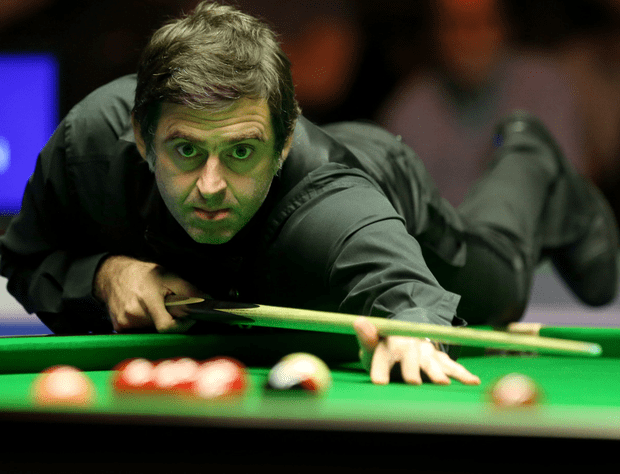
We asked snooker legend Ronnie O’Sullivan, 40, what his younger self would think if he could see him now… 

“I never really chose to play snooker; my dad did that for me, and I wish he hadn’t. When I was a kid, I just wanted to have a laugh, potting the odd ball, but I’d probably have been happier playing golf or football, or driving cars for a living – something outside, with an adrenalin buzz.

Dad was ambitious on my behalf. He sat me down when I was 10 and told me that if I wanted to play sport I should try to be the best in the world, and if I wanted to do that, I needed to stop mucking around. In that moment, he turned me into the hyper-disciplined monster I still am.

He used to compare the snooker hall in Chigwell to a crèche: it was somewhere he knew I’d be safe and stay put, rather than out on the streets causing trouble. He had spies there, too – older members would report back to him if I’d got the hump that day and snapped a cue, or wasted my pocket money on the fruit machines. 

js114765098-large_transbhaj3ppkpic7zv8fio7vi3_9yxjs22_2t7exj90mi40

By the time I was a teenager I was pretty well drilled, winning tournaments all over the place. Apart from the past five years, that time between 11 and 15 was probably the best, most consistent snooker I’ve played. Everything went a bit wrong in the following two decades. If that 15- or 16-year-old could see what I’m like now, he’d probably think I’d done OK. I’m clean now, on the straight and narrow, happy. He’d also think I was an idiot for going down some of the paths I did.

My dad went away to prison when I was 16, and with him gone I barely practised for nine months. Instead I got myself a first girlfriend and had fun with her. Then my dad came out on bail and read me the riot act, putting me back in training and getting me to win again. A year later, he was put away for good [O’Sullivan’s father, also named Ronnie, was jailed for murder in 1992], and I went completely off the rails. I had no education and no other skills, though, so snooker was my only real job prospect.

From the age of 16 to 35, I was rubbish. I was deeply unhappy, too, and the young me would know it, since I’ve only ever been happy when I’ve been in control of things. I was drinking far too much, dabbling in narcotics, and found myself in nightclubs every night. I didn’t enjoy that environment at all, so I anchored myself to snooker and knuckled down.

Throughout my life, I’ve never been bothered by the records or titles. I always want to be the best I can, but I basically play snooker in the same way I did as a kid – just trying to pull off good shots. It’s why I’ve dropped in and out of the game: trophies are fun for about five seconds. I prefer the art of it; some day’s it’s good, other days it’s not. I think teenage Ronnie would have some grudging respect for some of the breaks on my YouTube highlight reel, though it’s probably nothing he couldn’t have done.

I never would have thought about having kids either, that’s for sure. I love my children deeply, but I wasn’t gifted in the fatherhood department. I struggle with how it interferes with my own life, to be honest, but I do the best I can. Still, I’m healthy, I eat well, I get up and go for runs. With writing and punditry, too, I’ve found two things outside of playing that I love. The young me would appreciate that, because the structure makes me happy.

My son, Ronnie, is quite similar to me. He’s happy in his own little world, and just gets on with things. At one time he wanted to play snooker, but I talked him out of that one. It isn’t good for you as a person. That’s something I’ve got on the young me, I suppose. He wouldn’t know why, but I’d tell him never to pick up a snooker cue. Play something else – maybe tennis. I could be Andy Murray right now, and would have been happy the whole time. But I’m not, and I haven’t been.”

In his latest ES blog Ronnie clarifies his “car-boot sales” comments

Speaking to Desmond Kane, Ronnie explains why he said what he said, read it here.

I love snooker, but BBC Sports Personality snub shows we must change attitudes to our great sport

Ronnie O’Sullivan tells Desmond Kane why snooker is one of the world’s great sports as he sets the record straight on claims he was trying to criticise the game he loves during the UK Championship in York.

The five-times world champion says he simply cannot understand why snooker has been snubbed by the BBC Sports Personality awards for over a quarter of a century, and ignored by some newspapers in its lack of coverage for such a popular sport.

I want to use my latest blog to clarify my comments during the UK Championship in York that have been made to look like I was criticising the sport. .

I was asked why I thought snooker players and myself in particular were never on the shortlist for the BBC Sports Personality of the Year awards.

My answer to the question was honest and simple: I don’t think snooker is an important enough sport compared to other sports such as tennis, F1, golf, football, cricket, horse racing, boxing and Olympic sports. The list goes on and on.

“If you look at all the nominees over the past 10-15 years, you will see that it is people from the sports listed above that have been shortlisted. Snooker has not featured in the top three since Stephen Hendry was nominated behind Paul Gascoigne in 1990. Which tells its own story. “

‘Prize money adds prestige’

My next point was that I believe if snooker can get to the point where winners collect £1million cheques like they do in golf, tennis and F1, then I believe that would help to change the perception of the sport as the game looks to attract more interest across the globe.

“Bigger prize money would contribute to bringing the sport back to the level of prestige and importance it obviously should enjoy and reached in the 1980s when at the height of Steve Davis’ fame, it was said he spent more time on TV than the PM Maggie Thatcher. “

We had Mark King and Anthony Hamilton telling us how skint they were only four weeks ago. These are two leading players who have been in the top 20 consistently over the past 15-20 years.

I’m not sure this is the perception that any sport wants.

“This was my next point, and I always think it’s important to understand why things are as they are and where you sit within that situation: football rights are worth over £5bn-8bn for three years. Maybe more. BBC pays £6-8 million for the World Championship, UK Championship and Masters for the same period.”

I’m no maths genius, but it’s not hard to work out why snooker is where it is in the pecking order.

‘Traditional media don’t cover the sport properly’

I believe sometimes snooker is fighting for column inches in newspapers which is a problem that has been around for years when it is up against football.

It suits some people to make my comments sound like I’m criticising snooker when that’s the last thing I was doing.

All I was doing was answering a question honestly put to me on why I think snooker is not competing with other sports in the annual Sports Personality of the Year.

“I think the World Snooker chairman Barry Hearn has done a great job so far with snooker. There’s more snooker than ever. More playing opportunities than ever. Full credit to Barry for what he has achieved. “

Happy days for everyone involved in snooker.

‘Snooker was built for TV like tennis’

As far as saying snooker is cheap TV, it is.

“Snooker was a sport made for television back in the 1970s because it is easy and cheap to cover. Otherwise, it would never be on TV. “

Most sport is considered cheap television in comparison to what TV pays for other entertainment when you look at drama and movies.

I stand by what I say as factual.

This is something I’ve learned myself only recently since working on TV projects.

It’s great that we never stop learning.

Ronnie O’Sullivan