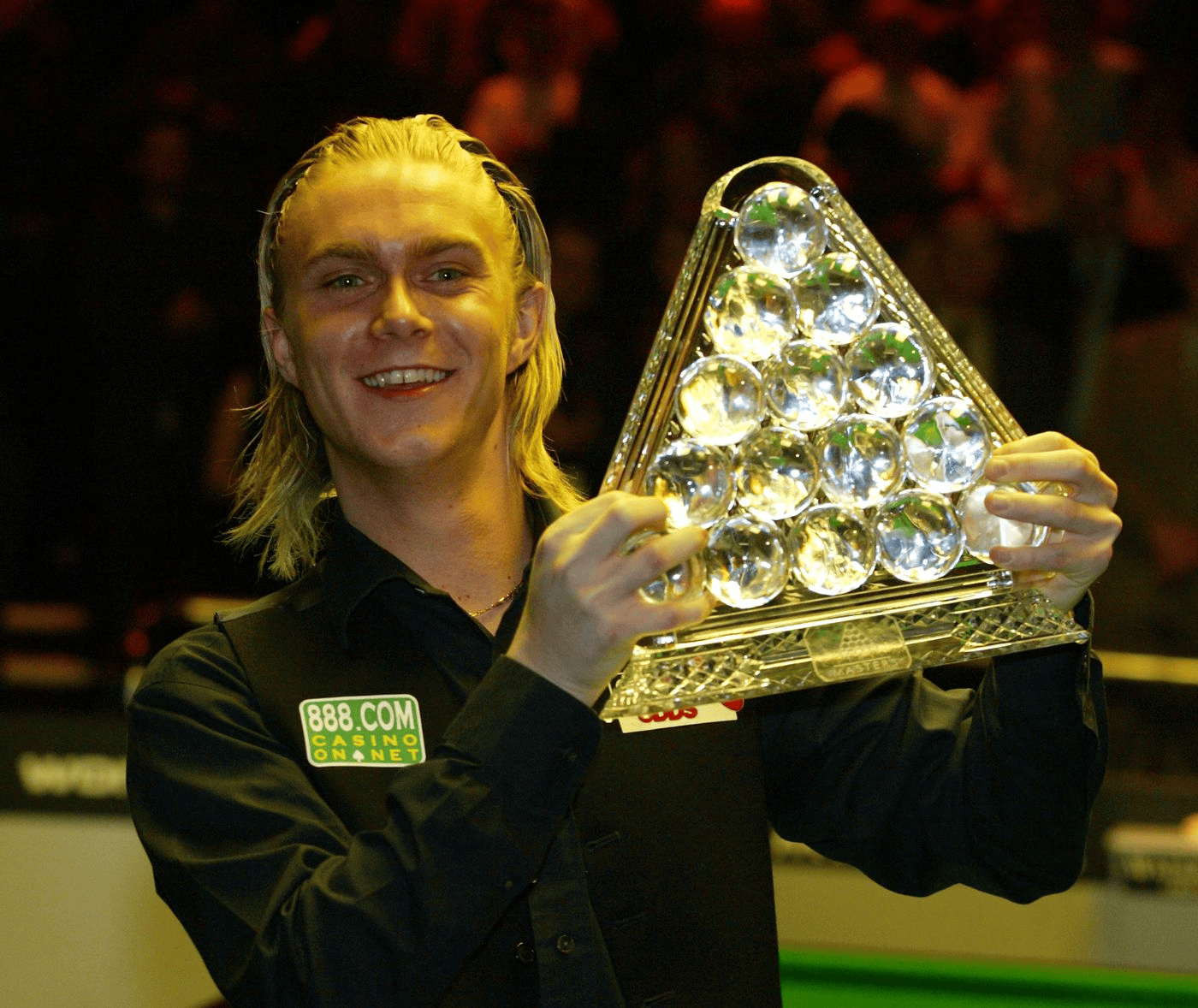
Ronnie “confirmed” for the 2026 Champion of Champions … but will he actually play?

That’s the question Phil Haigh is asking in this piece:

Ronnie O’Sullivan announced for big-money event and rare UK appearance

Ronnie O’Sullivan is in line to return to action in Leicester (Picture: Getty Images)

Ronnie O’Sullivan has been confirmed in the line-up for next month’s Champion of Champions, which will see him make a rare UK appearance.

The Champion of Champions does what it says on the tin, bringing together the winners of events over the last 12 months into one non-ranking tournament.

The Rocket has not won a tournament on the professional circuit since March 2024, but did win this year’s World Seniors Championship in May.

That would not necessarily earn him a spot in the 16-player Champion of Champions, but seen as there have been multiple repeat winners of events over the last year, the Seniors champ gets the nod.

O’Sullivan does not play in many events in the UK since moving to Dubai and also spending time in Ireland, so it is not exactly a sure bet that he will play in Leicester next month, but he is being advertised to be there.

The Champion of Champions social media accounts posted on Wednesday: ‘One of the game’s biggest names is IN. Ronnie O’Sullivan will be at the Sportsbet.io #champofchamps next month.’

The tournament-organisers have advertised(Picture: Matchroom)

O’Sullivan has a fantastic record in the tournament, winning it four times and reaching two more finals.

However, recent years have been less successful as he pulled out of the event in 2023, lost in the opening round in 2024 and didn’t qualify last year.

The 50-year-old joins 14 other players in the confirmed field, with the Northern Ireland Open offering the chance for someone to take the last spot.

If an already-qualified player triumphs in Belfast, then it will be the highest ranked player not yet qualified, which would be Neil Robertson.

Champion of Champions qualified players

  • Mark Selby – Champion of Champions, UK Championship, China Open, Championship League
  • Zhao Xintong – Riyadh Season Championship, World Grand Prix, Players Championship, Tour Championship
  • Kyren Wilson – Masters
  • Wu Yize – World Championship, Shenzhen Open
  • Judd Trump – German Masters, Shanghai Masters
  • Thepchaiya Un-Nooh – World Open
  • Chang Bingyu – Wuhan Open
  • Chris Wakelin – Scottish Open
  • Barry Hawkins – Welsh Open
  • Jak Jones – Championship League, British Open
  • Ali Carter – English Open
  • Alfie Burden – Shoot Out
  • Panchaya Channoi – Women’s World Championship
  • Shaun Murphy – World Championship runner-up
  • Ronnie O’Sullivan – World Seniors Championship

O’Sullivan’s last professional outing in the UK was a World Championship last 16 defeat to John Higgins in April.

He did then win the Seniors at the Crucible in May and the Snooker 900 Global Championship in Reading shortly after.

The seven-time world champion has been playing this season but only at events in China, competing at the Shanghai Masters, China Open, Wuhan Open and Shenzhen Open.

The Rocket is in the draw for next week’s Northern Ireland Open and could still take on Cheung Ka Wai in his first match on Monday afternoon, but it would be no surprise if he withdrew before that happened. He hasn’t played at the Belfast event since 2022.

The Champion of Champions runs from November 9-15.

It’s interesting that Phil Haigh what writes about Ronnie spending time in Ireland. I’m not sure if this is still the case, but some years ago, in 2016, Ronnie Wood came to an exhibition event at Goffs and, at the time, he had a property not far away from that venue. Ronnie and Ronnie 😉 are – or certainly were back then – close friends. Ronnie is godfather to one of Ronnie Woods twin girls1. I’m not sure of anything but, possibly, he’s been visiting Ronnie Woods’ family and his goddaughter.

  1. The twins , Gracie Jane and Alice Rose were born in May 2016. I took pictures of the two snooker players cuddling “their” baby but, at the request of the parents, I never shared them with anyone but them.. ↩︎

Gone but not forgotten … Paul Hunter

Yesterday was the 20th anniversary of Paul Hunter’s passing.

Here is the piece shared by WST, to honour his memory

Remembering Paul Hunter – 20 Years On

Twenty years on from his death at the age of just 27, three-time Masters champion Paul Hunter remains one of snooker’s most fondly remembered stars.

A charismatic personality and a fearless competitor, the Yorkshireman captivated audiences with his attacking style and remarkable ability to thrive under pressure.

To mark the anniversary of his passing, we look back on his extraordinary career and hear memories from some of the players he competed with.

Hunter’s wins in the Masters came in 2001, 2002 and 2004. His ice-cool ability under pressure is highlighted by the fact he won each of those finals by a 10-9 scoreline. Hunter trailed Fergal O’Brien 7-3 in the 2001 title match, was 5-0 down to Mark Williams in the 2002 final and 7-2 behind against Ronnie O’Sullivan in the 2004 showpiece. 

He defeated his best friend Matthew Stevens on his way to victory in 2001, having previously not won a match in the event. The pair were inseparable on the circuit and for Stevens, his loss was felt especially strongly.

Stevens said: “It is so sad. You forget how young he was at 27. Not only the future he had in the game, we lost a special person. No doubt he would have been a World Champion many times. You look at John Higgins and Mark Williams still playing into their 50s and Paul was only 27. He had a massive future in front of him. It is really sad.

“We had one or two late nights. We were quite naughty. When we used to go to China we were pretending to be in bed by 11 but we were still out. It didn’t hold us back too much, but maybe we lost one or two matches we should have won by not going to bed until four or five in the morning. That was part of the fun of life though.

“Those Masters finals were Paul all over. He was a long way behind in a couple of them, but nothing bothered him and he took everything in his stride. From beating me in 2001, when he hated the venue, the tournament is his now and the trophy is named after him. It couldn’t be named after a better person.”

Reflecting on the 2001 final, O’Brien was disappointed not to win, but didn’t begrudge Hunter his moment in the sun and was pleased to have shared the baize with him on one of snooker’s grandest stages.

O’Brien said: “That just typified his character. We saw it again towards the end when he was playing at the Crucible during chemotherapy, it was really sad but he never gave up. It is one thing digging in during a snooker match and never giving up. To keep positive with what was happening to him and the circumstances he faced, you wouldn’t know any of that and it was testament to him.

“He had that bit of star quality and he was box office. That night was so noisy. I can actually remember when the last black went in, saying to myself to wait for the noise. It was thunderous. He was behind in the match, a very popular player and it was so noisy. Even afterwards we were still up talking to each other at six in the morning. They were lovely moments.

“At the time it was devastating. You can look back at pictures of me after the match with a blank look on my face, I was just devastated to lose. It is such a big tournament. It was really disappointing, but any of that has passed now. For me to think anything other than looking back fondly is pure self-indulgence. I’ve seen my daughter grow up, you can lose any tournament but what happened to him was terrible. It was the right result.”

Hunter edged out 1994 Masters champion Alan McManus 6-5 on his way to the 2002 final. Looking back, the Scot believes Hunter’s uncomplicated approach was central to his success on the biggest stages.

“The guy he reminds me of from the current game is Zhao Xintong. He sort of had this thing of being uncomplicated as a player. That is unusual and always has been. I think Paul was quite like that. It never looked like an effort for him to play. That struck me. He always looked like he was really enjoying it. I wish I could have taken a leaf out of that book because for most people it is a big effort. You couldn’t get him under pressure. Nothing seemed to have much of an effect on him,” said McManus.

“It was a massive loss. You never know what is going to happen, but he probably would have gone on to even still be winning now. He’d have looked after himself for sure and because his game was uncomplicated, it would have stood him well. From a snooker point of view, we will never know how much he would have won. It would have been plenty. It changes the history of the game, but he was already a big part of it. To win three Masters titles the way he did, at that age, was bonkers really.“

Hunter’s semi-final opponent in 2004 was the now four-time World Champion John Higgins. Looking back, Higgins believes Hunter reached a market far beyond that of a typical snooker fan.

Higgins said: “I think he was the next one coming after Ronnie. They were even copying hairstyles and different things, I would have loved to have tried that! He is a big miss. He was a good looking boy and he would have transcended the sport in the way O’Sullivan has as well. It is still a sad loss to our game and to a lot of the players that were close to him. I wasn’t necessarily that close to him, but you looked at him as a wee rogue. He was a guy coming in ready to take over your position in the game. He played the game with an attitude of taking the bull by the horns and going for shots.

“It was like having a tiger by the tail. He pulled different shots out and you couldn’t get on top of him. You would try to trap him in certain situations and he would have a clever enough brain to re-trap you. I also played him when he won his first tournament, the Welsh Open. He beat me in the final. He was trying to chap my room later on and get me to the party. I was obviously a bit gutted. He was that type of guy that lived life to the full.

“It is an amazing tribute to have the Masters trophy named after him. I always get emotional when I watch the final and his dad Alan is often there as well. You feel for him every time you see him. I am a father myself now and what his family has had to go through. Each time I see Alan, I give him a big hug and ask him how he is keeping.”

Triple Crown winner Shaun Murphy remembers competing against Hunter while they were coming through the junior and amateur ranks. Reflecting on his career, the Magician is thankful of the contributions Hunter made and believes that he played a huge role in where snooker is today.

“I just remember he was a cut above. When he walked in the room, he had a presence and he carried that through to his professional career,” said two-time Masters winner Murphy.

“Paul became a figurehead. He was extremely handsome and appealed to a different audience than snooker had appealed to before. That never took away from the fact that he was a wonderfully talented professional snooker player. He was a talented junior trying to make it when I first saw him and make it he did. We were lucky to have him and it is right that the Masters trophy now carries his name. We will never forget the contribution he has made to the sport.”

The thoughts of everyone at WST are with Paul’s family and friends on the anniversary of his passing.

I didn’t want to write anything yesterday. The day belonged to those who actually knew and loved Paul 1 and who wanted to share some memories. I’m not one of them. I only started getting interested and involved in snooker in 2015. I only knew/know healthy Paul through press articles and conversations with fellow players.

What I do remember though, and remember vividly, is how well loved he was and how devastating his loss was for so many fellow players and fans. Paul had everything that makes a champion, he had the talent, the game, the temperament … and he had the good looks as a bonus. He was the ideal “poster Boy” for the sport. Many fans then, and still today, say that Paul would have become a World Champion. He certainly had the talent but, of course, there is no guarantee. Fans said the same about Jimmy White …

What I also remember is watching his last match on a very dodgy stream … even with the bad image quality, I could see that he was struggling, that he was in pain. It was heartbreaking and, although he made optimistic noises, I understood how ill he was and had little hope for his future.

Paul’s death hit Matthew Stevens very hard. He was his closest friend on tour, maybe his closest friend in life as well. I always wondered what would have happened, had Paul lived to grow old. I’m not sure he still does, but when I used to be on tour, I couldn’t help to notice how much Matthew drank. Was he like that before? I honestly don’t know. Matthew was a extremely talented player, but he never truly fulfilled his potential. Would he have if life had been kinder to Paul, and, by extension to himself? Possibly. We will never know for sure.

I also remember another young player taken by cancer that same year: Billy O’ Connor. Billy was only 19. He had fought the disease , with extreme courage, for four years. Billy was managed by Django Fung, he was part of the Grove team. Here is the piece written at the time on the Grove web site. Billy was Sean O’Sullivan’s best friend and Sean definitively never recovered from that loss.

  1. And they were many … I don’t think anyone disliked Paul except maybe his beaten opponents and then only for about 5 minutes ↩︎

Wu Yize is the 2026 Shenzhen Open Champion

Congratulations Wu Yize!

Here is the report shared by WST:

Wonderful Wu Triumphs In Shenzhen

Wu Yize won his first tournament since becoming World Champion as he beat Yuan Sijun 10-5 in an all-Chinese final at the inaugural Shenzhen Open.

Wearing the crown of the Crucible king inevitably adds expectation and Wu – who beat Shaun Murphy 18-17 in a classic Sheffield final in May – had made a quiet start to the current season, failing to go beyond the last 16 of a ranking event before this week. But in the Guangdong province the 22-year-old has reminded fans of his marvellous potting, as well as an improved tactical game. Wu knocked out the likes of Murphy and Judd Trump to reach the final before a comfortable victory today against underdog Yuan. 

Playing in his first ranking final, world number 33 Yuan looked competitive in the early stages and led 4-3, but passed up too many opportunities as the day went on and his opponent was far stronger in the concluding session. Wu becomes the third player from mainland China, after Ding Junhui and Zhao Xintong, to win a third ranking title, having landed the International Championship last season as well as the World Championship. 

The £177,000 top prize lifts him from fourth to second in the Johnstone’s Paint World Rankings, and when he heads to the BetVictor Northern Ireland Open later this month he will be within striking distance of world number one Zhao. For the first time, Chinese players occupy the top two positions, and it seems likely that Wu and Zhao will compete for the biggest titles for many years to come. Right-hander Wu, who comes from Lanzhou in the Gansu province, also jumps from 31st to third on the one-year list. 

This week is a huge breakthrough for 26-year-old Yuan, who turned pro in 2017 and had never previously reached a ranking final. The runner-up cheque of £76,000 easily surpasses his previous best payday of £21,000 and he climbs seven places up the rankings to 26th, and leaps to seventh on the one-year list.

In the seventh ranking final in snooker history between two players from mainland China, Wu led 5-4 after the first session, and soon doubled his lead as the evening session got underway with a break of 74. Yuan’s run of 50 helped win frame 11 and he had a scoring chance in the 12th but ran out of position on 24 and missed a tough red to a centre pocket. Wu’s delightful long red to a baulk corner set up a break of 62 for 7-5.

Again in the 13th, Yuan looked favourite when he was among the balls leading 37-0 but another red to centre hit the low jaw. The frame came down to the last red and yet another miss to a centre pocket from Yuan, sending the cue ball in-off, gifted his opponent the chance to extend his lead.

A loose positional shot from Yuan in frame 14, when he trailed 44-18, led to an undercut black to a top corner, and Wu punished him with a run of 56 to move to the brink of victory at 9-5. Trailing 35-33 in the next, Wu blasted a trademark long red into a top corner to set up a break of 41 which proved enough to secure the trophy. 

“This time I was able to be a little more composed than I was in winning my previous two titles,” said Wu. “I’ve grown both physically and mentally compared with before. I just hope I can continue to get better from here and keep pushing myself to break through. Maybe the pressure at the World Championship had become so great that I forgot how to enjoy it, I was completely immersed in the competition. Perhaps the happiness was still there, but I had already buried it somewhere deep inside.

“I wanted to prove myself again. There have definitely been a lot of voices around me recently, and I felt that I needed to keep improving, win another title and keep pushing myself towards my peak. So this is another breakthrough for me.

“Today Yuan put me under a lot of pressure in the first session. The turning point was probably the eighth frame, I had already prepared myself for being 5-3 behind. In the second session, he was probably under a little bit of pressure as well.

“I believe Yuan will definitely win a title in the future. He just needs to go through a few more of these experiences. I’m really happy for him. I think every breakthrough in a player’s career brings a huge amount of happiness. That feeling is something nothing else can give you.

“I’m so happy to be in Shenzhen. I really enjoy playing in front of a big crowd. I love that feeling of being able to completely immerse myself in the atmosphere of the arena. That’s why I really like this city, and I hope there will be even more tournaments held here in the future.“

Yuan said: “Overall, I think it was a pretty good performance. I played quite well in the first half of the tournament, but over the final two days I didn’t perform at the level I know I’m capable of, so hopefully I can do better next time. I just didn’t play very well tonight and I wasn’t able to put him under enough pressure.

“I really wasn’t nervous at all today. I just felt like my whole body was completely out of sorts. I felt really uncomfortable, and no matter how I tried to aim or strike the ball, it just didn’t feel right. So the whole day was actually quite frustrating for me.

“Hopefully, this run will give me a little more confidence for my future matches going forward, so that I can play my own game better.”

It isn’t a rare feature for a first time World Champions to struggle to perform at their best during the next season, and in this tournament Wu wasn’t always on his best game, but his mentality was certainly excellent throughout the competition. Today he found something extra. I’m very happy for him. Yuan Sijun, I’m sure, will learn from the experience. This was his first ever ranking final and he acquitted himself quite well overall.

Both players deserve respect and praise for their performance today. I enjoyed watching their match.

Thank you guys!

The 2026 Shenzhen Open – How things stand as we reach the QFs

Life has come in the way of snooker in the last three days … but here are the reports by WST on what happened on the green baize:

Shenzhen Open Day Two

David Grace scored what he described as the best win of his career as he beat John Higgins 5-4 to reach the last 32 of the Shenzhen Open.

…

Grace, who first turned pro back in 2008, had lost all of his five previous meetings with Higgins but this time the Englishman turned the tables on his legendary opponent to set up a match with Stephen Maguire on Wednesday at the £850,000 event in the Guangdong province of southern China. If world number 75 Grace wins that tie it will be only the second time he has reached the last 16 of a ranking event in China and first since the 2015 Shanghai Masters. 

The result extends a slow start to the season for four-time World Champion Higgins, who has won just four matches in ranking events so far this term, and he joins fellow ‘Class of 92’ members Ronnie O’Sullivan and Mark Williams as opening-round losers this week. 

Higgins opened with a break of 116 and soon led 2-0, but Grace then took four frames in a row with runs of 60, 64, 93 and 68. Another century, 101, helped Higgins back to 4-4, but a break of 60 put Grace in charge of the decider and he eventually won it on the pink after his opponent had battled for snookers on the colours.

“It’s probably my best ever win, John is the hardest player of all time to play against,” said Grace. “He has bashed me up so many times, he never gives you anything. I had chances to win 5-3, then John did what he always does and cleared up. At 4-4 I thought I’d had it but fortunately he gave me one more chance and I made a good break.“

Ricky Walden sprang another surprise as he beat Chinese favourite Ding Junhui 5-4, coming from 2-0 down to win with top breaks of 115 and 133. It’s a much-needed victory for three-time ranking event winner Walden as he is 63rd in the projected end of season rankings so the threat of relegation is looming. 

“I’m buzzing, it was a good match to be involved in,” said Walden, who now meets English Open champion Ali Carter. “I showed some courage and grit in the end. I have a long way to go to get back to the ranking position that I want, but I have been working hard, my game is good. It’s not easy out there, you run into players in better form than me with more confidence. I have been stuck in the qualifiers which is tough to say the least. I feel I am rebuilding. I feel incredibly low when I’m playing badly and incredibly high when I’m playing well. Results will give me a boost and hopefully things can turn for me.”

World Champion Wu Yize beat Jamie Clarke 5-4 with top breaks of 67, 143, 88 and 123. “I played very well in this match,” he said. “After going 3-0 up, I made two mistakes in the fourth frame and didn’t really react to what was happening, so before I knew it, I was behind. I was a little worried that the situation might affect my confidence, but overall I think I handled it pretty well.”

Kyren Wilson top scored with 100 and 122 in a 5-1 defeat of Sam Craigie while Shaun Murphy saw off Marco Fu by the same scoreline with a top break of 111. Michael Holt edged out Xiao Guodong 5-4 while China Open champion Mark Selby enjoyed a 5-3 success against Andrew Higginson.

The last-32 round got underway in Tuesday’s evening session and Neil Robertson was among those to progress to the last 16 as he beat Lei Peifan 5-1 with a top break of 94. Jiang Jun couldn’t capitalise on yesterday’s win over Ronnie O’Sullivan as he lost 5-3 to Zak Surety, who made breaks of 83 and 118 in the last two frames.

Scott Donaldson knocked out Zhao Xintong on Monday and he followed up with a 5-4 win over Pang Junxu, taking the decider by clearing from the last green to black. Jimmy Robertson was in fine form in a 5-1 defeat of Ben Mertens, compiling runs of 121, 55, 62, 117 and 82.

Shenzhen Open Day Three

Chris Wakelin has learned to embrace the opportunity to compete in tournaments in China and his positive attitude was reflected in a 5-0 win over Stuart Bingham to reach the last 16 of the Shenzhen Open.

…

World number 12 Wakelin fired breaks of 77, 64, 72 and 65 in a one-sided victory as he set up a meeting with Neil Robertson on Thursday. Another win would give the Englishman a first quarter-final of the season.

Wakelin spent a month in the Far East in July and August, during the ‘China Swing’ of events in Shanghai, Taiyuan and Wuhan. Before the last of those, he visited the city of Cixi and made a new group of friends who even took him on a mountain cycling excursion. “I was probably the heaviest person there by about 40 kilos so you imagine me trying to get to the top!” the 34-year-old joked. “But they really made me feel at home, I met some amazing people and great friends and they are here with me this week. 

“It helps me feel a lot more settled. We can go out, make plans and go for nice meals. When I first came to China my diet was Pringles and McDonald’s. It’s still difficult being away from my family but when I am here I want to feel as comfortable as possible and make the most of the opportunities that come my way. There will be a time in a few years when I’ll be begging to be able to come back out here and play snooker in front of all these fantastic people.” 

China Open champion Mark Selby boosted his hopes of another title as he made three centuries – 132, 77, 135 and 138 – in a 5-1 win over Jackson Page. “It’s amazing what confidence does, I feel I am going to take chances when I get them, and you have to do that to win tournaments,” said Selby, whose next opponent is Stephen Maguire, a 5-1 winner over David Grace. 

Shaun Murphy showed his break-building quality in a 5-1 defeat of Hossein Vafaei, knocking in runs of 132, 76, 64, 78 and 112 as he set up a match with Elliot Slessor. 

Michael Holt lost qualifying matches for the International Championship and Scottish Open last week, but has hit back in Shenzhen with wins over Xiao Guodong and Thepchaiya Un-Nooh, beating the latter 5-0 with breaks of 60, 67, 62 and 54. He now meets Kyren Wilson who saw off David Gilbert 5-2.

Holt said: “I had a bad run of results which drained my confidence, so I came here thinking I will have a swing at it and luckily I’m still going. I have qualified for a lot of events this season but have not kicked on at the venues which has been frustrating.“

World Champion Wu Yize came from 2-0 down to beat Xu Si 5-3 with breaks of 132, 126, 87 and 66. Wu is yet to reach a ranking quarter-final this season but will progress to that stage if he beats Ricky Walden. Wu said: “Overall we both played pretty well. Matches like this are enjoyable for both players. I have to say, I’m quite impressed by how difficult snooker is to play at the moment. I feel I’ve played well in both of my matches so far, but both opponents have put me under a lot of pressure. Hopefully I can keep this momentum going in the matches ahead. When I get back into that rhythm of playing regularly, I feel very confident out there. 

“Guangdong probably has the best snooker atmosphere of any province in China, so hopefully there will be more tournaments here. The spectators here have made a particularly good impression on me. I personally really enjoy a lively atmosphere, and I really enjoy having lots of people watching me play. Hopefully I can give them a few more matches to watch and perform even better.“

Walden is into the last 16 of a ranking event for the first time since the 2025 English Open. He edged out current English Open champion Ali Carter 5-4 thanks to a break of 61 in the deciding frame. Slessor enjoyed a 5-2 victory over Barry Hawkins, while Yuan Sijun won a Chinese derby against Fan Zhengyi by a 5-1 scoreline to set up a tie with Zak Surety.

Shenzhen Open Day Four

Shaun Murphy scored a third consecutive 5-1 victory at the Shenzhen Open, beating Elliot Slessor to set up a quarter-final meeting with Wu Yize – a repeat of their epic Crucible clash five months ago.

Having beaten Marco Fu and Hossein Vafaei 5-1 earlier in the week, Murphy continued the pattern as he comfortably saw off Slessor with a top break of 139. China’s Wu, meanwhile, battled past Ricky Walden 5-3 with a top run of 91 to earn his first ranking quarter-final of the season, giving his home fans a huge fixture to look forward to on Friday at 7.30pm local time. 

Back in May, 22-year-old Wu edged out Murphy 18-17 in one of the best World Championship finals of all time. The pair met again in the quarter-finals of the invitational Shanghai Masters at the start of this season, Wu coming out on top again 6-5. 

Asked after today’s match to look back on their Crucible clash, Murphy said: “Obviously my over-riding memory of the final is disappointment. I have said many times that I will never get over it. I have to live with it and move on. Whatever happens tomorrow, hopefully the best man comes out on top.

“All matches and tournaments are important, but the World Championship and particularly the final stands above all the others. I’m very grateful to have won it back in 2005, my name is on the trophy. I have lost in four other finals so I could be stood here as a three, four or five time champion – but I’m not. So every time I play one of the players who beat me in a final, of course I’ll remember.” 

Wu, reflecting on his tie with Walden, said: “I tried a few things that I haven’t really dared to try much in matches before, such as adding certain side spin to my safety play. I’ve been working on my safety game recently, and in this match I managed to play one or two safety shots that I was really pleased with. I don’t think I was quite strong enough in terms of scoring today, so I want to do better tomorrow.

“I’ve always really enjoyed playing against Murphy. He’s one of the best players in the game at the moment, so I’ll just try to enjoy it and hopefully give the spectators something to enjoy as well.“

Judd Trump enjoyed a 5-2 success against Si Jiahui and he’ll meet Mark Selby in another blockbuster quarter-final. Breaks of 80, 71, 53 and 54 helped world number two Trump to reach the last eight of a ranking event for the 113th time in his career – the same tally as Selby. 

“I have been to a few quarters and semis this season and been knocked out so it’s important to try to kick on this time,” said Trump. “At this stage there’s always a crucial ball or crucial frame. So far this season and maybe last season I have not been winning those. But that can change at any point, you have just got to keep putting yourself in those positions. When I was winning a lot of titles it was going my way, then there have been periods when I have done the same things but just rattled a ball instead of potting it. You have to keep putting the work in and wait for your turn.”

Selby beat Stephen Maguire 5-3 with a top break of 99. “It was a horrible match, I felt I brought Stephen down a bit. It was just a scrap really,” admitted the China Open champion, looking for a second title in the Far East within seven weeks. “I am always out there fighting, I would love to play one-visit snooker but it doesn’t always happen like that.”

Michael Holt reached his first ranking quarter-final since the 2024 UK Championship as he kept nerves at bay to beat Kyren Wilson 5-2. World number 46 Holt admits that anxiety during matches has held him back during his career, but this time the 48-year-old remained composed to knock out 2024 Crucible King Wilson. Nottingham’s Holt is already guaranteed a payday of £22,350 and if he can beat Yuan Sijun on Friday he’ll be into his first ranking semi-final since he won the Shoot Out in 2020. 

“When you play someone at the top they are probably calmer than you at the start, if they miss you have to take your chances, you’ve got to show you are ready for it,” said Holt, who compiled breaks of 126 and 54 in taking a 3-0 lead, then later added two runs of 84 in the last two frames. “If you can get on top of them you have to keep potting. I did that today, I was pretty good.

“Towards the end he came back at me but I stood up to it. If he senses weakness then he can roll over you. I have said it for years but I can play the game properly, it’s just about doing it more consistently. I felt calm and my attitude was good. I just tell myself to be calm in the moment because ultimately that’s what the best players are better at. When they get the chance they can stay in that moment and pot the balls. There are loads of players who can pot the balls, but staying calm in that situation is the key.“

Wilson remains in danger of failing to qualify automatically for the Crucible in the Spring as he is currently 23rd in that race, so may need to win a title over the coming months to climb into the top 16.

Jimmy Robertson enjoyed a 5-0 success against Scott Donaldson to reach the ninth ranking quarter-final of his career. Donaldson had knocked out world number one Zhao Xintong as well as Pang Junxu, but he was no match for Robertson who fired runs of 68, 100, 63 and 75.

“From 2-0 I felt in control, it’s very pleasing to win 5-0,” said world number 45 Robertson. “I rate Scott very highly. We are in similar boats, we are more than capable of beating anyone and having deep runs, but then we can go missing for a while, it’s hard to get the results. At the qualifiers everyone is so strong, if you get on a losing run it’s difficult. But then you get a few wins and you are a danger for anyone. It’s nice to still be in and feeling good.

“I have still got a lot to prove and a lot to learn. If you don’t think you can win tournaments you shouldn’t really be playing. I have had 20 years on the tour now and I used to always look at draws, but I have realised you can’t do that because everyone is tough. If you get to a quarter-final then the chances are you will be up against a top player. I am trying to learn just to play my game rather than worrying about my opponent.” 

He will now face Chris Wakelin, who enjoyed a 5-2 victory over Neil Robertson with runs of 86, 80, 72, 77 and 75. Wakelin, ranked 12th, is into his first quarter-final of the season and remains full of self-belief as he chases what would be the biggest title of his career.

“I’m really proud of that performance, especially playing Neil in front of a big crowd on table one,” said the current Scottish Open champion. “I felt I dominated from early on and made the most of my chances. I’ve had a new cue for the past two weeks which was a big change for me because I had used the previous one for 11 years and I really trusted it. But I feel very comfortable with the new one. It’s a big opportunity over the next few days but the only thing I am focussed on is being ready for my next opponent.“

All the detailed results are available on snooker.org

I haven’t watched much at all, so can’t really comment.

The quarter-finals tomorrow will be interesting. We have two “heavy-weigths” matches as Mark Selby faces Judd Trump and Shaun Murphy faces Wu Yize.

The other two matches feature two players who are lower down the rankings. Jimmy Robertson will play Chris Wakelin. Of course, Chris is a top 16 player, but Jimmy Robertson on form is extremely dangerous. Yuan Sijun will play Michael Holt, who, currently ranked 51st, is the lowest ranked player left in the draw. However, everyone knows how good Michael is when at his best … and when he stays calm and focused 😉

Chris Wakelin about ranking and fairness

Chris Wakelin has been talking to Phil Haigh some days ago and here is what he had to say:

Top snooker stars have ‘massively unfair advantage,’ says Chris Wakelin

World number 12 Chris Wakelin feels in too privileged a position (Picture: Getty Images)

Chris Wakelin says he is feeling the benefit of a ‘massively unfair advantage’ as a top 16 player in the current snooker landscape.

The 34-year-old is firmly inside that elite group at number 12 in the world, havign won last season’s Scottish Open and produced a string of other good runs in ranking events.

It is a great time to be in the top 16 as many tournaments have moved to tiered draws, meaning lower-ranked players have to qualify to join the top stars at the main venues of events.

That set-up sees lots of matches being played behind-closed-doors at Leicester’s Mattioli Arena for the lesser lights of the tour as they attempt to earn their spots alongside the brightest stars.

Over the last week-and-a-half there have been qualifiers for the Northern Ireland Open, International Championship in Nanjing and Scottish Open, all held at the Mattioli, meaning that if you’ve had a bad few days then your calendar looks pretty bare in the coming weeks.

Wakelin does not have to deal with many of these qualifiers, but did have to play a match to reach the main stage of the International Championship and he feels he is in too privileged a position to avoid as he avoids that fate more often than not.

It’s something that needs to be addressed for sure,’ Wakelin told Metro. ‘From my perspective it’s a massively unfair advantage, being in the top 16 and not having to go to these qualifiers. It’s not the most lively of places, a little bit soulless and playing in front of nobody.

I understand why they have to do things in that manner, but for the guys that are having to go to qualifiers and they’re never actually seeing the inside of a proper venue, it’s not really the dream a lot of people had when they turned professional, to play in front of nobody.’

With the tiered system, top players can win one match at the venue and earn more money – and therefore ranking points – than their opponent has for winning multiple matches to get there.

This has long been the case in some tournaments, most notably the World Championship, but Wakelin feels it is not a fair system to be used across the tour.

‘We all know qualifying is an important part of progressing in the sport, but being in the 16 is such a massive advantage at the moment,’ he said. ‘I’ve only won four or five matches so far this season, while there’s players that have won 10, maybe 15 matches that still haven’t got the same number of ranking points that I’ve accrued.

It’s a nice position to be in from my point of view, but I don’t think it’s fair on the other players that are trying to make progress up the rankings.’

Wakelin spent over a decade on tour before cracking the top 16, so even though he doesn’t think it warrants the rewards he is now enjoying, he knows just how much work it takes to get there.

‘I’ve served my apprenticeship. I did 10 years of not really achieving a great deal,’ he said. ‘To be in this position now, I feel very, very fortunate.

‘There’s a lot of players that graft their whole careers and don’t manage to get into the top 16 and for me only a couple of years ago it seemed impossible.

‘But look at the points that you need over two years to get into the top 16. It’s a massive challenge. If you’re in the top 16 you’ve won some big matches, you’ve gone deep in a lot of tournaments.’

At next week’s Shenzhen Open, Wakelin takes on a player who has been in rampant form in the qualifiers, Liam Davies.

The 20-year-old from Wales is in the situation Wakelin has described, winning a huge amount of matches compared to his higher-ranked rivals, but without receiving the same rewards.

As Davies beat Long Zehuang in Scottish Open qualifying on Wednesday, he picked up his 19th win of the season in ranking events. Wakelin has won eight but sits ahead of him on the one-year ranking list.

Wakelin says the youngster may even go in as favourite when they meet in China, given the amount of games he has been winning.

‘He’s a smashing lad, smashing talent,’ said Wakelin. ‘He’s got the potential now to go deep in pretty much every tournament he plays in and good luck to the kid.

‘I want to see these guys doing well, I’m a big advocate of the youngsters from this side of the world. They’re learning how to win matches against people that have been doing it since before they were born.

‘The likes of Liam, Liam [Pullen], Liam [Graham] and Stan [Moody]. Antek [Kowalski] and [Iulian] Boiko, they’re all making their way up.

‘Last season I think Liam Davies struggled to really find his feet, but I’m buzzing for him now that he has done.

‘If anything, I’d say he probably goes into the match in Shenzhen as favourite because he’s done really well in recent tournaments. Obviously found himself comfortable in these big arenas and big tournaments and I’m sure it’ll be a good game, whoever wins.’

Following that interview, Phil Haigh also spoke to Jason Ferguson, who expressed his point of view:

Jason Ferguson on tiered tournaments

WPBSA chairman Jason Ferguson spoke to Metro about wanting a balance between tiered and flat draws.

‘If you want my personal opinion, it’s not necessarily an opinion of the company, but my personal opinion is a balance is correct,’ he said. ‘I don’t want to see all events going to tiered structures. I still want to see some events retain open draw, flat draw structures where talent can progress quite easily.’

He added: ‘One of my concerns with this structure is the amount of downtime that certain amounts of the membership are now feeling.

‘We’re looking long and hard at that at the WPBSA in terms of the structure of the tour and whatever else needs to happen to make sure players can keep busy.

‘The problem with qualifiers after qualifiers is it’s very easy to get on a downward spiral. You lose one close match and you’ve played well, you’re still going downhill quickly. Before you know it, you’re thinking about saving your season rather than winning events. It’s a different mindset when you’ve got lots of qualifying rounds and I absolutely get it. I remember it well from my own career and I don’t like many qualifiers one after the other. I really don’t like to see that.’

For me, both raise very valid points, notably the fact that those qualifiers are “grouped” in the calendar, leaving some players with very little to do for long periods. But the big issue is elsewhere … the really big issue is the money list ranking system itself.

I have written about this in the past, I have explained why an ELO type of rating system has my preference and I won’t repeat it all. Instead I will just point why it’s unfair with an example: in the current money list system player A could play player B twice in the season, both times they play a best of nine, both times in the last 32, both time the score is the same 5-3, A wins the first match, B wins the second. It’s clearly the same effort from both and yet they may well end up in very different positions ranking wise, simply because one tournament carries much more money than the other one. THAT is where things are unfair and it could be the reason why one stays on tour and the other is relegated at the end of the season.

A very interesting article about “rankings” by David Caulfield

The always excellent David Caulfied has shared his views about the debate on events structures and what a good ranking system should “do”

Here it is:

Snooker’s tournament structure debate is about more than flat draws

There are genuine problems with the current tournament structure on the World Snooker Tour, but calls for flat draws and a smaller tour risk addressing the wrong issue.

Former professional Peter Devlin probably didn’t expect his recent criticism of snooker’s tournament structure to generate quite so much attention.

“I didn’t ask for this or expect it when I posted this post while I was on the toilet,” the 30 year-old, who is also a talented rapper, joked on Facebook afterward.

Devlin argued this week that the current tiered system is unfair to those lower down the rankings, pointing to the example of Liam Davies winning 17 matches this season and earning £38,900 compared with Ronnie O’Sullivan winning five ranking-event matches and collecting £48,000.

“Having to win three or four matches to get to the big names, then lose to them, and they earn more points than you is crazy in my book,” Devlin wrote.

He also questioned the logic of qualifying being used as evidence that players are match-sharp and ready for the main event when, in some cases, the two stages are separated by several weeks or even months.

His comments were backed by ranking event winners Gary Wilson and Alfie Burden, while former world champion Shaun Murphy agreed that a flat draw was the fairest option.

Burden, who first turned professional in 1994 but has spent most of his career in the lower section of the rankings, was particularly critical of the lack of exposure for up-and-coming talents.

“The current state of the tournament structure is simply an absolute shambles and disgracefully unfair to the majority of the tour,” last year’s Shoot Out champion said.

“For new pros and young players in the game now, playing in soulless qualifying venues for every tournament is no way to develop young players and give them the experience they require to develop.”

For a young professional trying to establish a career, reaching a major venue can be as valuable as the result itself.

Playing in front of a crowd, dealing with television conditions, and experiencing the atmosphere of the sport’s biggest events are all part of becoming an accomplished professional.

But does that necessarily make a flat draw fairer?

A flat draw is equal in the sense that everyone begins at the same point. A tiered draw, on the other hand, rewards players who have performed well enough to establish themselves higher up the rankings.

Why should the world number one and the player ranked 100th automatically receive exactly the same starting position?

Rankings are supposed to mean something, and there is nothing particularly unusual about higher-ranked players receiving benefits from having established themselves near the top of the sport.

The biggest tournaments also need venues that can accommodate their schedules, broadcasters need predictable programming, and promoters need to sell tickets.

There is an obvious attraction in guaranteeing that the sport’s biggest names will appear at the main venue rather than potentially requiring several rounds before they enter the competition.

That doesn’t mean the current system is beyond criticism. It simply means that removing the tiered structure would create a different set of problems.

It’s worth remembering that the World Snooker Tour not long ago almost wholly adopted a flat-draw system for a decade-long span, and there were plenty of problems and criticisms associated with it.

The draw structure isn’t really the biggest problem here. The ranking system is.

The prize-money-based rankings have created huge differences in how significantly an individual tournament can affect a player’s position.

The 2027 world champion is set to receive a record £625,000 payday compared with £312,500 for this season’s UK Championship winner and £100,000 for Ali Carter’s recent E nglish Open triumph.

Jak Jones, meanwhile, earned £33,000 for triumphing at the season-opening Championship League.

The difference in prize money is of course understandable as the World Championship represents the biggest tournament in snooker, while the Championship League – played behind closed doors – is an entirely different proposition.

But why should the amount of money attached to an event automatically decide how valuable winning it is for the rankings?

That’s the problem with using prize money as the ranking system. A player’s ranking should tell us how well and how consistently he has actually performed.

Neil Robertson came within one match victory of returning to the world number one position last month, but can anyone really say that he has genuinely come anywhere near to being the best player across the last two-year period?

Prize money is affected by commercial considerations, event budgets, and how much a promoter is willing to put into a tournament.

It’s for these reasons that a lot of the Chinese tournaments have grown in importance (never mind the ill-fated Saudi Arabia Masters), with events on the likes of the Home Nations Series deemed less vital as a result of the limited prize funds on offer.

A points-based system, more like the one used in tennis, would offer a much cleaner way of doing it.

The biggest events could carry the most points, with other tournaments given their own set value depending on where they sit in the calendar.

The World Championship could still be vastly more important than a lower-tier event without needing its prize fund to determine exactly how much it counts towards the rankings.

It could also help the very players who are currently complaining about the qualifying system.

If a player lower down the list starts putting together good results, those wins should move him or her up the rankings in a more meaningful way under a well-implemented points system.

Climb high enough and the rewards are obvious – start entering tournaments later, face fewer qualifiers, and get more opportunities to play at the big venues.

In that sense, the answer to a player being stuck in qualifying doesn’t necessarily have to be eliminating qualifying.

It could be providing a better escape out of it.

There is another peculiarity in the current system that makes things even more complicated – the Players Series.

The World Grand Prix, Players Championship, and Tour Championship are among the richest events on the calendar, with qualification based on the one-year ranking list.

Once a player qualifies, however, he receives ranking money even if he loses his opening match.

That’s different from the vast majority of ranking events, where a player’s first-round defeat means no ranking money is earned.

That doesn’t mean the Players Series shouldn’t exist, or that those events aren’t deserving of their lucrative status.

It does, however, add another layer to a ranking system that is already heavily influenced by the financial value attached to individual tournaments.

There is a difference between saying the ranking system is unfair and saying every player should have the same route through every tournament.

The former is increasingly difficult to dismiss. The latter is much more debatable.

Once a player qualifies, however, he receives ranking money even if he loses his opening match.

That’s different from the vast majority of ranking events, where a player’s first-round defeat means no ranking money is earned.

That doesn’t mean the Players Series shouldn’t exist, or that those events aren’t deserving of their lucrative status.

It does, however, add another layer to a ranking system that is already heavily influenced by the financial value attached to individual tournaments.

There is a difference between saying the ranking system is unfair and saying every player should have the same route through every tournament.

The former is increasingly difficult to dismiss. The latter is much more debatable.

That seems an extraordinary trade-off for a sport that is supposed to be expanding globally.

In recent years, snooker has been developing in markets beyond its traditional strongholds, with more players from emerging countries like Poland, Latvia, Ukraine, and Austria attempting to break onto the professional circuit.

Reducing the size of the tour would inevitably make that pathway narrower.

There are genuine questions around the amount of time lower-ranked players spend in qualifying venues, the development opportunities available to younger professionals, and whether the current balance between the top end and the rest of the tour is right.

Those issues could be addressed without abandoning the benefits of having a tiered system.

Ali Carter’s response to the debate was typically straightforward: “As a pro for 30 years, whatever the format – if you are good enough, you will get there.”

Professional sport is built around a hierarchy, and players who establish themselves at the top should receive some benefit from doing so.

The bigger question is why snooker is using prize money as its main way of measuring achievement when the amount of money attached to an event and the difficulty of winning it are not always the same thing.

A points-based ranking system, with properly defined values for different tournaments, could give the biggest events the weight they deserve while also giving players lower down the rankings a clearer opportunity to climb.

That would leave room to look at the qualifying system and find better ways of giving young professionals experience at major venues, without requiring every player to start every tournament at the same point.

Snooker doesn’t need to flatten everything or shrink the tour.

It needs a ranking system that better reflects what actually happens on the table.

I totally agree with David’s analysis and I believe that the answer to those issues exist: an ELO type point system. Basically in this system, the result of a match is a transfer of points from the loser to the winner, and how many points are transferred depends on the ELO rating of both players ahead of the match and the actual outcome of the match, not just who won and who lost, but what the score actually is. At the core of such system is a mathematical probabilistic model. The more “unlikely” a result is ahead of the match1, the bigger the transfer of points. I have already touched the subject on this blog and the biggest objection presented to me was always that it would be difficult to understand by the average fan, and those who bet on matches. Frankly, I couldn’t care less about the latter objection. You don’t want risk to lose money? Don’t bet. It’s that simple. As for the first objection, programs could be developed2 that could present the fans with the various possible “monetary outcome” associated with every possible result.

  1. Based on their previous rating, and results of their previous matches if any. ↩︎
  2. Probably already exist as ELO is used in some other sports ↩︎

Ali Carter is the 2026 English Open Champion

Congratulations Ali Carter!

Here is the report shared by WST:

Captain Soars To English Open Crown

Essex favourite Ali Carter defeated Mark Williams 9-6 in the BetVictor English Open final in Brentwood to land the seventh ranking event win of his career. 

The Captain, who is a qualified pilot, defeated Ding Junhui in yesterday afternoon’s first semi-final and had some unorthodox preparations for today’s title match. Carter took to the skies and flew his plane in the evening, whilst Williams was slugging it out in a classic last four clash with Shaun Murphy, which he won 6-5. 

Carter’s previous triumph came at the BetVictor Championship League in Leicester back in 2024, but this is his first full knockout ranking title on English soil. It was greeted with joyous scenes in front of a delighted near capacity crowd in his home county. 

Victory for Carter sees him pocket the £100,000 top prize and get his hands on the Steve Davis Trophy for the first time. He skyrockets from 25th in the Johnstone’s Paint World Rankings to 16th, putting him in line for automatic qualification for snooker’s Triple Crown events. Williams moves from ninth up to eighth position. 

Defeat means 51-year-old Williams is denied the chance to beat his own record as snooker’s oldest ever ranking event winner, which he set aged 50 at last year’s Xi’an Grand Prix. However, he does become the oldest ranking event finalist in 40 years, since Rex Williams competed in the 1986 Grand Prix title match.

They came into this evening with Williams holding a 5-3 advantage, but Carter hit back quickly when play resumed. Breaks of 64 and 57 restored parity, before Carter claimed the 11th to lead for the first time in the match at 6-5. 

Williams strung together a run of 60 in the next to make it 6-6, but Carter immediately regained the initiative by winning the 13th. He then claimed a tense 41-minute frame, after depositing a clutch green to the right-hand centre to go 8-6 up and one from the title. 

With the finishing post in sight, Carter surged over the line with contributions of 38 and 54 to claim victory. He clenched his fist in celebration after securing a momentous win. 

“It doesn’t feel real at the moment. It hasn’t really sunk in,” said 47-year-old Carter. “I’ve not won as many titles as someone like Mark Williams, but it is great. The boys know I can play, that is for sure.

“In all my ranking events I’ve never beat one of the all-time greats in the final, to do that today makes it extra special. Not being detrimental to the other players I’ve beat it has been lower ranked players than me. To play Mark Williams and win in front of my home crowd is a dream come true.

“I was flying my aeroplane last night. I was getting in it, running the check list, starting it up and going out flying for half an hour. I was getting away from it all. That was nectar for me.”

Williams said: “I tried my best. I played alright in patches. I didn’t play too well tonight, but Ali put pressure on me and I didn’t handle it very well. He deserved to win. It was a great game and I enjoyed it. I tried my best. The crowd has been unbelievable all week. The conditions have been good, tough at times, but good. Well done and good luck to Ali.”

I have nothing to add really. I’m not Ali’s biggest fan because of a few things he did and said in the past, but then, of course, I did and do not know what kind of personal challenges he may have been facing at the time. He fully deserves this win and huge praise for it.

Flying his plane at night may seem a bizarre way to prepare for a snooker final, but, it is an exhilarating experience, I suppose, and one that reminds you of both your frailties and your strengths. One of the books that most fascinated me as a teenager is “Vol de nuit” by Antoine the St-Exupéry, written in 1931, and it’s, among other things, about a pilot, Fabian, working for Argentine’s airmail, who is caught in a cyclone, and, unable to control his plane, knowing he won’t reach his destination and land, decides to use his last fuel to fly higher , above the cyclone turmoil, and experiences a final moment of absolute and complete peace whilst facing his own death in a stunning star studded night sky.

All the detailed result for this tournament are available on snooker.org