Ronnie on a car-boot sale rant …

Yesterday, maybe to celebrate the 23th anniversary of his first UK title,  Ronnie went on a good old rant about the sorry state of snooker after it was, once again, snubbed by the BBC and, reigning World Champion, and World n°1 for 93 consecutive weeks, Mark Selby didn’t even make the SPOTY shortlist. It’s been all over the media.

This is Hector Nunn’s take on it on inside-snooker

O’SULLIVAN: WE’RE SEEN AS CAR-BOOT SPORT, AND CHEAP TV

Hector Nunns November 28, 2016

Another day, another routine Ronnie O’Sullivan win at the Betway UK Championship, and another set of trenchant views aired – this time on the status of snooker relative to other sports, and another omission for the game from the shortlist for BBC Sports Personality of the Year.

Following his 6-1 win over Michael Georgiou at York’s Barbican Centre, a victory that saw a first frame dropped in three matches for the five-time winner, O’Sullivan was asked by this correspondent about a record 16-person shortlist for SPOTY with once again no snooker involvement – despite world champion Mark Selby being No1 for 93 weeks in a row.

The system was changed a few years ago, and rather than a straight public vote a panel of the ‘great and good’ picks a shortlist and only then can the public get involved. Arguably the success of darts’ Phil Taylor (you could almost hear some of the howls against this from members of the panel that year) showed what the public might do given the chance.

But O’Sullivan went further than limiting his comments to disdain for the panel’s judgment, with an honest and frank assessment of the issues facing the sport he has played professionally for 25 seasons.

Purely on the SPOTY issue, the failure to put O’Sullivan on the shortlist in 2013 when he won a fifth world title after taking an entire year off was a complete joke and embarrassing for all those who blocked the idea on the panel. The list nowadays has the appearance of being painfully agenda-driven, featuring sportspeople few would recognise or talk about.

And it is a long, long time since Steve Davis featured five times in the top three in the 1980s, including one win, and Stephen Hendry finished second to Paul Gascoigne and his Italy World Cup tears in 1990. Yet snooker still gets TV audiences in the millions others would kill for.

O’Sullivan, more concerned with the general trend than specifically this year, said: “We know how much we get on that show – about 10 seconds? That is how we are seen, that is a complete insult and what they think it warrants. At least I have got my OBE.

“Snooker is now a low sport compared to many other sports – like tennis, golf, F1, Olympics, that are corporate, classy events.

“You look at snooker and it is cheap TV, a filler for other programmes there is so much out there and it has lost its respect.

“We need £1million first prizes, that might happen with China, and it doesn’t get the coverage it should. It is still a great sport, but the image needs to change.

“In F1 you see all these beautiful looking people speaking well and you look at snooker and think ‘God’. For us it is a fiver to get in at Barnsley to watch top players.

“It is like we are the car boot sale, and the other sports are shopping at Harrods. How can we compete, and it affects the people picking the shortlist.

“And I don’t think snooker will ever get on the shortlist again. I wasn’t even surprised when I wasn’t nominated after winning the world title after a year out.”

I have to be honest, as a journalist who so often feels he is banging his heads against a brick wall trying to sell snooker to certain (not all) editors who sneer at the sport, O’Sullivan is in at least one sense also speaking for me on this one.

The game is not respected by many strands of the mainstream media, and it is rapidly becoming a TV sport only, “filling hours” in O’Sullivan’s words.

The Mark King ‘forgetting cue’ story in York was the sort of laughter-inducing tale that should have seen it done big in every newspaper. Only The Sun did it properly, putting it on the back page and creating a panel of other moments featuring forgetful sportspeople.

And it is not just elements of the media that cannot see past this rather lowly image of snooker. Barry Hearn rightly enjoys a reputation of being able to sell snow to eskimoes, but even he has not been able to attract blue-chip, non-bookmaking sponsors for some of the best tournaments.

There will have been comments in O’Sullivan’s stream of consciousness that will have chimed with Hearn, all the times he has come up short after meeting with or calling target non-bookmaking companies and trying to get them to put their name to an event on the calendar. The World Snooker chairman’s expected response on BBC Radio Five Live on Tuesday morning will be fascinating.

Although O’Sullivan’s pot shot at SPOTY will get headlines, arguably his concerns about the image of the sport are far more important and relevant long-term. He is not daft, never has been, and usually in there in the middle of a rant is some perceptive observation.

On the table, world No106 Georgiou said afterwards: “Ronnie is not human – the way he is playing I can’t seeing him getting beaten here.”

O’Sullivan, 40, added: “I could do with a good, tough, close match – a 6-3 or a 6-4. Not human? Maybe I am like Superman! But seriously I just do my best, and I take that as the ultimate compliment from a fellow professional.

“He must appreciate the way I play, and entertain and do it the right way. The only players I came up against in my career I didn’t think were human were Stephen Hendry and John Higgins.

“I think it was Muhammad Ali when asked about his natural talent who said ‘Yeah, I have got natural talent’. But he went on to say ‘I get up at 6am, go in the gym, go for my runs, train for two or three hours at a go, and then do it all again’.

“People use that phrase natural talent but a lot of hard work and discipline goes into it – it can be almost insulting when people say it looks easy. I work as hard as anyone and it isn’t easy.”

Of course Barry Hearn was already on BBC this morning, reacting to it. It expect some angry retaliation at Ronnie whilst, I’m sure, he will be secretly delighted at the exposure it provided.

My two cents on this, and something I have said countless times before, is that on the mainland European market at least, the close association with the gambling industry is doing snooker no favour. Gambling is heavily regulated in many countries and seen as a rather shady business, not one high-profile companies want to be associated with. In many countries advertising for gambling is banned, gambling companies sites are either blocked, or prevented to offer a number of products.

Betway is the sponsor of this UK Championship, and they do a blog with players interviews and stuff. Well, I can’t read them because the blog in blocked by the gambling regulation body in country I’m in currently, Greece, and it would most certainly be the same in my home country, Belgium.

But of course I’m surely talking “rubbish” again …

A very nice interview with Ronnie about his new book

It was published today by buzz.ie

Snooker ace Ronnie O’Sullivan revisited his misspent youth to create the hero of his debut novel, Framed. Ronnie told us about his own turbulent times in gangland Britain and how his family brought him stability.

He’s had his share of torment, battled with alcohol, drugs and depression and endured years without his father, who served a life sentence for murder, yet there’s something gentle and disarmingly honest about snooker ace Ronnie O’Sullivan.

After writing about his turbulent times, the booze, drugs and spells in rehab in his previous two autobiographies, the five times world snooker champion, nicknamed The Rocket because of the speed with which he pots the balls, is now revealing more of his own life, this time through his first novel, Framed.

It’s a gritty thriller set in 1990s gangland London, in which the hero, young snooker club owner Frankie James, enters a sordid world of ruthless mobsters and twisted killers, to find

out who has framed his brother for murder.

“Frankie is basically me, having to do things out of loyalty for his father and brother. He doesn’t want to be in that world, but he hasn’t really got a choice.

“I spent a lot of time going back to haunts in Soho where I grew up, and picked through my autobiographies. I wanted Frankie to come across stuff in the novel that I couldn’t put in the autobiographies. It was a chance to show the other side of what was going on in my life at the time.”

In the book, Frankie has a father in prison, something which O’Sullivan was able to draw on from his own experiences. When he was 16, his father Ronnie Snr. – who became a millionaire from running sex shops in Soho – was jailed for life for the murder of Bruce Bryan, a driver to the gangster Charlie Kray, in a nightclub in Chelsea. He served 18 years of his sentence before being released in 2010.

O’Sullivan’s Sicilian mother Maria also spent time in jail for tax evasion, leaving him to look after his little sister Danielle.

He says his father’s imprisonment had a ‘massive’ effect on his life.

“I like to think that if he’d been out, I would never have done drink or drugs, I’d probably have won world titles a lot earlier, probably not had the ups and downs that I’ve had.

“When he went away, I lost my way a bit, got involved with the wrong crowd and the wrong people and was quite easily led. I didn’t know what to do apart from block my mind from it through drinking, which is what Frankie has done in the book.”

After years of depression and spells in addiction clinics, O’Sullivan tries to follow more positive pursuits.

These days he says he has an occasional drink every three or four months. And he runs, currently covering around 25 miles a week.

“I took up running and that keeps me on the straight and narrow,” he says. “My addiction now is running, training and keeping fit. If I’ve got an addictive nature, I might as well have a good addiction.”

Widely regarded as the most naturally talented snooker player of all time, he explains: “A lot of the things I do are solitary, like snooker and running and now writing. It suits my personality.”

He’s no longer grabbing unwelcome headlines – in 1996 he was found guilty of assaulting an official and two years later was disqualified from a tournament in Ireland when traces of cannabis were found in his system – but seems to have mellowed thanks to a settled life with his fiancee, actress Laila Rouass.

They live together in Chigwell, Essex, with her nine-year-old daughter Inez, to whom he is stepfather.

“She’s energetic, very bright and loves having fun – a bit like her mum, really.”

He also sees his two children Ronnie Jr and Lily, from a previous relationship with his ex, Jo Langley, and has hopes of a closer relationship with his eldest daughter, Taylor-Ann, from a previous relationship, who is now 20.

“We’ve made contact and hopefully that’s something I can start building again. She contacted me and we started chatting and I thought, ‘cool’. Now we are in contact by text and are going to meet up soon. The last time I saw her was four or five years ago, and before that it would have been 10 years.”

He and ex-Footballers Wives and Holby City actress Rouass have been engaged for three years, after meeting when she was house-hunting and viewed his house.

She recently said: “I’m so proud of him and think he’s very capable of handling his depression these days. He’s been strong enough to seek help, brave enough to talk about the problem, and is so positive and upbeat about life.”

So, is the wedding imminent?

“You never know, but we’re happy at the moment. She’s in no rush, I’m in no rush, we’re happy together – that’s the most important thing,” he responds.

The couple prefer a quiet life away from the spotlight.

“She can’t stand red carpet events and nor can I. We like to keep a low profile. She likes to be at home or to go to the theatre in London.”

He turned 40 last year, but didn’t want a big party, he reveals.

“I never celebrate my birthdays, I hate them, want to get them over and done with. I don’t like people making a fuss. I’m quite shy and like to slip under the radar.”

But he did turn out to receive his OBE from Prince Charles at Buckingham Palace earlier this year.

“What a fantastic day that was! One of the best days ever. Charles presented it. I was looking at him a bit star-struck, it was a surreal moment.”

Family loyalty has been a major force in his entire life, he agrees, and while his novel is set in a violent criminal underworld, it also emphasises the loyalty involved within close-knit families, no matter what.

“My father was big on that. If you were his friend, he’d back you to the hilt and I grew up around that kind of culture, which rubbed off on me a little bit. It’s OK to be loyal, but sometimes you can be loyal to the wrong people and that’s what got my dad into trouble.

“I’ve tried to learn from that and be a bit more loyal to the right people.”

It felt strange when his father was released from prison, he observes.

“I’d been used to seeing him on a visit once a month and phone calls. All of a sudden, I felt the responsibility was on me again to make sure that he was all rig

ht. It was difficult for him, but absolutely put more pressure on me.

“I felt sorry for him because I could see that he didn’t feel comfortable and I was worried about him. He used to say, ‘It’s harder out here than it was in there’ and it’s sad to hear someone who’s got their freedom back say they feel more comfortable in a cell.”

Today, the O’Sullivan family remains close. He’s hoping his debut novel will lead to further books and possibly even a TV adaptation.

And could he be snooker world champion again?

“The honest answer is probably no, but I wouldn’t count it out,” he says.

Framed by Ronnie O’Sullivan is published in hardback by Orion, is available from Eason from €17.99.

Ronnie reveals what happened at the Crucible last April … and talks about his book.

Today, the Times and Sunday magazine publishes this interview and it’s both disturbing and heatbreaking …

You’ll need a subscription to read it on the site, but the subscription is free.

The Interview: Ronnie O’Sullivan

“I cracked, smashed my cue, broke my hand, cried, I was so weak”

Matt Rudd

November 13 2016, 12:01am, 

The Sunday Times
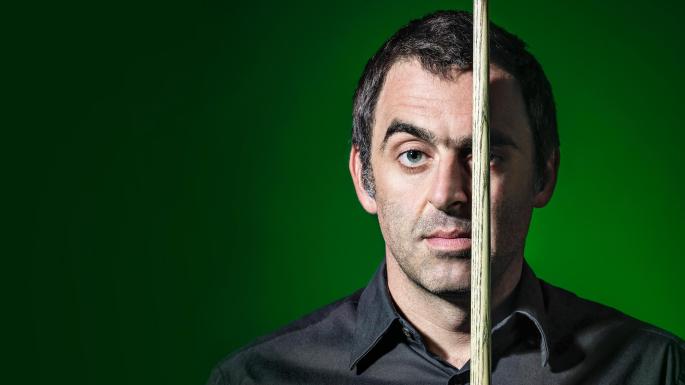
methode2fsundaytimes2fprod2fweb2fbin2ff6d39834-a1bb-11e6-b4bd-ee5a5e72dd22

It’s the World Snooker Championship in April 2016, the biggest tournament in the calendar, but Ronnie O’Sullivan, the greatest snooker player of all time, is in his dressing room, crying. His cue lies on the floor in pieces.

He had just won his first-round match and he’d won it with relative ease. But as soon as it was over, he had stormed out of the Crucible arena without explanation. When the time came for his obligatory post-match interviews, he was a no-show.

“I’ve not spoken about this before,” he says when we meet several months later at the Romford snooker club where he practises, “but I’ve got nothing to hide. I was having a breakdown. At the end of that match, I couldn’t shake hands with that guy. I couldn’t even look at the crowd. I couldn’t face anybody.

“I’d had the worst 18 months I’d had in a long time. Not because of snooker, but through personal circumstances. I was in a very difficult position, all to do with money.”

In February, O’Sullivan tweeted that he’d been conned out of £125,000 by a bankrupt businessman, but that, he says, was just the start of it.

“And it all came to a head at the World Championship. That’s how it is. It’s the biggest tournament you can play and it doesn’t matter who you are, you start to feel the pressure. And I cracked.”

“I got back to my dressing room, smashed my cue and punched a wall. I thought I’d broken my hand. It was my way of saying, ‘I’m out.’ Because I was out. I broke down, crying. I was just so weak. My two friends who were in the dressing room with me said I wasn’t going out to speak to the press.”

O’Sullivan was scared of the repercussions. “That’s the fear that’s put into the game. If you don’t fulfil your obligations, they say, we’re going to make an example of you.” But his friends insisted. Instead, they spirited him out of the Crucible, out of Sheffield and away.

Since bursting onto the professional stage as a precocious 16-year-old, O’Sullivan has always been the man to beat. He is Ronnie the Rocket, a genius at the table, fast like Hurricane Higgins but precise like Stephen Hendry. He is the game’s superstar. Its saviour. Box-office gold.

He has struggled with the expectation that goes with it, though. His life has always been about coping — coping with the pressure of his career and a string of personal traumas. And sometimes he doesn’t cope. Sometimes he teeters on the brink of madness.

To understand why, we must go back to 1992, the year he turned professional and the year his father was found guilty of murder. Ronnie Sr had been his mentor — relentless, like Emmanuel Agassi or Earl Dennison Woods. “If I won something and thought I was the bee’s knees, my dad would say, ‘Forget it, that’s history. It’s over. To be a champion, you need to win the next one.’ ”

Throughout his childhood, Ronnie Sr drove the car while Ronnie Jr ran behind it. Three miles a day, come rain, come more rain. “I hated it,” says O’Sullivan. “I never wanted to do it, but he made me. I think he knew that if I didn’t have that strict discipline instilled in me as a youngster, I could easily have gone off the rails.”

All the same, he says his childhood was a happy one. His parents met at Butlins — his father was a chef, his Sicilian-born mother, Maria, a chalet maid — and Ronnie’s early years were spent in relative poverty on an estate in the East End. But then his father, whom he has described as a cross between Del Boy, Joe Pesci and Ray Winstone, got into adult entertainment. He built up a string of sex shops in Soho and the family business became lucrative. It allowed them to move from Ilford to the plusher part of Chigwell. It also meant there was space for a snooker room at the bottom of the garden, which his father built for him when he was just seven.

“It didn’t mean nothing to me then, but when I think about it now it was quite a colourful childhood,” he says. “Our garage was always filled up with boxes of magazines and videos. I think I sold my first adult film when I was 10. It was just a business.”

When he wasn’t helping out, he was practising under the keen eye of his father. And then, one day, his father was gone, sent down for stabbing Charlie Kray’s driver to death after an argument in a Chelsea nightclub.

“At the time, I thought it was totally crazy,” he says. “An 18-year sentence and it was just an accident. It was a fight between two people. There was no premeditation at all.” Not long after that, his mother also went to prison for tax evasion. O’Sullivan and his eight-year-old sister, Danielle, had lost their stable childhood.

The effect on O’Sullivan was profound. For the next two decades, he searched for a means of escape. First, he took the most obvious route with drugs and alcohol. He would clean up in time for tournaments and relapse as soon as they were over.

When he is in the zone, playing savant-like, he is unbeatable. He has 28 ranking titles to his name, second only to Hendry. Even so, he is the first to admit that his career has been hampered by outside intrusions. “I’ve probably lost a total of seven years from my career just from being all over the shop,” he says. “I was in hot water almost every tournament.”

In 1996, he was found guilty of assault after an official at the Crucible asked his guest to leave the press room. The same year, he upset a Canadian opponent by playing (and winning) left-handed. In 1998, he was stripped of his Irish Masters title after testing positive for cannabis. He almost forfeited a match in 2005 for putting a towel over his head while his opponent was at the table. He’s been sanctioned for walking out of tournaments, playing in his socks and making lewd comments at press conferences during tournaments.

“Look, there’s no smoke without fire,” he says after we’ve run through his rap sheet. “For a long time, I didn’t know how to restrain myself from something that I knew was going to cause controversy. And I didn’t care about the consequences.”

Throughout all of this, he also experimented with Christianity, Islam and Buddhism. In 2003, he had to deny reports that he had become a Muslim. He also joined various support groups — anything with an “Anonymous” at the end. And the search wasn’t entirely fruitless. He found love at Narcotics Anonymous and for a while he was happy. But after eight years and two children, that relationship ended in 2008. After a “sapping and drawn-out” custody battle in which O’Sullivan sought and won greater access to his young son and daughter, he made a big decision. He would escape altogether. He would quit snooker.

“I’ve made my decision,” he told the BBC on the eve of winning the World Championship in 2012. “This might — might — be my last time here.”

For the next year, he returned to the discipline he had hated as a child. He fell in love with running, the anonymity of it, the way it released endorphins. By the end of the year, he was training every other day, winning county-level races. When he wasn’t running, he was volunteering on a smallholding farm in Epping Forest, looking after pigs. “I have been doing about three days a week,” he said at the time. “It has been kind of the complete opposite to what I was going through the last couple of years in snooker. I didn’t want stress.”

Of course, he couldn’t stay away for ever. He returned to the World Championship the following year and won it again with virtually no preparation. The break had done him good — or so it seemed, until that night at the same tournament earlier this year.

Today, it is difficult to imagine O’Sullivan smashing up his dressing room. The 40-year-old is relaxed, happy even. He chats with the candid honesty of a man who has spent a lot of time in therapy, which of course he has. But that day in April, his mindset was altogether more fragile.

After his friends whisked him out of his dressing room, he checked in at the Nightingale Hospital, a private mental-health facility in central London. For the first three days, he refused any drugs that would make him feel drowsy. He had to be back in Sheffield that weekend for his next match.

He slept for three days straight, only to wake on the Thursday still feeling exhausted. He couldn’t talk. He couldn’t summon the energy to leave his room for a cigarette. That was when the doctor put her foot down.

“You’ve got thoughts going round and round,” she said. “We need to slow that down.”

Eventually, O’Sullivan capitulated. He took the anti-anxiety drugs the doctor had been trying to prescribe, and began to feel better. The cycle of negativity was broken. The following day, he was on a train back to Sheffield. On Saturday, he lost a deciding frame to Barry Hawkins. It was the first time in 11 meetings that Hawkins had come out on top. But this time, O’Sullivan made it to the post-match press conference.

What is obvious is that O’Sullivan is not best left to brood, which is a problem because there is plenty of time to brood when you’re playing snooker. He needs to be occupied. He’s tried drugs, drink, running, religion and pigs. For the last year, it has been writing. For O’Sullivan is now a crime writer. Or at least he’s been working closely with a crime writer to produce his first novel.

They say that everyone’s first novel is semi-autobiographical, and Framed, a “gritty whodunnit set in the dog-eat-dog underworld of 1980s Soho”, is no exception. Frankie, the hero, runs a snooker club. When his brother is accused of murder, he sets out to prove his innocence.

“I can’t get away from the fact that my dad was in prison, and that I’ve had my ups and downs,” he says. “So a lot of what’s in the book relates to me. The setting is my setting. I grew up in Essex, but Soho was like a second home. I remember when I was about 10, we went on a school trip up Soho and we were walking past one of those shops with the streamers in the doorway. I put my head in and said, ‘All right, Tony, how you doing?’ ”

“Whenever I was on holidays, my dad would take me with him and he’d drop me off at the Ambassador club on Dean Street. After I’d practised, we’d wander around for a couple of hours. He had several sex shops around Wimpole Street, Walker’s Court, Dean Street and Old Compton Street.”

The novel’s setting is autobiographical, but so is Frankie’s suspicion of authority. It’s telling that the most unpleasant villain of the piece is not the evil crime boss or any of his sadistic henchmen. It’s a weasel of a detective called Snaresby, identifiable by the excess of bad aftershave he wears.

Even before his father went to prison, O’Sullivan had been brought up to be suspicious of the police. “He instilled in me that it was us against them,” he says. “In the early days, they’d raid the shops and try to make life difficult for him. [O’Sullivan Sr was always skirting close to the boundaries of the Obscene Publications Act — when he was ordered to put “modesty stars” on certain photographs, he put them on the model’s knees and elbows.]

“Some people got an easy ride and got left alone, but not him. Why do some people get stung and not others? Who knows why? Then, when he went away, I got dragged along with the idea that it was me and him against the system.”

When his mother also went to prison, his distrust of authority only increased. “I thought, fair do’s with dad, you do the crime, you do the time. But then they took mum, and everyone was saying they wouldn’t because Danielle was only eight, but they did anyway. And that was really hard to take.”

At the age of 17, O’Sullivan and his friends were arrested for abduction. “I didn’t have a clue what they were talking about, but apparently I had kidnapped some woman,” he says. “We were completely innocent, but I spent a night in a police cell. Of course, it made the papers and you had to read right to the end to get to the phrase ‘wrongly accused’. That was when I really became convinced that it was us against the Establishment.”

Soho, where my dad had sex shops, was like a second home. And I can’t get away from the fact that he went to prison

The novel has clearly been therapeutic for O’Sullivan. And that’s the whole key to understanding why snooker’s most gifted player is also famous for being its bad boy. Snooker is all about the pressure and how you handle it. As he puts it: “It’s not an endorphin sport. It’s about controlling your emotions. A thought goes in and you go, ‘Shh!’ Then another. Then another. When you get back on the table, the only reason you pot is because you left your emotions in your seat.”

In a 2007 semi-final against Mark Selby, a notoriously cautious, attritional player, O’Sullivan resorted to counting the minute, raised dots on the handle of a spoon whenever he was off the table. He couldn’t watch his opponent, but he couldn’t look away either. “By letting them know that this guy’s pissing you off, you give off a scent that you’re not up for it,” he says. “So I counted the dots instead. I could have sat there until three in the morning if I had to. Because there were 108 dots and, if I miscounted, I had to go back to the beginning. And if I did count 108 dots, I could still say, ‘Hold on, there might have been 109. I’d better start again.’ ”

If you took the snooker table away, this would be a textbook example of insanity. “It was total madness,” he agrees, laughing. “I know that.”

Six months on from his breakdown in Sheffield, O’Sullivan is still working with the renowned sports psychologist Steve Peters, the man he credits with helping him cope with the pressure of the game. But nothing he has said during our afternoon together suggests he ever enjoys it.

When I ask if he would encourage his nine-year-old son, a third Ronnie, to play, he reels at the idea. Football, yes. Snooker, no way. In fact, he wouldn’t encourage anyone’s children to play.

I’ve probably lost seven years just from being all over the shop. I was in hot water almost every tournament

“Any other sport you like, I tell them. Football. Tennis. Golf. Stay away from this game. Because somewhere down the line you’re going to wake up one day and think, ‘F*** me.’ Stuck in a room on your own, six days a week, five hours a day, not really speaking to anyone. It ain’t very healthy for your development as a person.”

Is there anything he enjoys about snooker? “The one thing I’m happy about in this job is that I can choose the hours I work. I’m my own boss. And I suppose it’s allowed me to travel and get away from where I live. But that’s it.”

In which case, why doesn’t he chuck it all in for good? “Well, I suppose I could,” he says. “Kind of. I could live well within my means. But I’ve still got two young children, still got a girlfriend [he became engaged to the actress Laila Rouass in 2013], still got people who want to be looked after.”

And, of course, he still likes to win the game it sounds as if he hates. “Yeah, it’s a complete paradox. If you look at the practice and you look at the travelling and you look at the times you’re just sitting in a hotel smoking when you don’t want to be smoking, thinking, ‘Oh, I could be home now, in the forest, doing a run’ — but you’re in China, with jet lag, walking round like a zombie for six days, you get pissed off and you think, ‘What am I doing?’

“But then you have those moments when it clicks. You get on the table and it goes and you just think, ‘I am flying. This is what I do.’ ”
Ronnie’s latest blog on Eurosport is out

Ronnie was talking to Desmond Kane again today

The blog post contains videos and images not included here, so make sure you check them

Ronnie O’Sullivan exclusive: ‘This season has been a nightmare, but I’m good enough to end slump’

In writing his first blog of the season, Ronnie O’Sullivan explains to Eurosport’s Desmond Kane why he has struggled for peak form.

Despite losing a thrilling European Masters final 9-8 to Judd Trump earlier this month, the five-times world champion is not happy with his game after losing to Michael Holt in the last 16 of the International Championship and Shanghai Masters and the last 32 of the English Open to Chris Wakelin.

Here Ronnie discusses honestly the ongoing challenges he faces to remain competitive, and why he may have to accept losing to become a winner again.

‘I must improve to challenge for trophies’

It’s not been a great start to the season.

In fact, I’d say it’s been a bit of a nightmare.

I’ve feel like I’ve only played two or three good matches out of 15 – that works out at one good match in five which is not really going to be enough to win events these days.

To be fair, since winning the Welsh Open earlier this year, I haven’t gone beyond the last 16 of any event apart from losing to Judd in the European Masters final in Bucharest.

I’m not sure I want the pressure of it all. I’ve enjoyed branching out into other areas away from the table.

It is something I never wanted to do, but I felt I had no choice at my age and stage of my career .

Snooker is very hard these days. There are loads of events, and lots of travelling.

Unless you win tournaments regularly, there are not great rewards for the top players. But the demands are no less when you have to travel to Barnsley, Wigan and Preston to play qualifying matches.

It is not something I relish, but I accept it is part of the way the game has gone.

I admit it was hard sitting out the sport when I still felt like I had something to offer. That’s why I came back to playing after some time out. But after coming back, the idea of playing was better than the reality.

What I really missed was being at the events and getting the buzz from playing: seeing the boys, the TV people and the tournament officials.

They are like a tapestry of my life. That’s why I’ve enjoyed the punditry work so much, and working at the English Open in Manchester earlier this month.

In fact, I got as much enjoyment out of doing the punditry as I do playing sometimes – that’s great news as I look to the future.

‘I’m committed to snooker, but not only as a player’

I’ll still play snooker just in case everything else goes belly up. That’s the one thing I can do forever without having a boss.

But for now, it will have to fit in around all the other things I do. I need to make snooker become part of what I do, instead of all I do.

The fun bit is seeing if I can nick a competition now and again. I nearly managed it in Romania, but came up short.

I suppose the fans that follow me will have to get their heads around it, just like I’m trying to. I still know that on my game I’m capable of winning events. That I have no doubt about.

But finding the time to practice and play in most of the events at the highest level is proving very difficult.

You don’t always want to go to the club and play for four or five hours, the drive is not the same as you get older.

At the moment, the tour seems like it’s there to cater for 128 players which at my stage of my career makes it a mammoth challenge.

Playing seven matches is hard enough, but to go to Preston and Barnsley to qualify as well just makes it too gruelling.

It’s fine for the younger guys starting out, but it’s not really suitable for me. It wasn’t suitable for me five years ago so it’s only going to get worse as I get older.

But I also have to accept that my best days are probably behind me. I don’t think they are going to get any better than the previous five years I had.

I suppose what I’m trying to do is manage everyone’s expectations of me from this moment on.

Don’t get me wrong, I know things can be fickle. One minute you’re flying, the next you are not.

I know things can turn around quickly. No one wants that more than me.

Laila Rouass about living with Ronnie and more …

In this lovely interview , reported by various media this morning, Laila Rouass speaks openly about what it is like to live with Ronnie

Laila Rouass on life with Ronnie O’Sullivan – he’s very open, it’s good that he talks about his depression

The former Strictly and Footballers Wives star met the snooker legend in 2012 when she was house-hunting and they’ve been engaged since 2013

snooker-player-ronnie-osullivan-poses-with-his-partner-laila-rouass

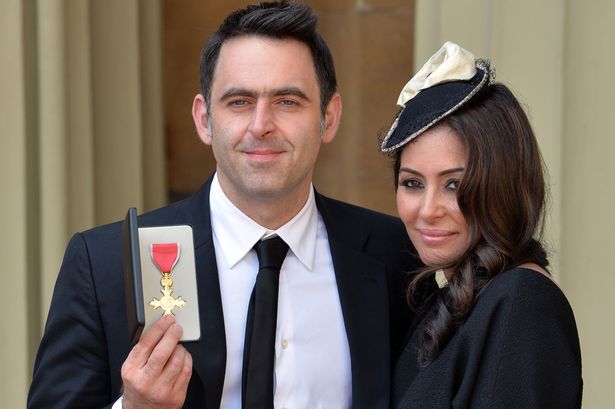
Snooker player Ronnie O’Sullivan collects his OBE with Laila Rouass

When Laila Rouass went house-hunting a few years ago, she found herself in the frame for a totally different acquisition.

The actress never did sink the deal on the property in Chigwell, Essex, but she did end up engaged to one of the most controversial, colourful and talented snooker players this country has ever produced – Ronnie O’Sullivan .

She says: “It’s a bit bizarre, but you never know how you’re going to meet someone. It just happened so naturally.

“I can’t pinpoint exactly what it was about him, but he’s just a very generous, open person. That’s appealing to me.”

After finding fame on ITV’s Footballers’ Wives, it seems a little too much like real-life type-casting that she is set to marry one of Britain’s greatest sports stars.

The couple, who live with Laila’s ­nine-year-old daughter Inez, have been engaged since 2013 and are in no hurry to tie the knot.

The former Strictly Come Dancing star laughs: “Oh no, we have absolutely no wedding plans at the moment. I’m not in a rush to walk down the aisle.”

And with a history of alcohol and drug problems, and a struggle with depression, Laila’s well aware five-times world champ Ronnie comes with a lot of baggage. The multi-millionaire even took a sabbatical from snooker for a year in 2012, spending much of his time working on a pig farm.

But with Laila’s support, Ronnie, 40, bounced back and is competing in – and winning – tournaments again.

He’s previously stated his depression was intrinsically linked to the game, saying: “I think I suffered a depression to do with snooker and I just couldn’t handle it. I could go out and play, but take me out of there and I couldn’t do life.”

Laila, 43, says: “He calls it his snooker depression. But Ronnie is a very strong person. Everyone’s fragile, but he vocalises it. When somebody openly talks about having depression, it’s a very brave thing to do.

“It’s easy to support somebody when you know what they’re going through. You know what you should and shouldn’t say – it’s about creating that kind of security and safety-net around them.”

She adds: “He’s under an immense amount of pressure and we have to take that on board. There are probably a lot of people in similar positions who suffer from depression, but who don’t talk about it.”

Exercise is a huge stress-relief for Ronnie and running has been a big help.

Laila says: “Ronnie is really into his fitness. For him, running is almost like meditation. Playing a match is a long time to focus, so running helps with that.”

A high point for the couple came in May this year when Ronnie collected his OBE from Prince Charles at Buckingham Palace, accompanied by Laila and mum Maria.

“He said it was one of the best days of his life,” says Laila. “It really was fantastic. He was so shocked he got it, he never thought about receiving anything like that. We were really proud of him.”

Laila embraces being a step-mum to Ronnie’s children, Ronnie Jnr, eight, and Lily, seven, from his previous relationship with Jo Langley.

He also has another child, Taylor-Ann, from a two-year relationship with Sally Magnus, but admitted in a 2013 book he’s “never really been a part of Taylor’s life”.

Laila says: “His children are lovely and are only round the corner, so we see them quite often. Ronnie is away a lot, but when he does have his kids, they see Inez. And then I might be away, so he has to look after Inez. We support each other.”

Born in Tower Hamlets, East London, Laila was one of seven children and raised a Muslim, but says: “I’m wouldn’t say I am practising Muslim – I don’t go to the mosque or anything, but it’s part of my identity. We don’t really talk about religion at home. Ronnie isn’t into it either.”

Laila split with Inez’s father, business tycoon Nasir Khan, shortly after she was born in 2007. He was jailed for nine years in 2011 after being convicted of a £250million VAT fraud. From then on, Laila adapted to being a single mum, but she missed the support of a partner.

She says: “It was difficult, but I’m one of those people who is very practical and I get on with it and do it.

“My grandmother was a single parent, she was very strong, my mother was very strong. I come from a big family and I was never completely on my own.

“But you’ve got other aspects like financial and emotional support that you’re missing.”

Laila dated Scottish chef James Petrie for just over a year, but when they split in 2011, she said she was taking a break from dating and wanted to concentrate on her young daughter.

Then she met Ronnie unexpectedly in 2012 and knew he was different because of the bond that grew between him and Inez. “He’s a good male role model for Inez, She sees him in that way, but they’re also good friends. It’s nice they can have a laugh. It’s important they get on.”

But not everything is perfect in the Rouass-O’Sullivan household – when Laila bought the family a pet cat, the snooker champ wasn’t happy.

She says: “We used to have a cat and my daughter begged me for a pet. But Ronnie was like, ‘Oh it stinks, I’m not going to eat in the house.’

“He became like a kid, he refused to even have a cup of tea. I would ask him if he wanted tea, but he’d say ‘No, no, there’s hair everywhere’.

“So I had to give the cat away. But she went to a fantastic home.” It’s hard work balancing a successful acting career which, after Footballers’ Wives has taken in Primeval, Spooks and Holby City, with being a mum, but Laila is grateful she can “dip in and out” of working and being at home.

She says: “I did have to stop Holby City after two years. It was very long days filming and Inez was just starting school, so I really wanted to be there for her.

“I thought, ‘I’ve got to take a few years out and be with her.’ It’s easier now she’s older, but it’s always been about her.”

It wasn’t until her mid-20s that Laila discovered she had a talent for acting, but thankfully her late start never put her at a disadvantage.

She’s recently played the deputy Prime Minister in US drama The Royals, opposite Elizabeth Hurley’s Queen and Joan Collins as the Queen Mother, joking, “We’re the three b*tches from hell”.

This year, she starred in Ruth Jones’s Welsh sitcom Stella and in 2009 she waltzed her way to the quarter final in Strictly. Her latest role is as a pushy mother in Disney’s The Lodge, which has been hailed as the British High School Musical.

It follows the story of 15-year-old Skye, played by Sophie Simnett, as she moves from the city to her childhood country lodge following the death of her mother.

Laila says: “I play Olivia, who is ­ruthless and ambitious. She’s a beauty-pageant mum so living through her daughter Danielle. She’s a fun character to play, but probably not so good if you know someone like that.

“It was good fun doing a family programme. My daughter loves watching me on Strictly, so it was great to do something that will appeal to her age group. I’ve become the coolest mum in the school.”

Enjoy! 


Ronnie’s interview ahead of the Shanghai Masters 2016

Ahead of the tournament, the Shanghai Daily has published this interview

O’Sullivan eyes fresh start at Masters

By Ma Yue | September 19, 2016, Monday |  PRINT EDITION

相册

RONNIE “The Rocket” O’Sullivan will be looking for a fresh start of the season at the 2016 Shanghai Masters, which starts at Shanghai Indoor Stadium today.

The Englishman has made the Shanghai tournament his first ranking competition of the new season.

“I want to play as many tournaments as possible this year, win the world championship, and be the best player of the world,” the 40-year-old said yesterday.

O’Sullivan won the Shanghai tournament back in 2008. He missed last year’s event, but decided not to miss the 10th edition of the tournament this year.

“It’s a great city, great tournament, great fans, good food… It’s a good sport to watch in China, with its talented players like Ding Junhui, Liang Wenbo, as well as a lot of young talents coming through… Soon China might have 4-5 players in the world top 20,” he predicted

O’Sullivan has been drawn into the same quarter as local favorite Ding. Ding, who just won the 6 Red Snooker World Championship in Thailand, takes on Scott Donaldson in the first round today. Tomorrow, O’Sullivan will start his campaign against the winner of a wildcard clash between Liang and Hu Hao.

No player has won the Shanghai Masters twice yet — it has had nine different champions in the past decade.

“Hope I can change that,” said O’Sullivan. “I haven’t really played since the world championships in April. Hope I get a good start here.”

The week-long Shanghai Masters brings together some of the world’s top players, including John Higgins, Mark Selby, Stuart Bingham, Neil Robertson, Judd Trump, and Shaun Murphy. They will be fighting for a total prize money of 465,200 pounds (US$605,000), with the winner pocketing 85,000 pounds.

Last year, Kyren Wilson was the shock winner when he edged fellow Englishman Trump 10-9 in a nail-biting final.