The new book by Ronnie and Rhiannon Lambert , “Top of your Game” is due to be published on May 16, 2019.
It didn’t happen for Ronnie in Sheffield, but 2018/19 still remains one of his most successful seasons, one during which he broke several records, and, maybe more importantly, one he enjoyed.
Ronnie O’Sullivan on the food regime that transformed his physical — and mental — health
He may have had his professional ups and downs, but armed with a new attitude to eating, the snooker ace’s life is in balance. He tells Lisa Markwell what he has learnt, and why health is always better than wealth
PORTRAIT BY ANDREW HAYES-WATKINS
The Sunday Times,
Ronnie O’Sullivan is known as much for his mercurial temperament as for his stellar success as a snooker player. Recently, within a month, he was named world No 1 and crashed out of the World Snooker Championships in the first round, beaten by an amateur. It was one of the sport’s biggest upsets, but O’Sullivan seemed to take it in his stride.
Over the years, he has battled addictions and continues to suffer from crippling insomnia, but there’s one area in which he’s found a happy equilibrium — food — and he credits it with changing his entire approach to life.
“The penny’s dropped,” he says. “I used to eat two steaks, all the potatoes, my dessert and everyone else’s too. Now, I’ll still have dessert, but just one or two mouthfuls. It’s about moderation.” Perhaps inevitably, he’s written a food book about the changes to his diet that have transformed his physical — and mental — health.
What makes the book so interesting is that it’s not a get-fit-quick diet book, but a thought-provoking read, with half dedicated to his acceptance of his addictions, what he was doing wrong and the lessons he’s learnt.
For the rest of us, these lessons can be translated into a steady, manageable lifestyle that leads, if not to world domination, then certainly to feeling and looking better. As he writes in the introduction, “moderation, healthy living and self-care aren’t necessarily things that you would automatically associate with me. I’ve been very honest about my addictive personality in the past; depending on the year and what else was going on in my life, my addictions have included drink, drugs, food, Prozac and running. It’s taken me a while, but I can now accept that my addictive personality is just the way I am. It’s my nature and I’m finally OK with that.”
When one of his obsessive pursuits — running — reached a professional level, he cut out all carbs, saying, “I thought this was the way forward.” It wasn’t easy, being the son of a Sicilian mother and spending half his life travelling and working late into the night, filling up on whatever food he could grab. He laughs ruefully. “I’ve always been a big eater.” But with typical focus, he cut out carbohydrates altogether — and replaced them with vast amounts of avocados.
He couldn’t understand why he seemed so fit and yet was unable to concentrate during snooker matches. “A match can last seven hours and I need to try and stay alert during that time. Snooker is an endurance sport.”
O’Sullivan, 43, has battled insomnia for some time, but this was different. “I’d never felt so bad. I ended up at the doctors having blood tests because I thought there’s got to be something wrong with me. I was just exhausted and I had to go and do TV interviews. Honestly, it was embarrassing, because I felt people could see that I was not really concentrating on what they were saying. They thought maybe I was being a bit rude or a bit distant.”
It was when he was introduced to the nutritionist Rhiannon Lambert that he was told in no uncertain terms what needed to change. “I told her what I was doing and she said, ‘That explains why you were feeling like that. Carbs feed the brain.’” He followed her nutritional advice. “Since then,” he says, “I’ve never had a day where I’ve not felt how I’m supposed to feel.”
“It was a lightbulb moment,” he says now, comparing it to the time, several years earlier, when he started working with the psychiatrist Steve Peters. As a result of eating a regular, balanced diet, he has lost 1½ stone, has more energy and is generally playing brilliantly. Was it important to have regained that No 1 status? “Not really. Not that I’m not feeling good, I’m just not driven by it. When everyone was going, ‘You’re going to be No 1’, for a nanosecond I kind of thought, ‘Yeah, it would be nice,’ but then I realised, that’s not why I play the game.
“The thing I love, more important than snooker or anything, is my health and fitness,” he says emphatically. In a flash of that addictive personality, he says: “I still run three, four, five miles a day, but that’s what I call not running. That’s just fun.”
He talks about the “rat race” of competing with trademark candour. O’Sullivan has managed to break free of the exhausting routine of comparing himself to other players. Instead, he likens himself to a racehorse. “You don’t race it every day. You don’t overtrain the horse. You want it on the start line raring to go. You don’t want to leave its best form on the gallops. I used to do that. I’d practise six, seven hours a day. I was overplaying, just playing out of guilt, because you think, ‘If I do it more and more, I deserve to win — everyone else is doing more’.
“I don’t look at anybody else now. I go by how I feel, and I’m not worried about results so much, just about being ready, having longevity and feeling as good as I can for as long as I can.”
He shows me his diary on his phone, with notes on all of his performances, annotated with emojis. “I play 45 matches a season, maximum. In Shanghai, I played shit, but I felt good in myself. Smiley face. Smiley face. Smiley face. Smiley face. Smiley face… I’m not playing good in every tournament, but the smiley face measures what I felt. Was I happy, was my whole life balanced?
“You get one life, one body,” he continues. “It’s the most important thing we own, and I’d like to get the best out of it because I abused it for quite a while. I could have been kinder to myself maybe, done things differently. That doesn’t mean I have to carry on doing that.”
He lives in Chigwell, Essex, and has three children — a grown-up daughter (who has just had a child of her own) and a younger son and daughter, although he doesn’t live with them. He calls himself “a bit of a gypsy” and is never happier than on his boat. He proudly shows me pictures of a very smart houseboat, with a full kitchen for his regular cooking sessions.
Perhaps unsurprisingly for a man who skipped a season of competitive snooker to work on a farm, he’s fascinated by the idea of a “gap year” to train as a chef. “I was thinking about doing something like that,” he says. “Is it expensive? I’d have to move closer to the school. I’m definitely thinking about it.” For now, he enjoys planning each day’s meals and making packed lunches for when he is on the road.
Judging by the enthusiasm with which he talks about the recipes in the book, and the upbeat, natural Instagram stories and short videos in which he rustles up healthy dinners, this is no “famous person attaches their name to a ghost-written money-spinner”. He is taking this, like everything else in life, seriously.
“This book ain’t for everyone. It’s for someone that wants to make a shift, wants to have a go, wants to feel good about themselves. If they do, then this is something I’ve tried and tested. It’s not a diet book. It’s just about getting your portion size down and taking control.”
Meanwhile, he continues competing. After all, he’s been playing tournaments for 30 years. “I have plans. If one doesn’t work out, then I’ve got another one, and if that one doesn’t work out, I’ve got another. I’d rather be in control of my own destiny. I will probably still be playing in my mid-fifties, maybe sixties, as long as I’m fit and healthy.
“I think the key — if you can create some space and time for yourself — is to listen to the body. That’s all I do. That’s why I use the smiley faces, because sometimes you can forget how you felt and I go, ‘That smiley face tells me that I was on the right system for me. It worked for me.’” And with that he moves on to the next part of his day, armed with plastic boxes filled with snacks and meals.
RONNIE’S DAY ON A PLATE
Before Two eggs and an avocado; chocolate bar; mezze including hummus, falafel, rice, bread and chicken; crisps; two portions of curry; chocolate cake
After Porridge with berries and flaxseed; fruit and yoghurt; chicken, rice and salad; hummus, rye crispbreads and cottage cheese; fish, sweet potato and vegetables; fruit
MINDFUL EATING
Acknowledge colours, flavours, textures and smells
Chew food slowly and put down your knife and fork between bites to help slow down your eating
Lose the TV or mobile phone at mealtimes
Learn skills to cope with anxiety and guilt around food
Set realistic goals
Avoid eating directly from a packet, and always pre-portion food
Eat something hot within the first hour of waking
Avoid going more than 3-4 hours without eating anything
PORTION SIZES PER MEAL
1 outstretched palm of protein — for example, chicken, fish or tofu
1 handful of carbohydrates — oats, rice or starchy fruit and vegetables
2 handfuls of non-starchy vegetables — broccoli, spinach or peppers
1 thumb of healthy fats — olive oil, butter, coconut oil or nut butter
RONNIE’S GAME CHANGERS
Consistency is key, so stick to your plan
Premix your favourite spice blends in big batches to save time — you can then label and freeze them, either in big portions or in ice cube trays
Batch cook your main meals with extra portions and freeze some of them for another time
Write a weekly shopping list, planning your meals and snacks
Keep a food diary. If I eat too many biscuits, I make a note and put a sad face next to it, because that’s how I feel afterwards
GOOD SNACKS
1 small pot of Greek yoghurt
Almonds and a piece of fruit
125g edamame beans
1 apple and 30g nut butter
2 sausages (chicken or vegetarian)
GOOD CARBS
Wholegrain bread
Brown rice
Buckwheat
Quinoa
Starchy vegetables
Fruit
Legumes
Oats
TOP OF YOUR GAME by Ronnie O’Sullivan and Rhiannon Lambert is published on May 16 (Lagom £15)
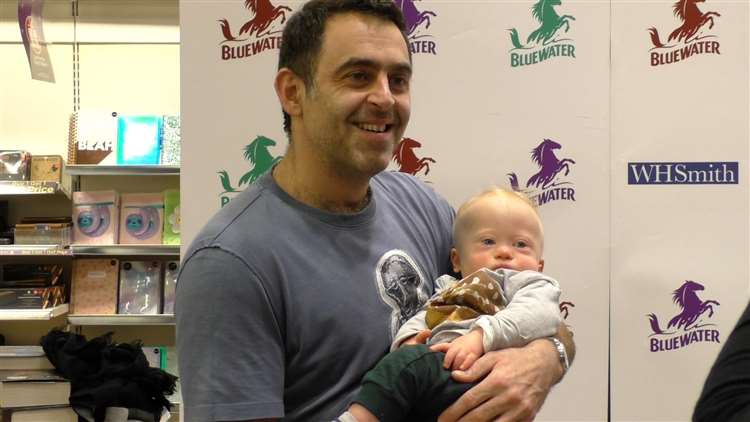
Five-time snooker world champion Ronnie O’Sullivan delighted fans young and old when he popped into Bluewater.
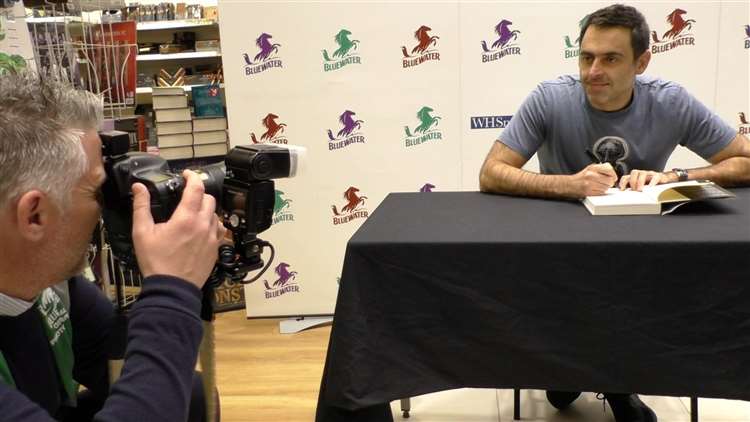
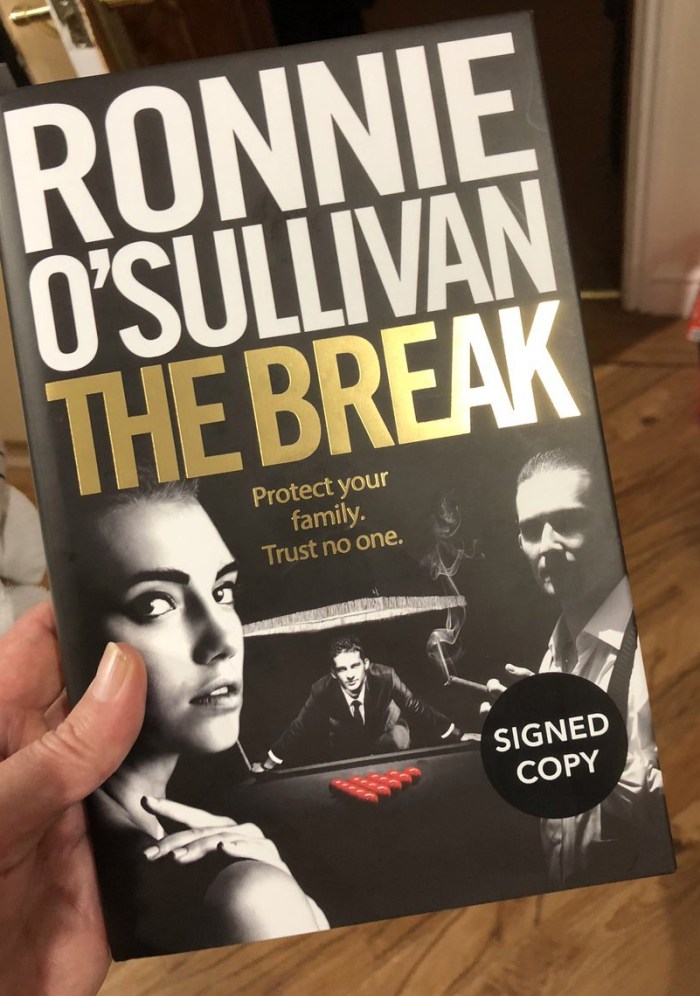
The top sportsman was at the WHSmith store signing copies of his newest book, Soho Nights thriller, The Break.
Pensioner Sheila Ulph who is from Chatham, is probably Kent’s oldest Ronnie fan.
Mrs Ulph, 91, got a signed card from him because by time she got there yesterday, all his books had sold out.
She was delighted as her daughters had not told her they were taking her to meet him.
Mrs Ulph said: “As far back as I can remember watching snooker with my husband (I have been a fan).
“I didn’t know I was going to meet him – it was a total surprise from my two daughters.
Sheila with the card signed by the snooker champion
“My grandson met him before and got his book but I was too late to get the book, but we will buy one.”
However, she said he would treasure the signed Christmas card she had received from him.
Her daughters say their mum has also turned down days out with them and opted to stay in to watch Ronnie play in matches and finals.
“She also put bets on him winning whenever he played.
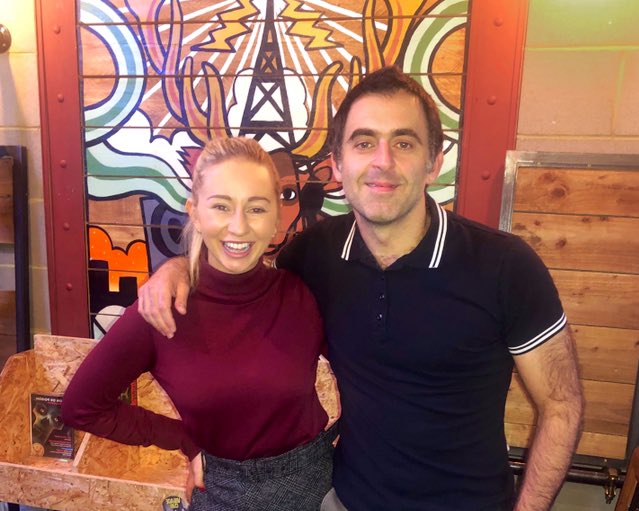
Ronnie O’Sullivan was at Bluewater meeting fans and signing his bookRonnie signed a Christmas card for Shelia Ronnie O’Sullivan also met a young fan at the book signing
Mrs Ulph added:”Every time I saw him whether he won or lost, it was good.
“Just watching him is enough for me, he’s absolutely superb.”
Hundreds of people went along to meet the sportsman turned author including a young baby which he held and posted for photos with.
His book explores the gangland world of ’90s Soho.
Set in 1997, when Cool Britannia’s in full swing and Oasis and Blur are top of the pops and it feels like the whole country’s sorted out for E’s and wizz.
But it’s not just UK that’s on a high, life’s looking up for Frankie James too – the main character in the book. Frankie’s paid off his debts to London’s fierce gang lord, Tommy Riley.
His Soho open snooker tournament is about to kick off at his club.
Ronnie O’Sullivan was at Bluewater meeting fans and signing his book
The future looks bright, but then Frankie finds himself being blackmailed by a face from his past.
They want him to steal something worth millions and it is enough to get him killed or banged up for life.
Frankie’s going to need every ounce of luck and guile that he’s got if he’s going to pull off the heist of the century and get out of this in one piece.
The Break is the third, fast-paced Soho Nights thriller, written by O’Sullivan.
Since turning professional in 1992, he has clocked up number of awards and trophies, including the UK Championship, the China Open, the Regal Championships, the Benson and Hedges Masters and the British Open.
In January 2000 O’Sullivan won the Nations Cup for England, boasting the best record of any player, 13 wins from 15 frames played.
In 2016 he turned his hand to fiction, publishing his debut novel Framed.
The last part of the article is just a cut and paste from the “trailer” on Amazon and what they chose to “highlight” regarding Ronnie’s record just baffles me … but there you have it. Whoever wrote this trailer probably isn’t a snooker fan.
The Scottish Open 2018 starts today, and maybe not surprisingly, Ronnie has withdrawn from it. Surely winning the UK Championship yesterday has taken a lot out of him and he deserves a break. His next event will probably be the Masters in January.
Meanwhile, this podcast by Rhiannon Lambert and Ronnie is worth a listen, especially with the end-of-year celebrations, and over-eating coming soon!
Regarding the sports itself, it was announced in the media last week that a ban will be enforced on adds for gambling and betting on TV during sports events. There were many articles in the press about it, and this is one of them, by the Guardian.
UK betting firms back live sports advertising ban
Online gambling firms such as Bet365, William Hill and Ladbrokes agree ban amid fears of impact on children
Online gambling companies have agreed in principle to a voluntary “whistle-to-whistle” ban on advertising during live sports, in an effort to address concerns about their impact on children.
Companies such as Bet365, William Hill and Ladbrokes would agree not to advertise during live sports, including after 9pm if the event started before the watershed.
While the proposals have yet to be approved, they are likely to be rubber-stamped at a meeting of the five major gambling industry associations next week, with a view to implementing the ban within six months.
A senior gambling industry figure said he would be “surprised and disappointed” if the measures were not agreed and said that while not every online betting firm would support them, all were likely to comply.
“It would be a very brave company that would stick its head above the parapet in isolation,” he said.
The whistle-to-whistle ban, which excludes horse racing, would involve the industry falling into line with Labour party proposals.
The advertising proposals, first reported by the BBC, have been put forward by the Remote Gambling Association (RGA), which represents online betting firms.
Labour’s deputy leader, Tom Watson, said: “I’m delighted that gambling operators have adopted Labour’s proposal of a whistle-to-whistle ban on gambling advertising during live sport.
“With over 430,000 problem gamblers in the country, many of them children, the number of adverts during live sports had clearly reached crisis levels.
“There was clear public support for these restrictions and I’m glad that for once the industry, led by [the RGA], has taken its responsibilities seriously and listened.”
Several chief executives in the gambling industry, including the bosses of William Hill and Paddy Power Betfair, have said they would support greater restrictions on advertising to protect children.
Concern about the normalisation of gambling has risen due to the sheer volume of ads during televised sport.
Shares in gambling companies fell on reports of a plan that would restrict their ability to reach TV viewers, while broadcasters are also likely to take a significant hit on lost advertising revenue.
One senior executive at a media agency told the Guardian that gambling ads were worth £200m to broadcasters last year, with the majority going to Sky and, to a lesser extent, ITV.
Online gambling companies are thought to have learned a lesson from the resistance shown by the Association of British Bookmakers, which fought tooth and nail against the cut in maximum stakes on fixed-odds betting terminals.
Their campaign was ultimately unsuccessful and caused considerable damage to the industry’s reputation over efforts to prevent curbs on machines that the government branded a “social blight”.
RGA chief executive Clive Hawkswood is thought to be determined to get the measure approved by the gambling industry before he steps down in January.
It requires agreement from the National Casino Forum, Association of British Bookmakers, Bingo Association and the amusement arcade body Bacta, although their blessing is likely to be a formality as the online industry is by far the biggest TV advertiser.
Matt Zarb-Cousin, spokesman for campaign group Fairer Gambling, said: “This is long overdue but to be truly effective it should have also included bans on shirt and league sponsorship and pitch-side rolling displays.”
This is indeed good news as far as I’m concerned, and it’s not just about children either. But for snooker, a sport that is relying so much on the gambling industry, at least outside China, this might be only the start of a massive issue, very similar to what happened with the tobacco ban. If the bookies see their TV adds cut off, they will be less likely to sponsor live sporting events because the whole point for them is to expose their “brand” and promote their “products”. This was coming, and it baffled me how much in denial so many fans were when I raised the point earlier. I very really hope that WS will act wisely and diversify their sponsoring sources. And it might not be that easy because the strong association with the gambling business has created an image already that many other businesses don’t want to be associated with, especially in mainland Europe.
Speaking of mainland Europe, Snookerstars have announced on Facebook that the Paul Hunter Classic 2019 will take place, but as an invitational event for 16 players only. I’m not sure at this stage what the status of the event will be, nor if it will still be a pro-am. My guess is that no amateurs will be involved in the main competition. This is both a good news and a bad news. Good because I really feared that he would disappear entirely, bad because this was the best pro-am you could play in, or watch, and it has been ruined. Making it a full ranking event, without the financial backing to attract top players has killed it. And getting financial backing from sponsors in mainland Europe is extremely difficult (see above!)
The Break explodes into the gangland world of 90s Soho, by snooker world champion and national superstar, Ronnie O’Sullivan.
It’s 1997 and Cool Britannia’s in full swing. Oasis and Blur are top of the pops and it feels like the whole country’s sorted out for E’s and wizz.
But it’s not just UK plc that’s on a high. Life’s looking up for Frankie James too. He’s paid off his debts to London’s fiercest gang lord, Tommy Riley. His Soho Open snooker tournament is about to kick off at his club. The future looks bright.
But then Frankie finds himself being blackmailed by a face from his past. They want him to steal something worth millions. It’s enough to get him killed. Or banged up for life if he says no.
Frankie’s going to need every ounce of luck and guile that he’s got if he’s going to pull off the heist of the century and get out of this in one piece.
The Break is the third, fast-paced Soho Nights thriller, by snooker champion Ronnie O’Sullivan.
I just finished reading it and here is my attempt at a review.
I quite liked the book, better in fact than “Double Kiss”. One reason is that the action starts right from page one, which is good. The plot is rather straightforward – not too many ramifications – but there are a few funny original ideas and characters along the way. I won’t say more, not wanting to spoil your read … The book will not get the Nobel prize of literature, but it’s fast paced, entertaining and the suspense – how the hell will Frankie get out of this mess? – sustained to the very end. Just what you want on holidays or for a chill out couple of evenings. The plot again would work well for an action film.
The psychological similarities between Frankie and Ronnie are once again obvious. The questions opened in the previous two previous books though aren’t answered, which probably means that there will be at least one more book to come. We still don’t know if/how Frankie’s father has been framed, and we still don’t know what happened to his mother.
Ronnie O’Sullivan will be at WHSmith in Bluewater next month.He will be signing copies of his newest Soho Nights thriller, The Break on Tuesday, December 18, from noon.
I just finished reading “Simply the Best” by Clive Everton, so here is my review for what it’s worth. Before I do this though, I want to point at Clive’s introduction and his acknowledgement that Ronnie – politely – declined to co-operate to this book. Ronnie indeed hasn’t particularly friendly feelings towards Clive mainly because he feels that Clive’s reading of and writing about some of his own comments and behaviours aren’t a correct reflection of what he actually felt and meant. This is something I have heard from Ronnie himself.
Clive goes through Ronnie’s life and career, nearly year by year, and every significant match Ronnie played is documented by comments made at the time, either by Ronnie himself, or his opponent, and sometimes by others involved like officials or witnesses. As such this book is an invaluable source of documentation as Clive certainly unearthed excerpts of the interviews and press conferences recorded “live” after matches, be it wins and defeats. It doesn’t always make for a very easy read such is the wealth of information offered to the reader. But it does take us to the rollercoaster of emotions and mood swings that paved Ronnie’s career, and it highlights how much working with Steve Peters has changed his outlook on his career and on himself.
Clive is firmly convinced that Ronnie Senior’s imprisonment had a profound and durable impact both on Ronnie’s career, psyche and on his life away from snooker. There is certainly a lot of truth in this and, if anything, this was confirmed by Ronnie himself in his “Sporting Live Story”. However, I believe that there is more than just that. I have known Ronnie for more than ten years now, and during the 2010 to 2013 period in particular he opened up to me about how much his “divorce” from Jo Langley had affected him, how lonely and lost he felt, and how he was prepared to do anything to make sure that he would not be estranged from his two youngest children as he had been from his first daughter. Also, when his father was finally released Ronnie had high expectations. Of course he didn’t think that all would be like it was 18 years earlier. He was an adult with children himself, not a teenager. But he thought that they somehow would be a family again. When his parents split, shortly after they were reunited, it hurt him despite his understanding that in 18 years they had inevitably become different persons and grown apart. To me, Clive doesn’t give those events enough importance in his analysis of Ronnie’s mindset at the time.
Also, it’s clear than Clive is a big fan of Barry Hearn. There is no doubt that Barry Hearn has done a lot of good and that snooker is now in better shape than it was, although, to rely mainly on one line of business for sponsoring – the gambling industry – is a dangerous thing to do and probably will backfire at a point. However some of the criticisms Ronnie expressed over the years were/are not unfounded. Players are the game’s biggest asset, and it’s the top players who attract the audience. They deserve to feel valued and respected. In his book “On the Road and Off the Table With Snooker’s Greatest”, Jason Francis tells us what the reaction was when Ronnie had a breakdown at the Crucible in 2016: “He will be fined”. Would it have been too much to ask if he was alright? And, in the October issue of Snooker Scene, Clive covers the spat Ronnie had about the Crawley venue at lengths, essentially taking side with WS. But, David Hendon, who, contrary to Clive, was on the site, is giving a very different account, basically backing Ronnie’s claims. Ronnie isn’t the most stable person, he’s bipolar to start with, and many things he says should be taken with a pinch of salt even if he genuinely means them on the moment. But that doesn’t mean there isn’t truth in what he says – in fact beyond the exaggerations and sometimes insults, there usually is truth in it – and I feel that Clive’s perception is biased at times.
It certainly is an interesting reading, and one every snooker fan should have in their library.
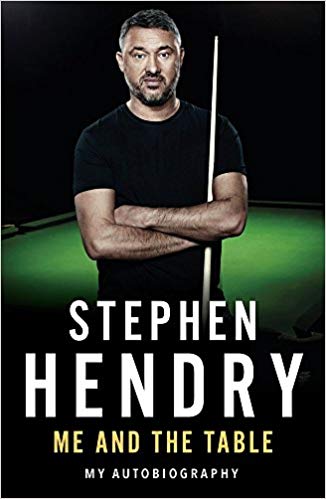
In a couple of hours the Seniors UK Championship 2018 will start, and once again, Stephen Hendry will pick up his cue and try to win. I thought that this is a good time to share my thoughts about his biography “Me and the table”
The first thing I’ll say about Stephen Hendry’s biography is what it is not: you won’t find any detailed analysis of any match played by the great man, neither will you find much about the most significant shots he played. If this is what you are after, this book isn’t for you.
What this book IS though, is a recollection of Stephen Hendry’s psychological and emotional journey from the carefree debuts on the small table he got as a Christmas present, to winning everything, to not winning anything and, eventually to retiring, and going to promote and play 8-balls Chinese Pool in China. Stephen Hendry takes us with him through the kaleidoscope of his emotions: excitement, hope, realisation of his own talent, reaching his goals, the years of invincibility, the first doubts, the denial, the pain, the depression, and finally a kind of acceptance. It’s quite engrossing and certainly portrays a man very different from the “Iceman” image he carried around for most of his career. Reading this book you won’t learn much new about his matches, but you will certainly come to know and understand the human person behind the cue much better.
Stephen Hendry also opens up about some aspects of his private life, and his relationship with his manager and some of his fellow players.
The seven-times world champion on his duels with Davis, Higgins, White and O’Sullivan and how his famed mental strength disintegrated leaving him no choice but to quit
Stephen Hendry has not lost his competitive streak. ‘Steve Davis let it go years ago but it still hurts me, watching people win at the Crucible.’ Photograph: Tom Jenkins/Guardian
“It was a mixture of embarrassment, anger, frustration, sadness, everything,” Stephen Hendry says as he remembers how his dominance of snooker unravelled into, in his mind, a shambling wreck of a game. When the end came, in the quarter-finals of the 2012 world championships, Hendry was so besieged by psychological demons “there was nothing positive left”.
Hendry’s favourite sportsmen are Tiger Woods, Michael Schumacher, Nick Faldo and AP McCoy and he was once as imperious as they had been. He holds the record for the most world titles, with all seven being won in the 1990s, and he was world No 1 for eight successive seasons. But the great champions feel it most when vulnerability takes over.
“It started about 12 years before the end,” Hendry says of his slow decline. “Of course it’s psychological and, when you strike a cue ball, you’re supposed to accelerate through the ball. But as you tighten up you end up decelerating. By 2012 my game was shot. You’re sitting on your chair watching players leagues below you play shots you can’t. That destroyed me.”
In his new book, which provides graphic insight into this implosion, Hendry accepts that people compare his condition to a golfer’s ‘yips’. He scrunches up his face. “That trivialises it. I hate the word because it’s much more than that.”
It resulted in humiliation for Hendry. He had to qualify for his final world championship by playing at the Institute of Sport in Sheffield instead of his beloved Crucible. “It felt degrading. That’s no disrespect to other players but I had owned the Crucible for a decade with seven wins and two finals.”
Hendry ground his way through qualifying and in the first round against Stuart Bingham at the Crucible he sank a 147 maximum. Hendry had already decided to retire and become an ambassador for 8-ball pool in China. “I got to the Crucible having flown to China and back, with one day there to meet my new employers. Somehow the 147 came about. It was amazing because, of the 36 shots, only six were played properly. My game had debilitated so far it was mostly shots I wasn’t hitting properly. I’d given every shot a pint of blood to get it in the pocket. The outsider was probably saying, ‘That’s amazing.’ Inside, it felt horrible.”
He beat John Higgins in the second round but, 3-0 down to Stephen Maguire in the quarters, it was over. “Clearing up in the fourth frame, I knew if I didn’t get perfectly on the blue I’d leave myself this pink. So consequently, on the brown, you’re thinking about two shots later and ‘I can’t play it.’ I was finished.”
He lost 13-2 to Maguire and retired but Hendry had suffered worse moments. “The lowest was losing [to Robert Milkins] in China. It was such an embarrassment. In China they called me the emperor of snooker but I kept losing in the first round. I broke down. It’s the only time I’ve cried from losing. Milkins is a journeyman, someone you should never lose to.”
Hendry does not mean to sound cruel towards Milkins – but he is intent on describing, with crushing honesty, how far he fell. “I loved being the best player in the world. There was no pressure staying there. I’ve heard [current World No 1] Mark Selby say: ‘It’s hard being the target man.’ I loved it.”
He admired the way in which Woods, at his most swaggering, rarely looked surprised or elated when winning. “I really empathise with that. When you get a trophy why go jumping and crying? Winning’s a great feeling but everything else is an anticlimax. I really had to force a smile because winning was my job.”
In his book Hendry details the way in which his manager, Ian Doyle, controlled him. Doyle even made Hendry break up with his girlfriend, Mandy, because he believed the young Scot should be consumed by snooker. Later, when he had finally married Mandy, Hendry horrified Doyle by mixing with other players. But Hendry believes now that losing his Ice Man image undermined him.
“Without a doubt. In the 90s I never socialised with other players. That changed. I wanted to spend more time in the players’ lounge. I became friendly with Mark Williams. There’s no doubt it affected my invincibility. Ronnie O’Sullivan is still the best player in the world on his day now and he doesn’t mix with the players. You need that coldness. But I missed out as a teenager and thought: ‘I want to enjoy being with people and going out for dinner.’ It was to my detriment as a competitive animal.”
During his 26-year career Hendry straddled different eras and faced a range of compelling players from Alex Higgins to O’Sullivan. He describes how drink once ran through the game. “Jimmy White and the others would have half a lager while playing. Bill Werbeniuk had to start drinking four hours before a match. He had this condition where he either took beta blockers, which were banned, or alcohol to calm his heart rate. If he had a match at 10 in the morning, he got up at six to start drinking beer. Alex obviously liked to drink. Sometimes we practised and he used the table to hold himself up. But he still played unbelievable snooker.”
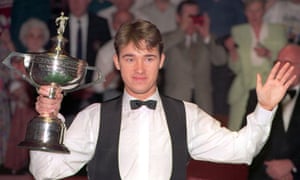
Stephen Hendry after beating Jimmy White 18-17 to win his fourth world crown in 1994. ‘I really had to force a smile because winning was my job.’ Photograph: Michael Cooper/Getty Images
Higgins was initially kind to Hendry but “it turned to resentment. He directed it at Steve Davis and then me because Alex believed he made snooker. In a way he was right. But when he wasn’t as good as us he couldn’t cope.”
Hendry was still disappointed when many younger players failed to travel with him to Belfast for Higgins’s funeral in 2010. He feels even deeper affection for White, his boyhood hero, whom he beat in four of his seven world championship final victories.
“He’d get introduced and 95% of the audience would go mental. I’d walk down the stairs to the odd boo. I liked it – being the bad one, the one who’s going to beat him. But you’d never hear a bad word from Jimmy about anybody. Higgins used to be nasty – but if Jimmy said anything, it was in jest. And he took losing with such grace.”
He smiles with nostalgia rather than in judgment. “Kenny Dalglish said: ‘Show me a good loser and I’ll show you a loser.’ Jimmy was an amazing loser. I’m sure inside he was devastated but he never showed it. If I’d had lost that final, I would be inconsolable.”
Hendry was still a teenager when Davis demolished him in every frame of a six-game exhibition. “I hated it, losing to Steve night after night but I would do the same in his position. I’d be willing to kill the young upstart every night.”
Davis did not compliment Hendry when the Scot finally beat him – and Hendry shared that mentality. “I’d practised with John Higgins for years and when he became world champion I couldn’t congratulate him. A normal person says: ‘Well done.’ I couldn’t. It didn’t matter if it was my best friend, my brother, I didn’t want anyone else to win. It still hurts me, watching people win at the Crucible. Steve let it go years ago. That’s why he played longer than me. He treated it as a day out. I could never do that.”
Hendry and O’Sullivan have fallen out occasionally but now “we get on”. Mates is probably too strong a word because Ronnie is complex. There are times you’ll be his best friend and times he’ll virtually not say hello to you.”
There is, instead, respect and rivalry. “Ronnie’s the best player I’ve ever seen and people forget I actually played him. I was obviously on my way down and he gave me some hammerings.”
Hendry responds emphatically when asked what would happen if he and O’Sullivan met each other at their very peak. “I believe I would win. If we had a four-session match, where things change, I would back myself every time. I was stronger mentally. But he’s more talented than me, making shots left-handed and sinking a 147 in 4½ minutes. My fastest maximum would be over nine minutes.”
Flying to China 15 times a year, to promote Chinese pool, and working as a UK snooker pundit, Hendry admits that, “compared to the 1990s life now is dull. Back then you were the world’s best player. Nothing could touch you. I’ve not got a bad life now but I have days where I think: ‘What is there to look forward to? What’s the buzz?’”
He takes solace in his belief that, as arguably the greatest snooker player in history, his world championship record of victories remains safe. “I can’t see anyone beating it. O’Sullivan’s got five. He can do it if he keeps playing. But there are four others playing at that level. At his absolute best Ronnie wins. But he’s getting to that age where he’s not doing it often. He’ll talk all sorts of bullshit, saying he doesn’t care about the record. But deep down he wants to beat me while, of course, I want to hold on to the record.”
Hendry sounds, briefly, like a perennial winner again. But he is too likeable now not to give in to honesty as, considering his involvement in a new senior circuit, he admits his game is still ruined. “I’ve played it a few times and in practice I’m fine because no one’s watching. But once it starts I’m totally embarrassed by my shots. It’s horrible.”
The 49-year-old former world champion laughs ruefully. He then shakes his head when asked if he will ever free himself of these demons. “There’re probably people out there who think they can cure me but it’s a mental thing. At exhibitions I have a couple of drinks before I play to relax. It works sometimes but that’s not a way out. I have to live with it now.”
I really liked the book, but can’t help wondering whether Stephen Hendry would have been able to re-invent himself the way Ronnie has done with the help of Steve Peters. In his biography, he tells us that he turned to various people in order to get help. But the help he was looking for was mainly aimed at changing his game in order to recapture his confidence and invincibility feeling. He wasn’t ready , or able, to try to change his own mentality nor his own expectations. “I didn’t want to go there” is a sentence that comes around a few times in this book.
I certainly recommend every snooker fan to read this book.
TOP OF YOUR GAME by Ronnie O’Sullivan and Rhiannon Lambert is published on May 16 (Lagom £15)



 Ronnie O'Sullivan