This one is slightly different, in that, willingly or not, Ronnie reveals how apprehensive he feels about the World Championship under social distancing rules, and what worries him most. Reading this we also get a better understanding of how he tries “not to care” in order to cope with his own anxious nature.
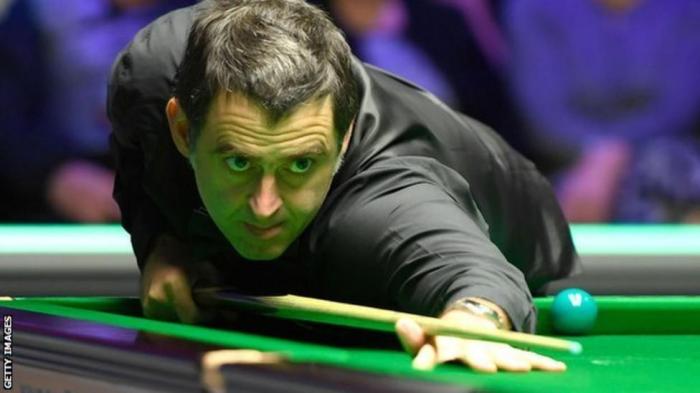
Ronnie O’Sullivan wants to win the upcoming World Snooker Championship – or fall at the first hurdle.
The Eurosport pundit – who will feature during their live coverage as well as playing in the tournament – was typically frank and honest about life in lockdown and returning to the table in an exclusive chat with RadioTimes.com.
O’Sullivan is adored for his unrivalled achievements and unconventional style, though he has thoroughly enjoyed his time away from snooker during lockdown, and claims he barely practised at all during the break.
He said: “If someone said to me it’s in the bag, guaranteed, all you’ve got to do is turn up I’ll go, ‘Sweet,’ but it’s not like that.
“It takes a lot of preparation, blood, sweat and tears. I like to just go there and enjoy it.
“If I’m on, I’m a danger. If I’m not, an early exit suits me fine because I don’t want to go all the way to Sheffield and get beat in the final. That’s the worst result, it takes years off your career.
O’Sullivan admits the 17-day tournament is a daunting prospect with certain areas of his standard preparation out of his control, including the food he eats, as players must adhere to strict social-distancing rules.
“You can’t stay in the hotels you’d normally stay in. Usually I’d rent a house with my own food and a few friends with me and we’d just turn it into a holiday. The snooker is a bit of an add-on.
“All those things I could control, I’m not going to be able to do that stuff. Potentially, that’s quite worrying for me. How do you spend 17 days in an environment, eating food you’re not used to? It’ll be tricky.
“Some people live off Dominos pizza and deep-fried burgers and fried chicken, for them, eating a bit of Ryanair food in the hotel – that’s what the catering is like – they’re stomach’s going to deal with that whereas me, I’m probably going to make myself feel ill from that after a day.
“The resources World Snooker have isn’t great, so I imagine they’ll go down the low budget end, so I’m not sure how – health-wise – I’m going to cope with that. It’s all new. Normal, but new.
“It’s about whether it means that much to you anymore, if you want to go to prison for 17 days, sweat it out and go through that then great, but some people might not feel like that.”
O’Sullivan featured during the Championship League tournament in Milton Keynes at the start of June, but spoke about his love for the simple life lockdown allowed him to lead.
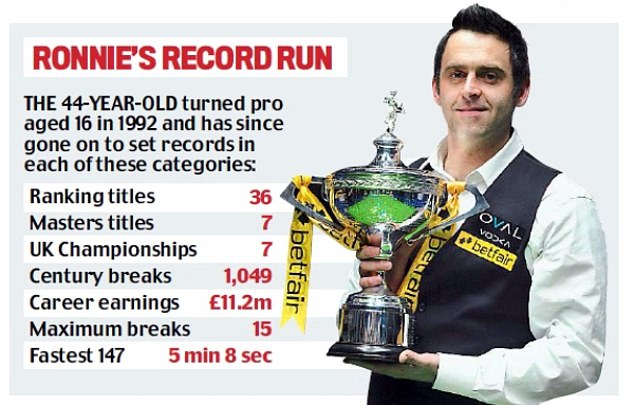
The 44-year-old said he missed snooker “for about three minutes” and barely practised at all, and while O’Sullivan still loves the game, he enjoyed a “fantastic time” away from the table.
“I like to play and I enjoy playing when I’m not preparing for anything and there’s no pressure and no big tournaments coming up. I love snooker. But once you start to think, ‘Is my game in good shape? Have I played enough? Do I need to do this?’ that’s when it becomes a job then.
“What it has taught me, in some ways, don’t prepare for anything, just play, oh, there’s a tournament next week, oh it’s the World Championship, oh, yeah, I’m going to go for that one. But trying to build anything up in your mind and putting so much emphasis on it, you end up stopping enjoying what is meant to be an enjoying.
“Before Milton Keynes, I’d done about six or seven hours practice, that was all I’d done since February, but I was doing a lot of practice in the mirror. I have this mirror in my house and I’d cue up for about half an hour every day just to make sure everything was all in line. That’s all I was doing.
“It sounds crazy to say, but I’ve had an absolutely fantastic time [in lockdown]. Life’s got even more simple.
“I’ve always enjoyed the simple life and always thought there was something wrong with me for wanting to enjoy a simple life but actually I’ve come to the conclusion it’s good to be like that.
“I rediscovered my running through the forest. You can’t go out to restaurants – not that I ever liked to – but it’s just made that impossible. Nice little takeaway sitting in my car eating it with the missus has turned out to be highlight of the week.
“It’s just the simple things, you know? People think, ‘Oh, you’re a bit of a weirdo,’ but actually I think most people come to the point of thinking it’s actually quite nice to get fish and chips and sit in your car or the top of a hill with a nice view and just enjoy the scenery.”
Now O’Sullivan is back under the spotlight, all eyes will be trained on him for more box-office performances that have seen him become the most-celebrated player in the history of the game.
Ronnie O’Sullivan insists he WILL play at the World Championship even if crowds are let in as ‘the Rocket’ is ready to put up with 17 days at the Crucible for just one reason — the world title
The Rocket struggled with having to self isolate in an on-site hotel room
He faces living under strict rules at World Snooker Championship in Sheffield
O’Sullivan has compared spending time in a cell to being in a bio-secure bubble
He has also voiced concerns about crowds being allowed back into the Crucible
Ronnie O’Sullivan is talking about the time he was locked up rather than locked down.
‘I was 17 and they thought I’d abducted somebody,’ explains the five-time world snooker champion matter-of-factly.
‘There were 30 police vans surrounding me and they locked off the whole of Chigwell. It was like a scene off the FBI show on Sky.
Ronnie O’Sullivan faces living under strict rules at World Snooker Championship in Sheffield
‘They stuck me in the back of a van and I was sitting there thinking, “What does abduction mean?”. I’d just come back from three days at Champneys Spa and I was going to watch a boxing match in Brentwood.
They put me in a white suit, took my car away for forensics and kept me in a cell. They did a proper job. And then they let me out 24 hours later saying it was mistaken identity. I was like, “OK, fair call, nice one, try not to make that mistake again”.’
O’Sullivan laughs as he finishes sharing his bizarre but previously untold tale. The reason it has finally come out in the open is because the 44-year-old is comparing spending time in a cell to being in a bio-secure bubble, of which his only experience so far was a negative one.
When competitive snooker returned last month in Milton Keynes, the Rocket struggled with having to isolate in an on-site hotel room while waiting for the results of his Covid-19 tests and only being allowed to eat what was delivered to his room.
‘I did 16 hours in a cell once and it was better because I got to choose my own food,’ quipped O’Sullivan at the time.
The Rocket struggled with having to isolate in an on-site hotel room during the pandemic
And speaking exclusively to Sportsmail, he again jokes how prison would be preferable to having to abide by those same strict restrictions for the 17 days of the World Snooker Championship in Sheffield, which begins on Friday.
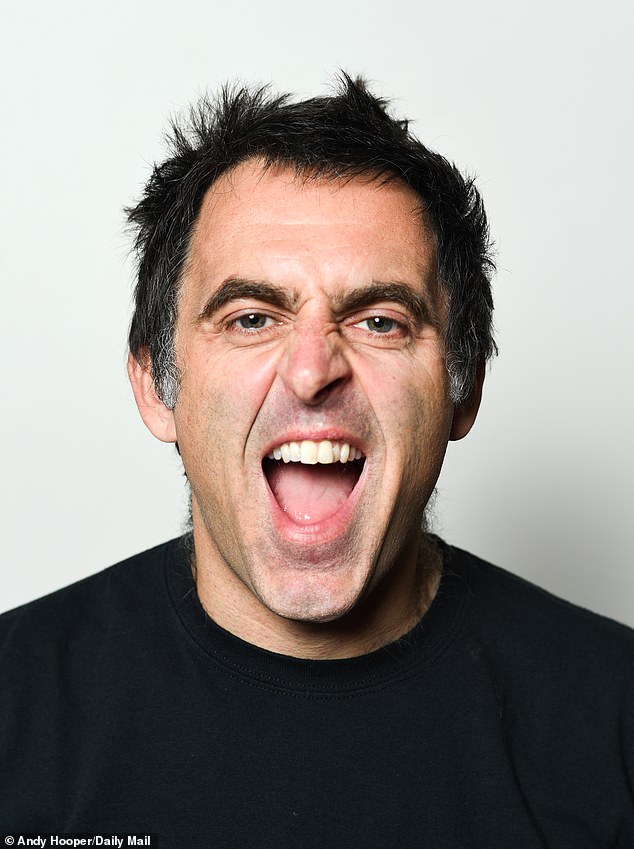
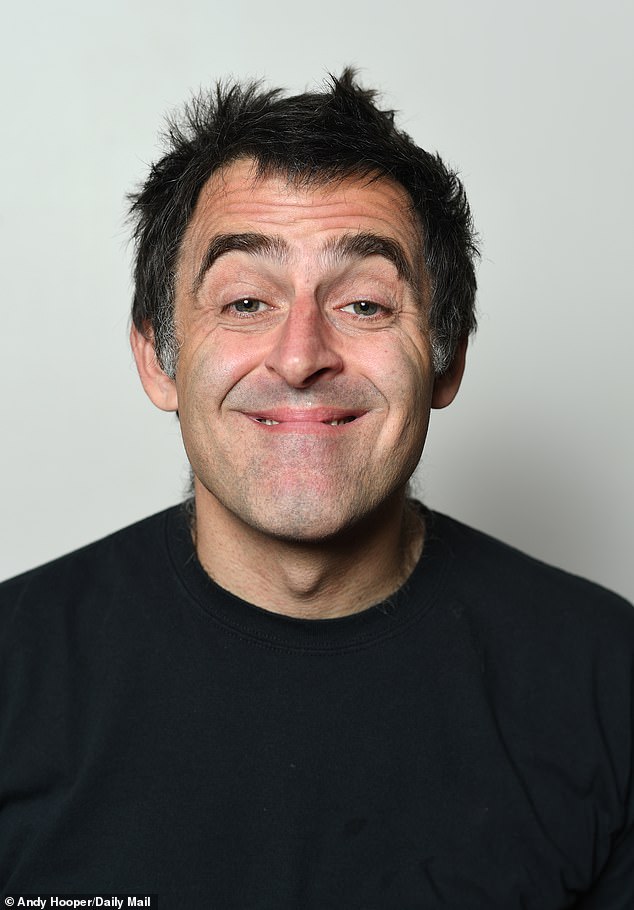
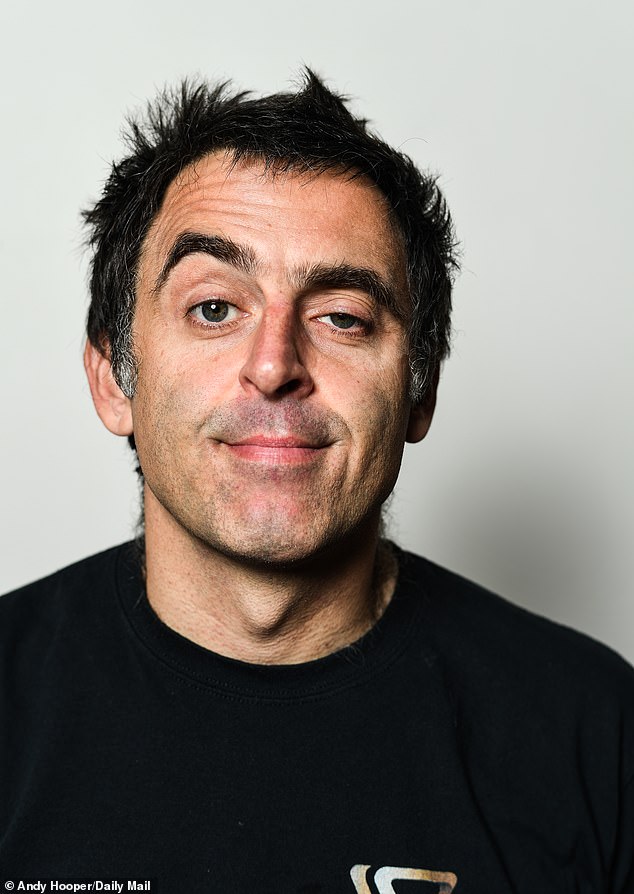
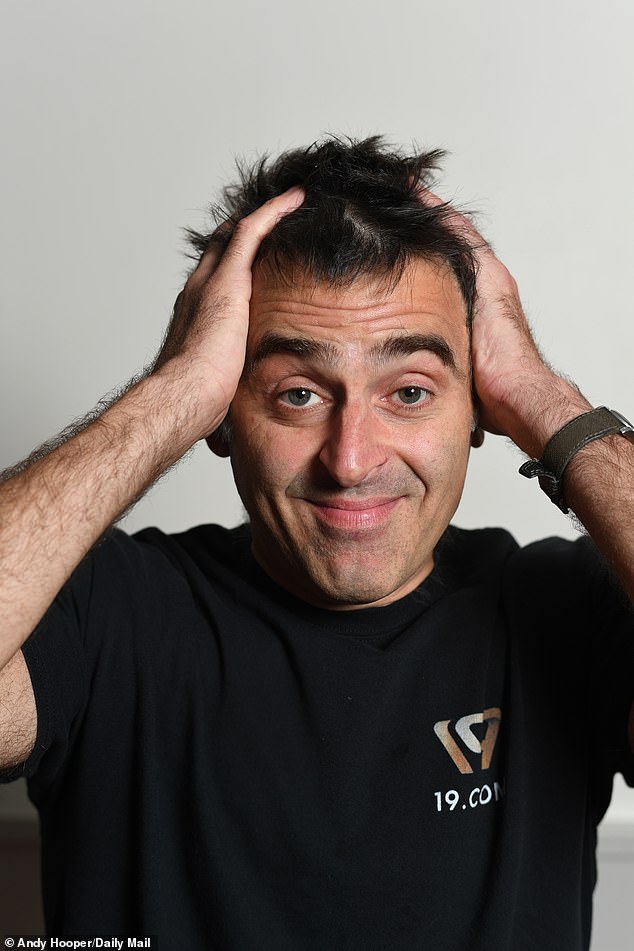
While rules have been relaxed for the Crucible, players must limit their social contact as they will be tested for coronavirus before the tournament and the quarter-final stage — and anyone who is positive will be disqualified. ‘I don’t know how I’m going to deal with it,’ says O’Sullivan, who is in fine form as he gurns for the cameras at the Woodford Wells Sports Club, near his home in Essex.
‘I don’t really love snooker that much to go through that suffering. When I go to tournaments, I like to go for a run, go to the gym, meet friends, get the right food in me.
‘I am very funny with what I eat and I am also used to going running every day, seven or eight miles. That has been my medicine for the last 20 years.
‘A happy snooker player is a player that will play well. An unhappy one is not going to play as well.’
O’Sullivan also has concerns about crowds being allowed back into the Crucible, as the Government on Friday announced the tournament will be used as a test event for the safe return of fans.
Despite previously threatening to pull out if spectators were present, he has now confirmed to Sportsmail he will play. But O’Sullivan says he would rather lose in the first round than be beaten in the final.
The 44-year-old has compared spending time in a cell to being in a bio-secure bubble
‘Why would you want to waste 17 days when you can only waste one day?’ he asks. ‘Going to Sheffield, it’s either win it or nothing. Getting to the final is no consolation.
‘I’d much rather bow out in the first round than lose in the final because then at least I’ve got 16 days to not have the battle scars and just get on with life.’
SHOULD the Rocket pocket the £500,000 prize money for winning the Worlds, he knows exactly what his first buy will be.
‘I’m looking at getting a campervan,’ reveals O’Sullivan, who recently sold his £130,000 60ft canal boat because he never spent a night on it. ‘Me and my mate are thinking of getting one and then going around Europe doing obscure running races.
‘My girlfriend has said that if it’s just like the boat and doesn’t get used, then she won’t be too happy.
‘But she knows I’m serious about my running. If I can manage my schedule enough and make use of it, then that would be something I’d like to do.’
Running — the title of his 2013 autobiography — was O’Sullivan’s salvation in the 2000s as he recovered from alcohol and drug addictions and a battle with depression.
Players will be tested for coronavirus before the tournament and the quarter-final stage
He joined the Woodford Green Athletics Club and regularly took part in road and cross-country races, proudly boasting a personal best of 17:04m over 5km and 34:50m over 10km.
O’Sullivan had let his running take a backseat over the past decade but, after piling on the pounds at the start of lockdown, he has caught the bug again and has shed more than a stone and a half. ‘I was on the steak-and- kidney pie diet for the first few weeks,’ he grins. ‘I thought, “If I am going to be sitting here for three months and I can’t go anywhere, let’s see what happens if I start eating whatever I want”. It was like a social experiment.
‘So I was banging in the old steak-and-kidney pies and just going for it, mate. I was eating them like, “Bosh, bosh, bosh”.
‘But all of a sudden, I woke up one day and I was like, “Jesus Christ, your diet really is important, I’ve got to sort this out”. I didn’t like what I was seeing so I just thought I’d get back into running because I’ve had nothing else to do.
‘I was nearly 14st 8lb and I’m down to 13st now in the space of 10 weeks. I am probably running six days a week, averaging seven miles a day.
‘I have gone back to the running club and I am the slowest of the lot, just hanging on, but eventually I’ll be flying again. I’m trying to get my body used to it and putting myself through the punishment.’
Because he has got back into running, Eurosport pundit O’Sullivan describes lockdown as the best three months of his life. But he hopes it leads to a cultural change in this country, where people spend less time commuting in cars to work and more time exercising.
O’Sullivan has voiced concerns about crowds being allowed back into the Crucible
As a nation, I think we should focus on being a lot healthier,’ the world No 6 says, this time with a much more serious tone.
‘What all this has taught me is that if, God forbid, you get any illness, if you are fit and strong you are more likely to pull through. But if you have obesity problems, that makes you vulnerable.
‘If people can work from home a bit more, that three hours that they’re using commuting, they can use to exercise. I am not going to be travelling to work.
‘Driving to the snooker club used to take an hour and a quarter of my day to get there and back. I have just decided that I am never going to waste an hour and a quarter driving to the club because I can get so much done in that time. If I want to hit a few balls, I will just use my friend’s table around the corner.
‘It’s like if Usain Bolt decided to come out of retirement. He would probably think, “I’m really s*** now”, but we would look at him and think he’s amazing.
‘So I look at myself and think I don’t really need to train properly, I don’t need to be a slave to it. The way I’m doing things now, I’m happy. It is working well.’
HE may no longer be a slave to the baize, but do not let that fool you into thinking O’Sullivan is ready to retire, even if he has threatened it many times. ‘With my game, I could probably play until I was 55, comfortably, and maybe even 60,’ he says. ‘I look around at the competition, I see what is coming through and there is not really a lot about. I hardly practise and I’m still getting to finals and winning tournaments and I am a grandad.
‘I still enjoy the battle. I call it the mustard and I enjoy smothering myself in the mustard, because whatever I do after snooker, it’s not going to be mustard.
‘Snooker niggles at me and I feel that I need that niggle. I’m not ready to let go of the niggle but I can deal with it.
‘A lot of my ups and downs when I was younger were down to the perfectionism that came with playing a sport. It became an obsession, but I have learned to manage that a lot better.
‘I have enjoyed my snooker more in the last 10 years than I ever have done because I just see it as a game with sticks and balls — and I back myself every now and again to do something great.’ In the eyes of many punters and according to most statistics, O’Sullivan is the game’s greatest.
He is the only player to have racked up 1,000 century breaks, he has earned the most career prize money and shares the record for the most ranking titles of 36 with Stephen Hendry.
The one stat he trails Hendry in is world titles — five to the Scot’s seven. But O’Sullivan grins: ‘It’s not really important. I suppose I’ve got to let him have one record, I can’t take them all.’
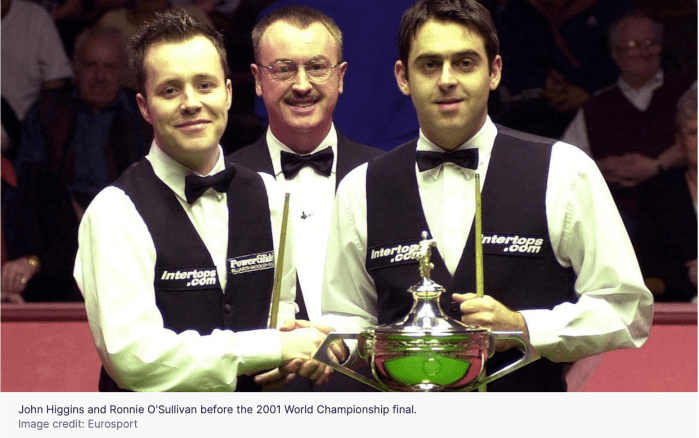
O’Sullivan’s Crucible crowns came in 2001, 2004, 2008, 2012 and 2013, but he reckons he wasted almost a third of his near 30-year career because of his hellraising off-the-table antics, which at one stage saw him check in to rehab at the Priory.
‘The Rocket’ has labelled discussions on allowing fans of the sport back in as ‘insane’
I had a mad few years where I over-indulged and I was in no fit state to compete or win tournaments,’ he admits. ‘I do regret it. People say, “Oh, don’t have regrets”, but I wish I hadn’t gone through that phase The last thing you want to do when your head feels like it’s in a jam jar is go and play snooker.’
O’Sullivan, though, doubts whether he would have surpassed Hendry’s haul even if he had not been such a wild child. ‘To win it five times is beyond what I thought I’d do,’ he says. ‘I’m not greedy. I’m not like a Hendry or a Michael Schumacher or a Tiger Woods who are driven by wins.
‘I’m more a luxury person. I like an easy life and if it comes and it comes easy, I’ll do it. If it doesn’t come easy, then let one of the others have it.’
The sport of snooker is lucky to have their luxury item and will not be the same once he is gone, a point O’Sullivan agrees with.
‘I’m not saying snooker wouldn’t survive and no one is bigger than any sport,’ adds O’Sullivan. ‘But I feel like I have been the fore-runner for snooker in many ways and brought a lot of excitement and a lot of different fans to the sport. I am sure that is down to the energy that I play with.
‘When you put the golf on, there is a different energy when Tiger Woods is playing in an event. I’m not saying I am the Tiger of snooker, but it’s always better to have Tiger wearing his red shirt on a Sunday.’
How the snooker world would love to see O’Sullivan wearing his black shirt and dickie bow on the final Sunday in Sheffield in four weeks’ time.
Well that’s a bit of everything – typical Ronnie – nothing really new either, but the good news that he will play at the Crucible.
How far he will go, and how he will cope, nobody knows, not even him. But at least he’s giving it a try. And, IMO, there is a lot of what he said here that’s about easing the pressure rather than about a lack of desire. Nobody – NOBODY – can become the best at any sport if they are not competitive beasts, and that never goes away.
Ronnie O’Sullivan: ‘People thought I was taking the mickey when I started playing left-handed’
Ronnie O’Sullivan admits he wished he began playing left-handed earlier in his career despite causing controversy at the Crucible due to his ambidextrous wizardry.
The five-times world champion lost 16-14 in the 1996 World Championship semi-finals to Peter Ebdon, but his campaign was overshadowed by a bust-up with Canada’s Alain Robidoux in the first round in Sheffield.
O’Sullivan completed a 10-3 win over Robidoux, who was furious when his 20-year-old opponent began playing shots with his left-handed having a constructed a 8-2 lead overnight.
The 1997 World Championship semi-finalist accused O’Sullivan of being “disrespectful” even though his left-handed play has become almost as reliable as his right-handed stance in the ensuing 24 years.
Robidoux continued playing in the ninth frame of the match despite trailing by 43 points with only the pink and black on the table. He refused to shake O’Sullivan’s hand at the end of their fiery encounter, but later apologised for misreading the situation.
“I wish I had started playing left-handed sooner,” O’Sullivan told Eurosport. “I was playing so poorly with my right hand that I should have switched. I knew that I could pot balls with my left hand. But I was aware that people might have thought I was taking the mickey.
“It just got to the point where I wish I had wished I had done it sooner because it was relaxing me. Alain didn’t take it too well. I could understand that at the time. But once I started, it soon became acceptable.
“I beat Peter Ebdon 6-1 in the semi-finals of the Premier League in Kettering a year later playing with my left hand. People quickly realised that I could play as well at times with my left as my right,” said O’Sullivan, who is seeded six for this year’s tournament which begins on Friday 31 July.
“I won seven frames against Stephen Hendry playing with my left hand in a 10-8 win in the final. And he was world champion at the time. It was unfortunate for Alain, but he apologised to me a couple of years later and said he didn’t realise I could play as well as with my left. I accepted his apology. And we were good friends after that.”
Ronnie O’Sullivan on his toughest ever opponents – ‘It was a golden era for snooker’
Ronnie O’Sullivan feels you have to go back 15 years to discover snooker’s true golden era despite rising standards and prize money in the sport.
The five-times world champion – who could win a record £555,000 for a sixth world title next month – pinpoints the season-ending rankings of 2004-2005 to get a true reading of green baize greatness.
In O’Sullivan’s opinion, that was as close to snooker utopia as you could wish to see with seven-times world champion Hendry still competing at the top level and Hunter – who tragically died in 2006 after battling cancer – lifting three Masters titles in the early part of the decade.
With Higgins yet to win another three world titles, Williams fresh from lifting the second of his three Crucible trophies and former Masters and UK champion Stevens competing in the second of two world finals, O’Sullivan believes that period should be celebrated as the halcyon days.
“I’ve always said that snooker enjoyed a golden era when Hendry, Higgins, Williams, Stevens, the great Paul Hunter and myself were battling it out. I truly believe that was the best top six ever,” said O’Sullivan.
“For me, getting through Hendry, Higgins and Williams in their prime was almost impossible. To beat two of them was so, so tough. Nobody has made me fight as tough as that trio in their prime. In some way, the players these days go for their shots a lot more.
“They are much more aggressive. They miss a few balls to let you in, and are less focused on safety. The games are much more enjoyable for me these days than years ago when you had several players you didn’t really like playing because you knew they could match you.
“A lot of the top players try to win frames at one visit. In some ways, those games are easier to play in. You either get taken out early, or you can feed of it to enjoy the battle.”
For thos who wonder about the numbers presented in the part I put in blue, here is the explanation: the World Champion will get £500 000 for his efforts, the highest break prize money will be £15 000 and there will be a £40 000 bonus for a 147, should there be one. Here is the link to the relevant WST annoucement.
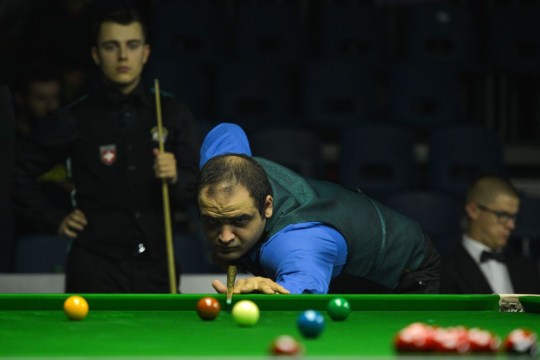
From Tehran to Darlington via the Iranian army, Soheil Vahedi wants the Crucible to be the next stop on his unique snooker journey
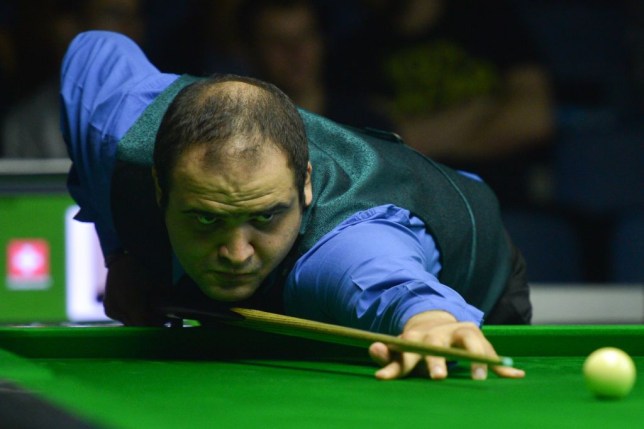
Soheil Vahedi has forged a unique path in his snooker career (Picture: Getty Images)
Snooker has taken Soheil Vahedi from growing up in Tehran to a new life in Darlington, with his unique journey including an 18-month stint in the Iranian army along the way.
The 31-year-old has battled the odds to make it onto the professional tour and now he is set-up in his new home, he is ready to put all the adversity he has experienced in his career to good use.
Certainly not the most glamorous of destinations, but Darlington has managed to attract not only the man from Tehran, but also the only Brazilian on tour, Igor Figueiredo, making the County Durham town an unlikely cosmopolitan hub, at least in snooker terms.
Vahedi explains that for players ranked outside the top 100, Darlington makes a lot of sense, even if it doesn’t mean a lot of fun.
‘I spent all of lockdown here in Darlington, I’ve been here full-time about four or five months.’ Vahedi told Metro.co.uk.
‘I didn’t play for two months, but now I’m practicing eight hours a day. ‘Most of the time me and Igor are here. It’s because Darlington is a bit cheaper than London or Sheffield, the cost of living is less which is good for us lower-ranked players and the academy is good.
‘I still pay about £1000 a month in all expenses and rent, so it’s still expensive, but cheaper than other places.
‘But there’s nothing in Darlington to have fun, it’s not a great town to live in. I haven’t seen much of it really, but I haven’t heard from local boys that there’s so much going off here.
‘I was told by a few players that Q House Academy is a nice place to practice. When I came here we had a full house – Thepchaiya, Xhao Guodong and Zhou Yuelong – but since COVID 19 came out of nowhere, they all went.
‘Some of them may come back here, but maybe not, they may go to Ding’s academy in Sheffield, only time will tell. I’m sure they will be replaced by other players, hopefully, because the owner here has put a lot of money into the club to improve the academy.
’ Soheil’s winding journey has also taken him through Glasgow, where he practiced with Anthony McGill and developed huge respect for four-time world champion John Higgins.
‘I was in Glasgow previously,’ he explained. ‘I didn’t have many players to practice with. For a while I was practicing with Anthony [McGill] but then he got that unit with Stevie [Maguire] and John Higgins and since then he’s been with them.
‘John Higgins was nice to me a few times to practice with me and I enjoyed his company, he’s a lovely man and I enjoyed practicing with him.
‘Some times he took me down to Barnsley for matches, and one time we drew each other, he gave me a lift down, bashed me up and then he bought me a train ticket home [Higgins beat Vahedi 5-0 in the 2019 German Masters qualifiers].
‘He’s an absolutely brilliant guy, people who don’t know him as close as I did wouldn’t know he’s as nice as he is.’
Vahedi has battled the odds to make it as a pro (Picture: NurPhoto via Getty Images)
Now in the UK full-time and settled here with his wife, Vahedi expects to make more inroads on the world rankings and improve on his current position of 103.
The stress of travelling between Iran and the UK has been removed, but he still feels overseas players are at a disadvantage, with the British focus of the tour suiting local players.
‘I’ve been in the UK about seven months now, full-time,’ Soheil explained. ‘But last season I was here for six or seven months without going back to Iran. Then I went over for our wedding, with the engagement and everything, I had to go over and with all the rush and hassle before a wedding I had to come to the UK twice, so it was pretty tough, but now I’ve got my wife here it’s making it a bit easier.
‘There are so many players in so many academies that haven’t got their families or their better halves with them and not having a nice time in the UK. They don’t know what they’re eating, they’re up late at night, they’re all over the place. That’s one of the reasons some of the lower ranked players are struggling because they’re not living properly, or how they’re used to in their own home.
‘People are absolutely clueless about it. They just watch snooker and think, “why is he not performing?” But they don’t know what’s happening in our lives. Because they don’t know, they tend to judge us, but since my wife came here and I started a new life, I have improved.
‘Some people know it, some people don’t, but it’s easy to sit in front of the tele and judge technique, your head’s not right, this and that, he’s not going to make it…but they don’t know what’s happening. We’re trying our hardest to hit our peak but it’s very, very difficult.
‘For somebody like me coming from Iran, it makes it 10 times harder to play snooker, compared to a British player. They’ve got their family, their own food, they know the rules of the country. Some wont even have rent because they stay with their parents, they’ve got somebody beside them all the time. I didn’t have that, so for us, it’s three or four times more difficult to play snooker than 80% of the tour.’
It is not just life on tour that is trickier for overseas players, but their grounding in the game is very different to those growing up in the UK, as Vahedi explains.
‘When I was growing up. 20 years ago, I was practising in this club on this table. It was an Iranian table, so the condition was bad. ‘Say the middle bags, if you wanted to stun a red in, it would come out because the pockets were so bad. But if you wanted to play it slow you had to have played golf before snooker because you had to aim maybe five inches from the pocket to curve into it.
‘That’s how I grew up. Some players from the UK start on a Star table, with a coach, a proper cue. I was playing with a club cue for five years. They don’t realise how blessed they are.
‘We’ve done it the hard way. Maybe that kept us going, doing it the hard way, because when it’s easy you get lazy. I’m proud of doing it the hard way and I’m giving it my best to play as well as I can. Hopefully good things will happen in the future.
’ It has taken years of dedication for Vahedi just to have his professional status, and the hard work stems from a deep love of the game which came about almost entirely by chance, when a young Soheil first discovered snooker.
‘I was playing football in a park for eight or 10 hours a day,’ he explained.
‘We lost a match and had to sit and wait for a turn. A friend said there’s a billiards club round the corner. I asked him what billiards was because I hadn’t even heard the word before. We went and I saw the table with balls and pockets and as soon as I saw it I felt there was something about it.
‘Within a week I’d stopped playing football and I was in the club watching for 12 hours a day. Because I didn’t have support I had to watch until I got my pocket money which maybe bought me two hours in a month on the table.
‘Some of the older players could see I loved the game and then showed some talent so I would partner them in doubles snooker. When I partnered them they would tell me what shot to play and, I didn’t have a clue what I was doing, because I didn’t really know the rules.
‘It was loser pays for the lights and winner stays on, and I wanted to practice so much. Maybe 10 groups of two were waiting for the table one day and we were on for about eight hours and didn’t lose. There was the best player in the club and he chose me as a partner, he told me what to do and I would just do it. I think I was 13 then.’
Vahedi started to show some serious promise, reaching the final of the World Amateur Under-21 Championship in 2009 in his home country, but his progress was slowed in 2012 when he had to fulfil his national service in the Iranian army, A character-building experience, Vahedi felt it was harming his snooker career at the time, but has taken the positives from the steep learning curve he found himself on.
‘It was eight years ago for 18 months,’ Soheil said. ‘You go to educational part of it, the first two or three months. You learn how to work with guns, putting it together, learning to shoot, how to march, life in difficult situations in the desert.
‘It was so cold, sleeping in a tent. During a war you might have to spend a few nights in a desert because you’re running from the enemy. It was a very difficult 18 months, it taught me a lot of things but it also wasted my life as well. As a snooker player, I’m doing that to serve my country, performing for Iran as a flag bearer.
‘That wasn’t the case for us. Before I went there I had three semi-finals, one in the World Games, IBSF, Under-21 World Championship. With all that, I still had to serve, everyone serves the same way. You learn to be humble like that. You learn to be the same with everyone.
‘In your home, everything is done by your mama. You don’t do anything. You can’t even unscrew a screw with a screwdriver because you don’t know. But in the army, the first day you get there there’s a load of iron, screws and screwdrivers and they say “that’s your bed” and if you want to sleep in it you have to make it. They leave you and say “good luck”. I had to think how to put the thing together. Then you think about what you’ve done in your life. Your parents have been so kind to you that you never have to do anything like that.
‘I think it did help with snooker because when you’re in there it’s a tough life. You cherish every second of being on the table, winning matches and getting pleasure out of it, You realise how blessed you are to be a snooker player, have the talent, go to different countries, travel the world. You realise you’re very lucky, you value your life more after being in there.
‘In the middle of the desert, in a tent, -15 degrees and you haven’t got a blanket. You can light a candle for 10 minutes or so. You sleep like that, I remember turning over and being frozen, because it’s so cold you have to stay still for eight hours or whatever.
‘On tour I’ve seen it all. I’ve seen players complain about a bed not being big enough. I’m like “what are you talking about? Put your head down and stop talking.” They haven’t seen difficult times in life, that’s why they start moaning.’
Vahedi has, so far, only shown flashes of his talents in the pro game, with a run to the fourth round of the Welsh Open this year one of the highlights as he knocked out Thepchaiya un-Nooh and Jack Lisowski before losing to Ronnie O’Sullivan.
His next task is to become the first Iranian to qualify for the World Championship at the Crucible, something he is battling the other Iranian pro, Hossein Vafaei, to achieve.
The results have not come yet, but with his settled life in the North East and hours of practice behind him, he is confident they will arrive in Sheffield this month.
‘In a way it’s a new journey now, but I’ve got experience, that’s the difference,’ he said. ‘I’ve got the game and the experience, I just need a click, that moment that changes everything and I’m working very hard for that moment. Hopefully it happens one day.
‘I’m very confident. I practice for eight hours a day. 9.30am-6pm, with an hour for lunch. Sometimes solo, sometimes match practice. I’m very, very confident, I know it’ll be difficult, but I’ve got a chance. Play well in the first two qualifiers and you’re sharp and ready for the third and fourth.
‘It’s going to be difficult in quarantine, in the hotels, not allowed to go out, but having the snooker back is good enough for me.’
I’m wishing Soheil the best in Sheffield next week. He won’t have it easy. His first opponent will be Alan Taylor, a former pro. Alan has played on the Challenge Tour this season and has qualified for the play-offs. This means that he will have at least one competitive match at the EIS under his belt before facing Soheil. It certainly puts Alan at an advantage.
Soheil is absolutely right about the British players being helped by the current structure of the tour, a structure that practically forces players to be UK based. Living as an expat is never easy, especially if you’re not well-off and, in this piece, Soheil explains exactly why.
Ronnie O’Sullivan explains why he can’t watch his own matches
Ronnie O’Sullivan says he struggles to watch his own matches back, because he can be so critical of his own cue action.
The Rocket is incredibly harsh on himself, saying that he has felt suicidal after winning matches, because he was still so disappointed with how he played.
His work with sports psychologist Dr Steve Peters has helped him overcome this crippling self analysis, but it still stops the five-time world champion from watching himself play at times.
O’Sullivan hates to see minor and often insignificant changes to his cue action, which he knows are inevitable, but are still a source of frustration.
‘I’ve got about 50 cue actions,’ O’Sullivan told Stephen Hendry on Instagram. ‘I’m a lot better now than I used to be, but I’ve had a nightmare.
‘I can’t even watch myself play sometimes because I watch it and think, “I don’t like that, I don’t like this.”
‘I’ve had so many different cue actions, I think it’s just part and parcel, you’re always tweaking about.
‘Sometimes when you change, no one would even notice, it’s just you. Moving this finger or that finger, go a bit more square on, go a bit shorter.
‘Although you think you’ve made a change, you probably haven’t, it’s more psychological.’
The futility of feeling down about his cue action is proved by O’Sullivan feeling he played badly in a near perfect performance against Ali Carter in 2007.
The Rocket beat the Captain 5-2 in the Northern Ireland Trophy, making five centuries, including a maximum 147.
It was a performance that the majority of professionals in history could not repeat, but Ronnie was unhappy afterwards.
‘I played Ali Carter I think I made five centuries in a best of nine, one of them’s a 147 and afterwards I just felt I wasn’t cueing that well.
‘I wasn’t! But for some reason they just went in that day.
’ O’Sullivan is back in action at the World Championship, which begins on 31 July, as he looks to win his first ranking event of a season which has been quiet by his high standards.
He may have had a slow and steady season and not won the World Championship since 2013, but the 44-year-old goes into the tournament as second favourite with the event sponsors, Betfred, only behind reigning champion Judd Trump.
Ronnie is a perfectionist through and through and it has often been his undoing.
That said, I remember that match in 2007 very well. Ronnie was crucified by fans and media afterwards because he wasn’t happy with his performance. And yet, he was right. He may have had five centuries in that match, including a 147, but he wasn’t creating opportunities for himself. His long potting wasn’t great at all and he had to rely on his opponents mistakes to get in. Once in the balls he was OK, Ali gave him those opportunities. The next day, Fergal O’Brien played a much tighter game and beat him.
That Ronnie is second favourite this year doesn’t make sense. Neil Robertson and Shaun Murphy, both had a much better season so far and should definitively be ahead of him. But they aren’t and that’s part of Ronnie’s problem. He has always a lot of expectations on his shoulders even when nothing actually justifies them. It doesn’t help him.
At the time of writing the draw for the World Championship Qualifiers is yet to be announced. My guess is that there are quite a few “non-entries” and WST is still busy contacting amateur players to fill the draw, whilst making sure that they will actually be able to attend.
Meanwhile, some images of the practice tables being installed in the “Bubble Hotel” were shared on social media:
Other than that Phil Haigh has published another article about Ronnie and here is the link.
The content is nothing new really. Ronnie shares how, in the past, his own perfectionism and expectations have held him back and even driven to depression. It’s something he has spoken, and written, about before in other interviews and his his biographies.
here is the most relevant excerpt:
‘I just want to be the best that I can be,’ O’Sullivan told Stephen Hendry on Instagram.
‘I’ve played tournaments, played terrible, but won, then felt suicidal! ‘But I’ve lost matches, played really well and thought, “Yeah! I can’t wait for the next tournament!”
‘For me it was about how I played, and that’s the wrong way to be and that’s why I’ve changed.
‘It’s about getting through, getting the job done, live to fight another day.
‘Once the penny dropped, working with Steve Peters, it’s very hard to go back to how I was pre-Steve Peters.
‘I was all over the gaff really. Yeah I’d win tournaments if I was on it, but if I wasn’t I had no chance really.
‘Whereas now, I’ve won so many tournaments where I’ve gone into it feeling like I’m playing absolutely terrible. Because I’ve had the right mindset I’ve worked my way into it, got to the quarters, started to fly and then won other tournaments off the back of it.
‘That wouldn’t have happened pre-Steve Peters. I’m a much better winning machine than I was.’
Phil also quotes Steve Peters speaking on the BBC about his work with Ronnie back in 2013
‘When Ronnie approached me he expressed what he wanted to do with his emotions, his mind, his thinking and the frustrations of why he couldn’t do that,’ Peters said.
‘I see people, when I work with them, as students really. All I’m there to do is to give them the equipment to deal with their minds, to work with it the way they want to work with it. Ronnie’s been an amazing student.
‘I work with a model, which is called the Chimp Model. It’s a simple way of understanding how they mind works and what the rules are.
‘When you walk out there to play snooker, inevitably the chimp will kick off and say “I don’t want to be here at all, this is going to be threatening.” Who knows what it’ll say? It’s about learning what your particular emotions are going to do to you.
‘Then behind that there’s a back-up system that I call “The Computer” which is try to understand the belief systems you’re holding when you go in there and what are your values.
‘We all feel pressure under certain circumstances and Ronnie’s saying he’s learned how to deal with it now, rather than just succumb to it and react to it.
‘It’s a learning process. He’s much better this year than he was last year [2012], he’s making improvements so long may it continue.’
Ronnie was also in contact with Steve Peters, during the CLS aka the”Covid Classic”. Hopefully, Steve Peters will be able to help him coping with the unusual conditions during the coming World Championship.
Ronnie O’Sullivan is set to participate in his 27th straight World Championship as he chases a sixth title that would see him equal the Crucible hauls of Steve Davis and Ray Reardon.
It will be a serious business for O’Sullivan and the rest of snooker’s leading players with the game’s most coveted trophy and a £500,000 first prize on the line in Sheffield when the delayed tournament begins on Friday 31 July.
O’Sullivan has plenty of memories since first appearing at the Crucible as a teenager in 1993, but can also still enjoy the lighter side of the sport as a fan.
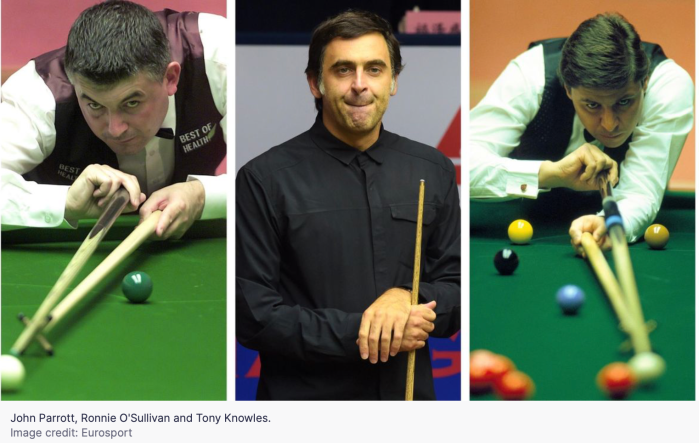
The five-times world champion – who is seeded sixth at this year’s event – recalls watching a match between then defending world champion John Parrott and Tony Knowles in 1992 when Parrott benefited from a blunder by legendary referee Len Ganley on his way to a 13-4 win in the last 16.
“One of my favourite moments was a match between John Parrott and Tony Knowles. I remember watching it on the box,” said O’Sullivan.
“John Parrott was in a snooker on the brown. He missed it, and the referee said: ‘foul four, and a miss’. Tony Knowles has said to the referee: ‘Yeah, put the white back’.
“Parrott suddenly gets down to pot the brown, blue, pink and black to clear up. Knowlsey is going mad. He is saying to the referee: ‘He couldn’t see that brown.’
“Poor Knowlsey. He was getting out of his chair, and was fuming. But it was funny to watch.”
It might be perceived as a bit mean to find that incident funny, but, myself, I have witnessed Tony Kowles getting quite worked up about something related to snooker and he got so passionate about it, despite the fact that nobody was disagreeing with him in that particular case, that indeed, it became actually funny.
Regarding the above incident, what puzzles me most is the fact that John Parrott must have known that the white had not been correctly replaced, and said nothing. Unless, of course, Tony’s perception of the situation was wrong from the start. That’s possible because, a player sat in his chair at the Crucible, certainly does not have the best view on the table.
Ronnie O’Sullivan admits he will always regret engaging with boxing trash talk before his World Championship semi-final with Stephen Hendry in 2002.
Ahead of his Crucible clash with seven-times world champion Hendry 18 years ago, O’Sullivan infamously said he would like to send his opponent “back to his sad little life in Scotland”.
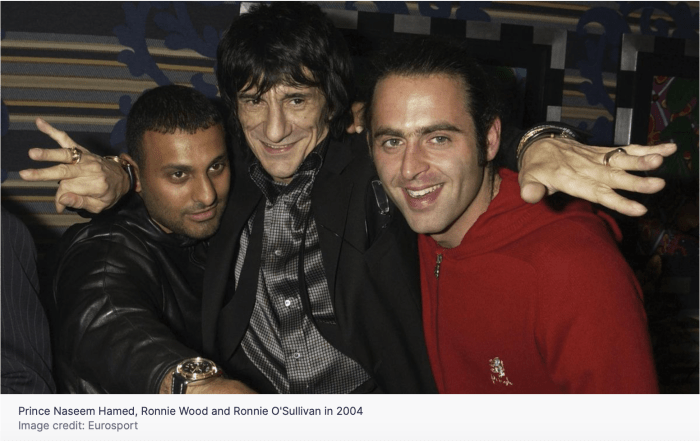
It is a moment the Essex player always regrets – he later apologised to Hendry – but believes his close friendship with former world featherweight champion boxer Prince Naseem Hamed did not help before getting inside the ropes with his fellow 36-times ranking winner.
“I wonder – rightly – whether he’s been listening to a certain Sheffield boxer with a penchant for shooting his mouth off,” said Hendry in his autobiography Me and the Table.
“In the last couple of seasons, my pal Prince Naseem has visibly switched his loyalties from me to Ronnie, and the latter has been spotted hanging out with Naz’s entourage. So it’s not surprising there’s a bit of fighting talk.”
The pre-match barbs backfired on O’Sullivan as he lost 17-13 to a fired up Hendry in the semi-finals, who also admitted it is the only grudge match he ever played at the iconic Sheffield venue.
Hendry rolled in breaks of 125, 124, 122, 113, 100, 81, 73, 65, 63, 59, 58, 55 and 53 as he won five of the last six frames to progress to the final, punching the air in completing victory.
“That was terrible. I blamed myself for that,” said O’Sullivan.
“It should never have happened. But I’m also blaming Naz for getting me so revved up. He said to me the day before the match: ‘You should be more like this, or more like that.’
“It was okay for Naz because he was a boxer, but I’m a snooker player. You have to respect your opponent. In boxing, they like that sort of trash talk to sell tickets. It wasn’t really me. I was easily led. When I said it, and when it came out, I was gutted.
It is something I will always regret for the rest of my life. Stephen was my hero, and still is. I never a meant a word of it. I’ve told Stephen that, and apologised to him. I have a lot of time for Stephen, and he accepted my apology. We’re good mates now – we have a solid friendship.
“It was a big mistake on my part.”
It was indeed a very bad idea and it backfired big time. It also led to quite heated – and colourful – discussions between fans of both players on forums and message boards, notably on BBC 606, long after the players themselves had patched things up!







 Ronnie O'Sullivan