Yesterday evening should have seen the conclusion of the second round at the World Championship …
Eurosport has published this vodcast about the “Greatest Rivalries”
To be honest, I found this one a bit disappointing, but the issue is probably with me rather than with the vodcast. I’m not overly interested in “rivalries” and the concept of “rivalry” itself is not entirely clear to me.
I’m certain that Alex Higgins saw anyone who beat him regularly, and possibly threatened his “status” as “People Champion and the most important player on the tour, as a rival or even as an enemy. His attitude towards the like of Steve Davis, Cliff Thorburn, and Dennis Taylor suggests that much. At times he really hated them. I’m very doubtful that those “rivals” feelings were reciprocal, nor that they were so extreme. They probably had very mixed feelings: irritation most of the time, anger as well, but surely they were also disconcerted and puzzled as it was plain for all to see that he wasn’t stable mentally and battling addictions.
Some of those “rivalries” were the expression of a “change of guard”: Davis v Hendry, Hendry v Ronnie, Ronnie v Trump and to an extend Selby are examples.
Other rivalries, like Ronnie v John Higgins, John Higgins v Mark Williams, Mark Williams v Ronnie, are the true rivalries in my eyes: sportsmen of the same generation, competing against each other throughout their career. Same era, same opportunities, same conditions.
And then, you have those rivalries that are more of a fans’ thing than anything else. As much as I like Jimmy White for his unwavering love of the game, I can’t see him as a rival to either Hendry or Steve Davis in terms of career and achievements, and, surely, both Steve Davis and Stephen Hendry must have been aware of this even in their prime. Jimmy had the flair, the charisma, and the charm … but his lifestyle, personality, and iffy work ethic meant that he was never going to challenge them in terms of career achievements.
To an extend, this also goes for the Hendry v Ronnie rivalry from 2004 on. Hendry was no more the force he had been, but hope never died in his fans.
WST Crucible Gold was about Ronnie and shows his last three Crucible Finals wins
This of course triggered very fond memories for me, as I was there in 2012 and 2013.
It also awoke bittersweet ones. I was thrilled to watch him win in 2008. I was in a snooker club, because I couldn’t watch BBC at home. The club doesn’t exist anymore, it’s a supermarket now, the owner has lefts us, taken away by cancer, and I remember the mixed feelings seeing Ronnie there with his partner and two young children. At the time, I knew that their relationship was on the rocks,
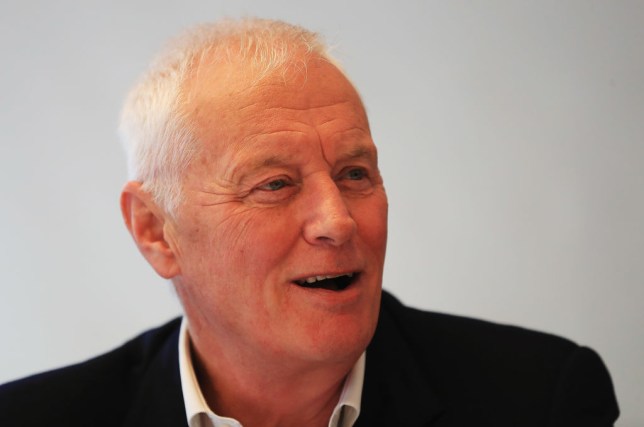
Barry Hearn is going strong despite recent scares (Picture: Getty Images )
Barry Hearn suffered his second heart attack earlier this month, but the 72-year-old is already back at work, motivated and searching out his next hit of adrenaline.
The veteran promoter suffered his first heart attack in 2002 and the second came on 5 April, but far from being concerned by the health scare, Hearn was more worried about being a burden on the NHS during the coronavirus crisis.
Having a history of heart issues in the family, Hearn knew exactly what had hit him earlier this month, but it took some persuasion from those around him to not just keep calm and carry on.
‘I’m doing alright,’ Hearn told Metro.co.uk. ‘During times like this you feel silly complaining and I won’t be, because there are people going through much worse things than just a little heart problem. It was just throwing a couple of stents in.
‘When I went into hospital I was embarrassed to be there, really, but everyone told me “no, you’ve got to go” and it was good advice. I might not have woken up. That would have been a terrible way to finish the book, wouldn’t it? But you still feel embarrassed because they’re front line troops in there
‘I knew what it was because I’d had it before, but this was a minor one, so I was reluctant to go and see anyone. I’ve got a cardiologist so I spoke to him, told him the symptoms and he said “get down there!” I had a night in the intensive care unit, which was horrendous, but they looked after me really well. ‘Maybe it’s told me that I have to grow up a bit, I can’t do everything myself, I need to maybe delegate a bit, but I just don’t like to. I didn’t like handing the boxing over to Eddie, but what a good idea that was, he’s doing a better job than I ever did.
’ Barry’s father, Eddie’s grandfather, Maurice died at just 44-years-old due to heart problems, and with the same health issue running deeper through the roots of the Hearn family tree, it has motivated Barry to live life to the full. ‘You grow up in that sort of environment, waiting for your turn because his father was 45, his father was 43, so I bucked a trend there,’ Hearn explained.
‘I think it’s just made me appreciate my whole life, I’ve appreciated every day I’ve been given and I’ve not wasted it, I’ve tried not to miss a moment because I know how precious time is.’
Hearn is back at work and busy as he tries to find ways to get his darts and snooker players back to work as soon as possible with the coronavirus putting global sport on hiatus.
He has already found a way to keep darts players busy with the PDC Home Tour which is seeing the world’s best play over webcam from their houses, while the World Snooker Championship has now been rearranged for the end of July.
The chairman of both the PDC and WST, Hearn still leads the way on the decisions made by both organisations, and he does it all for the rush he could never get from competing himself.
‘The sadness of me and sport is I’m arguably the best sports promoter in the world, not arguable in my book, but I’m a failure at every sport,’ Barry said.
‘Running marathons, triathlons, I’ve always reached a reasonable standard in every sport but never one I’d want to promote myself. I’ve failed the Hearn entrance exam, but I enjoy it.
‘I love competing with myself in everything and I run my business the same way. It’s a successful business but I run it like a sportsman’s world – to win.
‘I love it. It’s a buzz in my life, a rush of adrenaline.
‘When Anthony Joshua first signed for me [at Matchroom Boxing] he looked at me, sort of old fashioned, quizzical, like “what do you really want out of me?”
‘And I went, “I just want 1% of your adrenaline” and that sums up everything. Whether it’s Steve Davis winning, whether it’s Phil Taylor winning, whether it’s Anthony Joshua, Chris Eubank, all the people over my life. If I can get 1% of their adrenaline going through my veins then I’m a lucky man and I’ve been lucky so far.’
As someone who claims to be the best sports promoter on the planet, Hearn does not deny that ego is involved as well as the thrill of the action. In darts and snooker he has very little competition, but is motivated by bettering his own achievements.
‘We’ve all got an ego, we all want to be seen to be doing the best job ever,’ he continued. ‘I want to do the best events, the ones that get the biggest ratings, that pay the biggest prize money, that make the most money, it’s all a chase after adrenaline in different ways.
‘I take a lot of satisfaction in where sports have got to over the last 20 or 30 years. Darts, snooker, boxing, Eddie would look back on this period of his life with pride because he’s taken it to another level. That’s what people like us do, what turns us on and what gets us out of bed in the morning.’
As the leading figure in snooker and darts, and with son Eddie certainly one of the most influential people in boxing, the Hearns wield substantial power in the sporting world.
However, Barry feels sport as a whole is done a disservice by those in political power who do not give sporting endeavours the support needed to reach new heights.
Hearn feels he takes care of the professional level of his sports, but there must be improvements to how amateur activities are run.
‘We do need a better infrastructure in the UK for amateur sport because so many of the governing bodies are run by blazers – that’s not a compliment – who are passionate about their sport but have no idea about commercial ramifications,’ said Hearn. ‘
That has to change because amateur sport is essential to the country and essential to me. Things like diversification, across women, ethnic communities, age, disability, there’s a whole range and it’s such a big job, I get frustrated as I get older because I think it should be government-led.
‘I don’t think successive governments have paid sport the respect it deserves and made investment in sport that unifies the nation, keeps us entertained and makes us lead a better lifestyle.
‘I always think, whatever we pay for defence, we should put the same into sport and we don’t. We rely on amateur enthusiasts to do it and it’s not their fault that they’re not good enough.
’ A master salesman and spin doctor, Hearn could have been a politician in another life, and fancies himself as one, but although he knows it is too late for him to pursue that career path, he doesn’t mind telling the government how he would do things.
‘If I was 20 years younger…obviously I’d make a great Prime Minister, but the minister for sport, it’s an outrage that that isn’t a full cabinet position,’ Barry said.
‘I was talking to him yesterday, I said “the problem with you guys; you’re great, you’re passionate, but you have absolutely no power. I might as well talk to a tree!”
‘They’re lovely people, intelligent, good ideas, but zero power. That’s the first thing I’d want to change, the minister for sport is a cabinet position. It’s as important as defence, certainly as important as the charities we support overseas with our development fund. God knows what we could do with that money.
‘Times like this you do get a little bit isolationist, you do what’s right for us. Why haven’t we got this PPE? Imagine me running that! I’d have every bastard in the world making that stuff. It wouldn’t be pretty, but it would be effective and efficient.
‘That’s the same with sport, yes we need to do more, across a whole range of sport. Who’s going to do it? You can’t lump everything on Bazza!’
There is no doubt that the fire still burns in Hearn and his love of sport is unquestionable as he turned his political anger towards a lack of funding for grassroots cricket.
‘What pisses me off, we win the Cricket World Cup, within 24 hours, the entire team is on the lawn at 10 Downing Street with Theresa May having their picture taken.
‘Over the last 12 years, 50% of local village teams have gone out of business. 50%! I wouldn’t go. I appreciate a wonderful victory, great for the nation, but do something for my sport and I’ll come and have my picture taken. Is that a good swap?
‘In the realities of what we spend on everything else it’s a pittance but sport doesn’t get the respect. People criticise, there’s not enough amateur snooker competitions. I know there’s not! What do you want me to do?
‘I’ve done my bit. I’m trying to get the dream out there, but I need a bit of help, boys.
‘Until someone puts point-whatever per cent of our GDP into sport and it won’t be sidetracked into other things to save money, then like any business you have a budget and you can allocate a budget, it’s simple business and it frustrates me.’
So what’s next for Hearn? Getting his sports back on track through and after the coronavirus crisis is the immediate concern, but he, as ever, is looking further ahead.
Neither a second heart attack nor a global pandemic can keep Barry down, and he will plough on in search of more success.
‘The world’s a changing place,’ he said. ‘The numbers have been amazing, the company’s grown from me underneath a billiard hall into one of the biggest sports companies in the world. It’s very satisfying.
‘But then along comes this virus and we’re an events company without any events.
‘We have to be creative like we have been with the darts at home and next week we’ll trial some snooker stuff and get ready as this lockdown eases, hopefully some behind closed doors events before we can go on to entertaining live audiences.
‘This is something I’ve never experienced in my life, I think it’s our toughest challenge and we have no idea really how long it’s going to go on for and how much damage and pain it’s going to cause,
‘Looking ahead, I don’t think we’ve gone as far as we can go anywhere, even in the UK and Europe. I’m pleased to say the numbers are going up everywhere, in all our broadcasters.
‘Realistically, obviously I’ve done an outstanding job, but compare snooker to golf in China we’re still miles behind even though we get bigger figures, so there’s an image perception issue still
‘Tennis and golf are probably the two that I compare us to to say “why on Earth aren’t we four times bigger when we are actually 10 times bigger for exposure and audience? The World Snooker Championships get 500 million viewers, a hell of a lot of them are from China. It dwarves virtually everything else in China. I feel we’ve still got huge potential there.’
Given his relentless drive, many onlookers assume it is all about the money for the snooker supremo, but Hearn says that has long since subsided as a motivating factor.
‘People will always say it’s about the money, but that’s usually people with no money say that.
‘When you get to a certain stage with money you are doing it for love and passion. Like I found out a couple of weeks ago, I miss it, its not about how much you make, that’s just a measuring stick.’
Barry Hearn does not exactly come across as humble there … but we knew that already.
There is no doubt about his passion for sport, but, although I love many sports, in my opinion, sport should not be a top priority in any government. Not until poverty is eradicated, not until quality food, health care, and education are REALLY available to all. We are very far from that. And when I write education, I’m not speaking about academic grades, I’m speaking about much more fundamental things: knowing how society functions and how to function in it, understanding the basics of the economical, and political systems we live in, understanding our place and impact on the global ecosystem, developing the ability to reason, analyse and be creative, to grow a critical mind as not to fall for dogma, myths, and indoctrination, be it political, racial or religious. And more down to earth, being educated to the basics of health care (physical and mental health), nutrition, and cooking. Sport has its role in this, but it’s far from being the highest priority. Art, for instance, is just as important. Sciences and engineering are MORE important.
In this crisis, when I see people not understanding why they should stay home for now, when I read that people have died after following Donald Trump “suggestions”, when statistics show that in some “civilized” countries – yes the UK as well – as much as one child in three lives in poverty and needs to rely on food banks and government-funded free meals, my feeling is that we are very far from what a true “civilized” society should be. In that context, sport can be a tool to achieve the goal, but it’s not the main tool.
Also when I see someone like Donald Trump being elected as the president of the biggest military power on the planet, I can only despair. This is the failure of democracy because so many people aren’t ready for democracy: they are too gullible, too irresponsible and too selfish. It’s the result of education failure, and again it’s not about grades, there is no such thing as a “Ph.D. in true humanity”. Then, of course, dictatorship is worse… so much worse.
When I read that “it unifies the nation”, I cringe. There is so much tribalism in sport. So much of “us against them” spirit when it comes to supporters. Think hooliganism, think about how much aggression you witness in pubs every time England plays Wales or Scotland at rugby for instance. Sport SHOULD be a unifying factor – that was part of Pierre de Coubertin Olympic dream – but let’s be honest, only too often sport is just the opposite.
In a wide-ranging discussion about his life off the table during a storied career, Ronnie O’Sullivan has told Eurosport he will retire at the age of 50.
In a frank and honest discussion, O’Sullivan spoke about how his life spiralled in the 1990s following his incredible ascent to fame as a teenager, and the imprisonment of his father, before a spell in rehab proved a turning point in his career. The five-time world champion also talked about the roles played by his mentors Ray Reardon and Steve Peters in cementing him as one of the greatest players to ever play the game.
O’Sullivan went on to examine why a reduced schedule didn’t work for him in 2019-20 and how he will change next season by not practicing and instead “play every tournament”. He also revealed why he will retire in five years time…
We have selected some of the best extracts below, but you can listen to the podcast for the full episode.
RONNIE ON HIS PRIVATE LIFE IN THE 1990s
I was just partying a bit too much and like I said when I won that tournament (in 1993) I thought I’d made it. I’d come into a bit of money, I had a nice house, a nice car, I was single. So, I could do what I want when I liked really. I just probably chose the wrong company but it just got hold of me really. I took my eye off the ball. I wasn’t really focused on snooker and I wasted probably five years of my career just messing about really.
THE ‘LIGHTBULB MOMENT’ WHEN HE KNEW IT HAD TO CHANGE
I think after I lost to Stephen Hendry in 1996, and I was quite overweight as well. I was eating and drinking quite a lot. I was looking at a picture of myself and it dawned on me, and I thought, ‘I need to get myself fit again’. So, I spent three months, I lost my driving licence, so I spent three months just going to the gym two or three times a day, eating really well and got myself in good shape for the next season. And then I managed to win four of five tournaments actually, which was great. But then I went back to drinking and partying again. So for the next two years I wasn’t as bad as I was before but I was still doing things that I shouldn’t have been doing. So, that’s why I decided that I had to go to The Priory. Basically, first thing in the morning I was getting up, having a drink, having a joint just to function through the day. Which never felt good because I thought ‘I don’t want to have to rely on this sort of stuff’ but it just a hold of me a bit too much and that’s when I decided to get help for it.
ON GOING TO THE PRIORY
I just rang up the drugs helpline and said, ‘I’ve got some problems and I need to get some help, I think I know what it is, and I’d like some help.’ She said fine, so she came round the house and spoke to me and within two hours of meeting her she had me in The Priory in Roehampton. That was probably the best thing I’ve ever done. I didn’t want to go, I was scared. I thought ‘I’m not an addict, I’m not an alcoholic, I’ve just got to learn to just control it a bit’. And when I went in there and they said it was complete abstinence it was like ‘What? There’s no way I’ll be able to do that.’ But, I managed to get clean and sober. I haven’t stayed clean and sober the whole time but I don’t go out and have one or two drinks, I have a glass every six months if it’s a birthday party or New Year’s Eve thing. Otherwise I’m teetotal really.
HOW HIS CAREER WOULD HAVE BEEN DIFFERENT WITH HIS DAD AROUND
I think it would have been a lot different. I think I would have won the World Championships a lot earlier. I think I would have won plenty more tournaments. Absolutely 100% it would have been different but it was what it was and it was just unfortunate. It was unfortunate for me and unfortunate for him and things could have been so much better really. I certainly would have enjoyed my career a lot more having him around than not having him around.
RONNIE ON HOW RAY REARDON CHANGED HIS GAME
My dad made the phone call to somebody. I don’t know who he called. But he said, ‘Ronnie could do with a little bit of someone with a bit of experience in his corner. Who would you recommend?’ They mentioned a few names then said the one you really want to get hold of would be Ray Reardon. So we said, ‘Can you get his number for me?’ and he said ‘yeah, no problem.’ So we got Ray’s number and my dad phoned him up and he had a chat to him and said, ‘Would you want to help my son?’ And he went ‘Yeah, love to! No problem.’ So he got off the phone to Ray Reardon and phoned me up and ‘here, I’ve got Ray Reardon’s number, he’s waiting for you to call him.’ This was halfway through a match, I was playing Andy Hicks at the time, and I think I was 9-7 down in the final session. I had a phone call from Ray and I said ‘Ray, I’m playing well but I’m 9-7 down.’ He went, ‘he’s not scared of you, that’s why.’ I was like ‘really?’ And he said, ‘No, he’s not scared of you, no, no, no. Just keep him tight, keep tight, don’t go for them ones where you leave them easy.’ So I thought ‘alright’ and I tightened up a little bit and I won the match quite easily, about 13-10 or 13-11. But it felt different, it felt a different way of playing. I felt in control. I got more mistakes out of my opponents. So, that was my first lesson with Ray, over the phone. Then, the next day he was in Sheffield so we really got to work on the table. And then from that moment onwards I was a different player, a completely different player, and all for the better as well.
RONNIE ON STEVE PETERS
Again, that was through one of my managers at the time. He knew me better than anyone at the time and he knew that I was having these stage frights if you like. I was OK practicing but as soon as a tournament came up I was so overly anxious that I would end up worrying myself so much that I wouldn’t be able to pot a ball when I get there, and I wouldn’t even be able to enjoy it. And he read this article about this guy that Steve Peters was working with and thought that it sounds just like Ronnie and Ronnie could do with some help form this guy. So I got in touch with Steve Peters and he agreed to meet me, we went up to his house. I think I spent about an hour with him for the first session and after about 10 or 15 minutes I thought ‘this geezer’s different’ and he grabbed my attention. I thought ‘I want to see what this guy’s got to offer.’ So, I did what he said for a year or two years. I really studied hard on the model, tried to get my emotions under check which I did and I had become a different player. So in the same way that Ray changed me, Steve changed me in my mental approach. So by then, I probably felt I’d got to…I’d covered all my weaknesses if you like.
RONNIE ON REDUCING HIS SCHEDULE
I think it backfired on me this year because in previous years when I did play I either won the event or at least got to the finals. So, I was getting a lot of ranking points and that was keeping me up the rankings – I got to number one towards the end of last year, that’s with playing half the tournaments some of the other players were playing. But, you need to win tournaments to do that and this year I haven’t. I’ve made finals, played two semis, made two quarters, two last-16s. So, it hasn’t been a bad season but I haven’t played enough and obviously I’ve struggled – I think I was about 18 on the one-year list. So, next year I think I won’t practice and I’ll just play probably every tournament and use that as my practice. So, when I come home I don’t play, spend time at home and do some of my other bits and pieces that I enjoy to do, like a bit of property and stuff, because I don’t want to be a slave to the game. But then I think if I’m going to play 90 or 100 days a year, I might as well play 70 or 80 matches and just use the matches as my practice. And if you lose great you have a few days at home and just try out doing it differently and seeing what I get because last year was a disaster. And I was missing so many tournaments that when I did some back to play I felt like I was well off the pace and that isn’t a nice feeling either.
RONNIE ON RETIREMENT
I think I’ll give it one good crack maybe next year or the year after I might play some more and then by the time I’m 50 call it a day. At some point, I can’t go on forever. It would look stupid keeping playing and playing. I love doing the exhibitions and stuff like that but if I can get another four or five years out of my snooker career that’s great. Obviously I’d like to do the exhibitions but then look to do stuff away from snooker.
I can only recommend that you listen to the full podcast, instead of just reading the article, because there is a bit more to it than what’s written. It’s a very positive interview and Andy remarked that Ronnie seems to be in a good place mentally, whilst a lot of people struggle with the lockdown. Andy knows Ronnie very well; as children, they were going to the same school and became friends. Andy is a decent amateur snooker player himself. In a way, he’s the ideal interviewer for Ronnie, who trusts him, knowing that he won’t distort what he’s telling him in order to create “stories” that sell.
Here is part of the vodcast …
Ronnie will turn 45 in December, so that’s him planning to play for another five years. A lot can happen in five years…
Yesterday’s Crucible Gold was about Steve Davis.
Steve’s emotion after winning in 1981 remains endearing and infectious even after nearly forty years. The 1984 final finish is still tense and enthralling, as well. People who never saw Davis play as a young man may think that he was mainly a defensive player, but he actually was very positive in his shot selection, without being reckless. And when in 2011, he defeated John Higgins, the defending Champion, in the last 16, Steve was slower, but he was still going for his shots. I think the finish of that match, should have been included in this “Crucible Gold”.
Eurosport continues with their “vodcast” series, and this article is a teaser to the one likely to be shown today, which means that the complete interview will probably be on their youtube channel tomorrow.
This one is about Ronnie’s struggles mainly
O’Sullivan: Rehab was the moment my career truly started
Ronnie O’Sullivan has told Eurosport that going into the Priory for drug and alcohol treatment in 2000 was the “best thing” he has ever done, and that it was the moment his career truly started.
In a candid new episode of Eurosport’s new snooker vodcast, O’Sullivan discusses his life away from the table in depth with Andy Goldstein, covering the highs and lows of one of the great sporting careers.
From his sensational victory as a 17-year-old at the UK Championship in 1993, O’Sullivan has been a talent who has commanded intense attention. In an open discussion, the five-time world champion discusses how he could have won even more titles had his father not been imprisoned just weeks after that seminal victory over Stephen Hendry.
In 1998, he was also stripped of an Irish Masters title and forced to return his prize money after testing positive for cannabis following his win over Ken Doherty in the final.
O’Sullivan also discusses the “lightbulb moment” when he realised he needed to change his lifestyle, resulting in a rehab stint at the Priory – a decision which proved to be a major turning point on his road to sporting greatness. So much so that O’Sullivan considers it to be the moment his career truly started.
Addressing his private life in the 1990s, O’Sullivan tells Goldstein: “I was just partying a bit too much and like I said when I won that tournament (in 1993) I thought I’d made it. I’d come into a bit of money, I had a nice house, a nice car, I was single. So, I could do what I want when I liked really. I just probably chose the wrong company but it just got hold of me really. I took my eye off the ball. I wasn’t really focussed on snooker and I wasted probably five years of my career just messing about really.
“I think [the ‘lightbulb moment’ was] after I lost to Stephen Hendry in 1996, and I was quite overweight as well. I was eating and drinking quite a lot. I was looking at a picture of myself and it dawned on me, and I thought, ‘I need to get myself fit again’. So, I spent three months, I lost my driving licence, so I spent three months just going to the gym two or three times a day, eating really well and got myself in good shape for the next season. And then I managed to win four of five tournaments actually, which was great. But then I went back to drinking and partying again.
“So for the next two years I wasn’t as bad as I was before but I was still doing things that I shouldn’t have been doing. So, that’s why I decided that I had to go to The Priory. Basically, first thing in the morning I was getting up, having a drink, having a joint just to function through the day. Which never felt good because I thought ‘I don’t want to have to rely on this sort of stuff’ but it just a hold of me a bit too much and that’s when I decided to get help for it.
“I just rang up the drugs helpline and said, ‘I’ve got some problems and I need to get some help, I think I know what it is, and I’d like some help.’ She said fine, so she came round the house and spoke to me and within two hours of meeting her she had me in The Priory in Roehampton. That was probably the best thing I’ve ever done.
“I didn’t want to go, I was scared. I thought ‘I’m not an addict, I’m not an alcoholic, I’ve just got to learn to just control it a bit’. And when I went in there and they said it was complete abstinence it was like ‘What? There’s no way I’ll be able to do that.’ But, I managed to get clean and sober.
“I haven’t stayed clean and sober the whole time but I don’t go out and have one or two drinks, I have a glass every six months if it’s a birthday party or New Year’s Eve thing. Otherwise I’m teetotal really.”
O’Sullivan was asked by Goldstein if he looks back at that time and sees a ‘different person’, and said he has effectively wiped six years of his career as a result of his personal issues.
“I wouldn’t look at anything from 1994 up until where I came out The Priory. I just wouldn’t want to look at it because it’s such bad memories for me.
“Anything from coming out The Priory onwards I class as my career that was a proper career really where I was giving it 100%. I wasn’t always mentally in great shape because I struggled with performing badly. But I was still putting the work in, putting the practice in because if my game was alright I was one of the favourites to win any tournament.”
Ronnie O’Sullivan and Judd Trump react to possibility of World Championship behind closed doors
Phil HaighFriday 24 Apr 2020
Ronnie O’Sullivan and Judd Trump are both of the opinion that a World Championship without a crowd is better than no World Championship, but the event would certainly lose something with no fans in attendance at the Crucible.
The World Championship is set to run from 31 July-16 August, although there is nothing guaranteed on whether there will be a crowd in attendance at the Crucible Theatre in Sheffield.
There remains the possibility that the event could be held behind closed doors, with a reduced crowd, and an outside chance that a full house of around 1,000 would be allowed in South Yorkshire.
Five-time world champion O’Sullivan and reigning world champ Trump would obviously rather have fans in the room, but know that needs must during the coronavirus crisis.
Talking on Instagram with Stephen Hendry, O’Sullivan said: ‘I think as long as it’s safe…
[What if it’s 17-17 in the final frame?] ‘It would be mental wouldn’t it. That’s a terrible thought.
‘I watched the Gibraltar Open, the final when there was no one in the crowd and it was quite bizarre to watch it ‘
I suppose from a TV point of view, a lot of people sitting around just wanting to watch some live sport.
‘From that point of view, any type of World Championships would be better than no World Championships, really.’
Judd Trump won his first World Championship last year and will have been dearly looking forward to returning to the Crucible and being introduced to a packed crowd as the reigning champion.
It will be a disappointment for the world number one if the crowd can’t be there, but like O’Sullivan, he accepts that players need to get back to the table ASAP.
‘Obviously, I’d love to defend my title in front of a full crowd. And it’d be a bit disheartening having that taken away from me,’ Judd told the Sun.
‘But you’ve to look at the bigger picture here. As snooker players, we need to keep playing.
‘Maybe if there aren’t other sports going on, then snooker can become a global sport. People who maybe didn’t watch the sport before might tune in.
‘With football, you need 60-70 people to play a game. In snooker, maybe you need only four or five people.
‘The best-case scenario is a full crowd. But I cannot see things getting back to normal that fast.’
WST are very confident that the event will go ahead on 31 July although there remains the possibility that government guidelines could prevent this entirely.
More likely it will just be a question of crowd restrictions, which WST are flexible to and will make a decision on closer to the time, depending on how government advice changes.
Personally, I still doubt that holding the tournament end of July will be possible. I can’t see the qualifiers, involving a possible 128 players, being deemed safe as early as mid-July.
Yesterday’s “Crucible Gold” was about the 1985 Black Ball final. I have to say, I’m getting sick and tired of the constant rehashing about that final and how it finished.
The BBC, on the other hand, showed a really good and interesting “Crucible Classic”: the 1988 match between a 19 years old Stephen Hendry and Jimmy White. This was a high-quality match. Young Stephen lacked experience but his quality is there for all to see. As for Jimmy, watching this match, you really wonder how he has never won the World Championship, although, in a way, the answer is there for all to see as well. Unable or unwilling to curb his attacking instinct, ever in the crucial moments, and a certain vulnerability under pressure, although, there was no sign of the latter in this particular match deciding frame.
Today they are showing the 1992 final… same players, different story.
Of course, it can only go ahead if restrictions are lifted – at least partially – and if it’s safe. The main issue, in my view, remains the qualifiers, that need to happen earlier and involve a lot more players and officials.
Also, if travel restrictions are not lifted globally, players based outside the UK may find it difficult or even impossible to attend. That’s a serious issue because the World Championship qualifiers are essential for so many players when it comes to their tour survival and it would be completely unfair if they were unable to compete, by no fault of theirs, and lost their tour card as a result.
Interestingly, the Championship is due to start on a Friday and end on a Sunday. That is a very welcome change for a lot of fans around the world. WST stands for “World Snooker Tour”, and having the climax of the final of the biggest event of the season played on a Monday, meaning on a normal working day for everyone except the UK fans was just another example of the persistent UK centric view of the governing body of the sport. I hope this particular change in the schedule is there to stay and not just a “one-off” thing.
Eurosport delivered two interesting vodcasts.
Andy Goldstein spoke to Neil Robertson, about his career, video games addiction, and supporting a partner suffering mental health illness. Neil is truly a great, positive person and this chat is really worth listening to.
He also spoke to Ronnie about his best wins, lockdown life, 146s, and that streaker.
At the time of writing, the vodcast isn’t available on youtube yet, but here is the audio:
And here are some of the key points (source Eurosport)
Ronnie O’Sullivan on his best wins, lockdown life and that streaker
Ronnie O’Sullivan | Snooker | ESP Player Feature Image credit: Getty Images
Ronnie O’Sullivan joins us for the latest episode of the Snooker Vodcast to discuss, amongst other things, the matches that shaped his career.
…
O’SULLIVAN ON LOCKDOWN
It’s actually been alright really – it’s a bit tough for us at the moment because we haven’t actually got a kitchen so we’re just making do with what we can; we’ve got our doors getting delivered in five days and then hopefully our floors will be delivered in another three weeks, and then our kitchen another four/five weeks after that. So, it’s not ideal but it’s alright.
ON WINNING THE UK CHAMPIONSHIP AT 17
In some ways I wasn’t surprised [by winning it that young]
When I first turned pro I didn’t really know how good the top pros were. You only watch it on TV and sometimes you only get the highlights, and they only show you the best bits. I think my first real insight into playing someone like Stephen Hendry was the tournament before the UK Championship and that was in Dubai – and he beat me 6-2.
And basically the reason why I didn’t win or just get a bit closer was because I showed him too much respect. But he gave me chances, and I just didn’t take them. I think when I went into the next match I had a bit more belief that if I got those chances, there should be no reason why I couldn’t compete with him. Obviously, the pressure was all on Stephen and no one knew me at the time, so that also helped.
ON THE FEARLESSNESS OF YOUTH
It’s so much harder when you’re playing someone that’s younger than you because Stephen was the one to be shot at. So from that moment onwards [the UK Championship win], me, [Mark] Williams and [John] Higgins were trying to just keeping coming at him and every time he beat us it only made us stronger, but every time we would beat him it would make him a bit weaker, you know? Like for me, now if I was to play someone like Higgins, it probably wouldn’t put as much of a dent in him [if I beat him], but for him to get beaten by a younger player, it would really like maybe put more of a dent in him. So, it was harder for Hendry than it was for me in many ways.
ON HIS FIRST MASTERS TITLE
I remember that I was lucky to get through the first round. I was playing John Parrott who was a bit of bogeyman for me, as the first seven times I’d played him he’d beaten me. So, every time I had to play him I just thought, he was the one guy I could never get near. He had a straight blue in the middle to beat me 5-4, but he missed it and I cleared up and then went on to win the tournament. And to play John Higgins, who is probably my biggest rival out of all of them, was fantastic.
WHY IT TOOK ‘SO LONG’ TO CLAIM WORLD TITLE AND THE RELIEF
Because I just started partying really. So, when the tournament season started, I kind of thought, it started in September and finished in May, so I had to kind of curb my drinking, my partying from September to May.
If I had a bad session I felt the sooner this is over, the sooner I can have some fun with my friends.
When it came off, it was the most unbelievable feeling. If you win it once, it doesn’t matter if you don’t win it again because you’ve got your name on the trophy. The monkey off your back is huge, it allows you to go and play and then it’s just a case of clocking up as many titles as you can get. I’m sure Judd [Trump] will go and win it a few more times [now he has won it once].
ON WINNING HIS FIFTH WORLD TITLE AFTER TAKING A YEAR OUT
never thought I’d win it [after the sabbatical], because I’d never won the World Championship back to back. However, when I got on the practice table I felt great immediately. But practise and matches are totally different and I had no match practise and you can only get that by playing matches. But I did feel that after each match [at the Crucible], parts of my game got stronger. And by the final I kind of hit my true, the highest point, you know, I was playing at a very, very high level. Come the final, I just went out there and played as aggressively as I could.
BEST WINS
I think my three best victories were the 2012 World Champs, 2013 World Champs and I enjoyed the 2014 Masters when I beat Mark Selby in the final – to beat Selby as convincingly as I did shows that I must have been playing some really good stuff.
ON THAT FASTEST-EVER 147
I was a lot faster then, a lot younger, and played much more on instinct. I still play on instinct but that was youth and enthusiasm and all that sort of stuff. I probably know I wouldn’t be able to do that now because I’m a different player. It’s still one of the fantastic moments in snooker I suppose.
….
ON THE 146 AGAINST BARRY PINCHES
I was always going to get a 146 [against Barry Pinches]. Yeah, there was no way I was going to get a 147. No chance. I didn’t even need to go round the table [to complete the 147], I’d have just screwed it in with a little bit of side and been on the black. I think I’ve had three 146s now, which could have been maxes.
ON THE 140 AGAINST MARK KING AT THE 2010 WORLD OPEN
I knew it wasn’t a big prize [for a 147], but then I also knew that if I was to say there should be a bigger prize for a 147, you get people going, ‘Oh, you know, you’re ungrateful, you’re this, you’re that.’ So, I just thought, ‘What’s the best way to illuminate it? I thought, just go for the 147 and ask the ref what the prize is. Once he tells me it’s that, I go, ‘Oh, alright, I’ve made a 140, that’ll do’. It just makes it much more of an interesting talking point.
ON HIS 1000TH TON AND THE CROWD REACTION
It was a great moment; especially to do it at the Guild Hall where I won my first UK Championship. To win the title and then make the century in the last frame, against Neil Robertson, who’s a fantastic player, for me it was the perfect place to do it. Yeah, I was buzzing, the crowd were excited, and once they [started clapping] I didn’t know whether to carry on playing or let them carry on clapping so I kept potting the balls. It was a good moment.
THE STREAKER IN THE FINAL OF THE MASTERS IN ‘97 AGAINST DAVIS
It was quite bizarre really. The weird thing was, I was sitting opposite her, so I saw her taking her clothes off and I was thinking ‘what she’s doing now?’ And then she ran down and did a couple laps round the table – I think she was waiting for somebody to take her away, but no-one did. But yeah, it was quite funny.
…
ON HANDING HIS CUE OVER TO A SPECTATOR AT THE ENGLISH OPEN
You could just tell she was no threat and all the security guards come running out, and I thought, oh I hope they don’t grab her to the floor. So, I went, ‘Hold on, let her have a shot.’ So, I gave her a shot, she tried, she was happy, took her shot and off she went.
So, Ronnie admitted to having been naughty about the 146s … in protest against the dwarfing, then the disappearance, of the reward offered for a maximum. One can look at this in many ways, and argue that players are out there to entertain, which is true but only in part. They are there to win, first and foremost, and to earn a living. How they play, and the shot they chose to take is their decision and theirs only. Usually, going for a 147 involves taking risks at some point. It may not be worth it, even if the frame is safe: after all, there is a reward for the highest break, and the 146 – or less – might do the trick just as fine. For years, before the media became centuries obsessed, and before snooker was as reliant as it is today on the betting industry, Mark Williams was known for pushing balls safe as soon as he was confident that his opponent wouldn’t come back to the table. I can’t remember him being blamed for it back then. He was just eager to go on with the matches (*)
Update: the vodcast is now available although it’s “shorter” than the audio.
Also, WST looked back at Ding Junhui’s Crucible career and significance in the context of snooker in China. But I find those Crucible Golds a bit disappointing. To much emphasise on big breaks, and not much on the “stories” behind some matches, or “runs” in the championship.
(*) Willo also frequently conceded frames whilst still being mathematically able to win, when he felt that his chances to actually win were very slim. He did this mainly in qualifiers, not on television. Again, the idea was to not spend a lot of energy on a lost cause and get on with the next frame.
Yesterday’s Eurosport vodcast was about the “Greatest of all times”.
Well, it’s between Steve Davis, Stephen Hendry, and Ronnie, and eventually both Neal Foulds and Jimmy White went for Ronnie, basically for three reasons: he’s won most triple crowns, he’s been a top player for 28 years and counting and he’s done it despite the permanent challenge of the likes of Hendry (for about 20 years), Higgins and Williams. I agree, but it’s a bit of a pointless debate, because sports change over time, as do the conditions, and you can only try to be the best possible in your era, which all three above have done.
It wasn’t the best debate, IMO, with Jimmy insisting from the start that it was Ronnie and not really wanting to consider the others in some depth, adding that Hendry himself would tell them that Ronnie is the GOAT.
The only slightly less usual thing when it’s about the GOAT debate was that both Neal and Andy remarked that John Higgins would almost certainly be in that conversation had he not been in competition with Ronnie and Mark Williams during their entire career. In contrast, Hendry and Davis didn’t really have “close” competitors during their prime years.
The highlight of yesterday to me was provided by Stephen Hendry who had a long, enjoyable and very positive interview with Ronnie on Instagram.
Here are a few things that stayed with me
Hendry duly introduced Ronnie as the GOAT, which made me smile because of the coincidence with Jimmy’s statement earlier in the day
For the next two years, Ronnie is considering to play in every event he can possibly play and see if he can get back to his best level.
Playing well is was gives him enjoyment, not necessarily winning. In contrast with Hendry for whom winning was everything. And also working with Steve Peters, of course, has helped him to cope with playing bad in a less destructive way than in the past.
His greatest achievement is probably the 2012 World Championship. Why? Because he’s just had a very bad spell, on and off the table, had worked with Steve Peters for a few months, but wasn’t getting the results. He had started to doubt his own ability to win it again. He thought he was finished, and then he won the World for the fourth time. What Peters did fo him is to give him perspective, to get less hard on himself.
The 1000th centuries… that’s something Hendry really admires.
Ronnie doesn’t set goals. You just prepare and try your best. Winning tournaments is just a “by-product”.
Best performance. A final, European Masters, in Le Touquet, where himself and Hendry played each other at the top of their games.
No regrets about not playing at the Masters. Too close to home, with lots of people asking for tickets. And a lot of media work. Last year during the final the kept him for three hours doing filming and interviews after the SF.
Preferred tournaments? The Chinese tournaments, because of the hospitality, the way the players are looked after. Shanghai is his favourite. But the travel part is a bit difficult.
That led them to discuss the “old days” and the atmosphere there was backstage at tournaments and the hospitality. Now the standard of snooker is higher but there is no atmosphere at the tournaments anymore. (both players agreeing on that)
Best 147? the one against Ding in the Welsh final. And “that” last red to black is probably his best ever shot. The feastest 147 was an “inspirational moment” but not a good break.
He’d love to win another World. But his private life is/has been a bit complicated and been a “distraction” from snooker. But that’s not an excuse. But yes, he’d love to win another one.
Not going vegan! Eating more veggies and fruit, yes, but no, not vegan.
Worst loss. The Masters final against Higgins in 2006. That was hard to take.
The 1000th century … he would have loved to do it at the Crucible. But, then the opportunity came in a great final, in Preston (the venue of his first title) and he went for it and it was great.
Teaching, coaching? No, not really, it’s a different approach than playing, a different state of mind. Ronnie not sure he’s got that mindset.
World Championship behind closed doors? As long as it’s safe … although a Crucible final in an empty arena is a terrible thought. But any type of World Championship would be better than no World Championship.
No really regret to get to the Players Championship, although that series offers brilliant tournaments.
Both wondered at the fact that they never played in a World final. Ronnie remembers the 1999 SF, a defeat that changed his approach to the game. It was a very good match, but he went on the defensive towards the end and it was his downfall. A lesson learned.
Goals? Not really. At this stage of Ronnie’s career, it’s about enjoying it. that’s key to longevity.
Country Ronnie would love to play in? Iran.
Praising Trump. Currently, head and shoulder above anybody else. His brother Jack is a big factor in his success. They practice a lot together.
Talent or hard work? Talent without work will get you nowhere. Hard work without talent, you may win a few, but never get to the highest level.
And they might do another one … so many questions still unanswered.
Here it is:
It was really enjoyable, very friendly and lost of respect between them. And Ronnie’s memory when it comes to his past matches is amazing. Hendry asked him three questions, inspired by Cuetracker, about matches from the 90th and he got all three right.
And the daily “Crucible Gold” about the four “other” maximum breaks at the Crucible.
Speaking on Eurosport’s new snooker vodcast, Ronnie O’Sullivan says that Judd Trump has the potential to dominate snooker for the next decade.
In a wide-ranging discussion with Andy Goldstein about the icons and rivals who have played a part in O’Sullivan’s great career, the five-time World Championship winner said that Trump is now in a position to pick up the baton from the ‘Class of 92’ – O’Sullivan, Mark Williams and John Higgins – and forge his own era of dominance.
….
Ronnie on Judd Trump carrying the torch for the next generation
Without a doubt, he plays a different game, he plays a brilliant game, the power play. He plays shots that no one else can play. He’s got the killer instinct, he’s hungry. He’s proven that after winning the World Championships. We all knew it wasn’t a fluke but there’s people out there saying “can he back it up?” He’s come in this season and he’s won six ranking events which is more than any other player has had to do. I know there’s more ranking events now than ever but still to win six is a fantastic achievement. So, for me, he’s a complete player now. He’s just going to get stronger and stronger. It’s like when Hendry came along, and he was pretty much head and shoulders above the rest. I think that Judd is head and shoulders above everybody else at the moment.
Ronnie on Trump’s chances of winning multiple World titles
Easy. In ten years, Judd will have a problem that I’m having now. There’ll be a few young ones come up behind him and he’ll have few battle scars and they’ll keep pushing up. Eventually, if you’re not mentally up for it or you’re just a little bit off you start to lose matches. So, he’s got the next seven to ten years to dominate really. I think it was a lot harder for Trump coming through than it was for Hendry coming through because Hendry didn’t really, apart from Davis, Jimmy on his day, there wasn’t anyone there that was going to frighten him really. Whereas with Trump when he came on you still had Hendry, you’ve got Higgins, Williams, me, Ding. It was hard to come in and dominate from that point on,but I think players have developed a little bit more slowly now. So, you learn your trade and every player gets ten years at 20-30 or 30-40. Judd’s started at 30 and I think he’ll go on to 40 playing some fantastic snooker.
Ronnie on Trump’s rivals
No one, no one. Well I mean if we played five times, I might win one, twice possibly, but he’s just going to get stronger and stronger and I think the best thing to happen to Judd is his brother. If he hadn’t had his brother there maybe Judd wouldn’t have made the changes that he’s made. He owes a lot to his brother and he’ll be the best thing to happen to Judd. I’m glad his brother came along now and not 10 years ago!
Ronnie on the influence of Davis, White and Hendry
Growing up I used to look at them and think they’re the best players around. You watch Steve Davis, he was like a robot, you never thought he was going to make a mistake. Jimmy White – the most exciting player you’ll ever see and could play every shot in the book. So, they were the two yardsticks, if you like, for me growing up. But if I was to watch them playing now in some of their matches, which I do sometimes, I look at it and just think the standard really wasn’t that high. So, it’s just all about perception and people raising the game to a higher level. But at the time, that was the highest level. But then this young Scottish guy Stephen Hendry came along, and he’s probably taken the game to as high… It would be hard to say that anyone has taken the game on further than Hendry. Hendry I still think if he was in his prime, we were all in our prime, he would still be winning many, many titles. So, you look at Davis and Jimmy, yeah fantastic players, but probably not good enough to stay with the current breed of players.
Ronnie on the ‘Class of ‘92′
I knew Mark WIlliams, we used to play each other quite a lot on the Pro-Am circuit. When we were 10, 11, 12,13 we used to go to Hemsby for junior tournaments,so we knew of each other. But the first time I’d seen John Higgins he was fourteen, so I hadn’t heard of him. The first I’d heard was that this Scottish kid had nearly had a 147 in the home internationals. So that was the buzz going round. I didn’t even know what John Higgins looked like but after we heard that we had to watch him play, and watching him play I thought this kid looks super, super good. Then from that moment on, I knew John Higgins was going to be a class, class player. So that was my first encounter with John Higgins but the rivalry from that day really has been on between the three of us. There was a lot of good players around, but we were hungry, we had the desire. We loved it, we wanted it. For a lot of snooker players, it was just a bit of a lifestyle, they used to go round there and have a bit of a laugh and a joke. But we took our business seriously. But I think it helped that the three of us came through together because I think we all motivated each other to try and do better. If one of us was doing well it would always spur the other one on to do well. So, it was a healthy rivalry really.
Ronnie on the added excitement of playing Williams or Higgins
Of course, we’ve been playing each other for nigh on thirty years. It’s always nice to see Nadal play Federer or Federer play Djokovic. Their careers, and their ages, and their statistics are so evenly matched that none of us have got anything to prove and the chances are that it’s nice to see greats play each other I suppose. So, I get why it’s exciting.
Ronnie on Mark Selby
I always thought Mark was a great match player. I watched him play and I could tell he was going to be a good player. But I see a lot of his faults, I had the same faults in my game that I think he had in his game and I knew how much of a struggle it was for me to try and play with those faults. One day you thought you were great and the next you were terrible, and that up-and-down inconsistency can mentally get to you. So, while I knew he was a fantastic player I never expected him to be able to go on and be as successful as he was. At one stage I said I didn’t think he’d ever win the world title because to win the world title you really can’t afford to have a bad session. But what Mark’s been able to do is that he’s able to play bad but he’s also able to make the other player play badly. I was never able to do that. If I played badly, balls were all there ready in the open and the opponent would just hoover them up. Whereas when Mark was playing badly there’d be balls on cushions, and you’d think where do I go from here? So, he was always able to play himself and stay in the matches. So, he found a way to still be able to win when you’re playing badly, and I never thought snooker could be played like that. I know Mark doesn’t like playing like that but if you sometimes have to do that to get the result and get to the next round you’ve got to do what you’ve got to do and no one in the history of the game has been better at that than Mark Selby. So, you have to take your hat off to him really.
Ronnie on his main rivals going forward
I don’t really put myself in to have a rival. You want them to be similar eras, it’s hard for me to be a rival with Ding or Trump because they’ve got 14 years on me. I just always think that I can still give Selby a game, I can still give Murphy a game, I still think I could probably give Neil Robertson a game because the age difference is not that different to me, John Higgins and Williams. But I just think when you look at the younger ones it’s a little bit harder because they’re so hungry and they’ve got so much desire. Every match that they play a John Higgins or a Mark Williams or a Shaun Murphy or a Neil Robertson, they might lose but it’s just a learning curve for them. So, it’s just making them stronger and stronger. Like me playing Hendry at the end of his career, I was getting a lot from it where it was doing him no good. I think eventually you get to the stage where it’s hard for you to keep battling away. So, for me my situation is just to keep playing for as long as I can really and hopefully, I can still win a few tournaments every now and again.
A very interesting interview. Of course, the written article puts the subject that is more likely to catch eyes first, although it’s the last one they discuss in the vodcast, but, really all are interesting.
One thing I feel listening to Ronnie out there is that he doesn’t have the hunger anymore that he had as a younger player, which, of course, is normal. However, that being the case, he will probably not win that much anymore and we, as fans, will have to accept that. Of course, he still has the desire, and the hunger might come back stronger in spells, and probably will. But he’s going to turn 45 this year, and his longevity has already been remarkable as it is. I hope, and believe, that he has more titles in him, although probably not a World title. We should just try to enjoy every match, and every victory while he is still playing, without putting too many expectations on him, and be grateful for everything he gave us over the years. It’s easier said than done… I know that only too well.
Ronnie said that he hasn’t really pot a ball for weeks. He’s not the only one. Higgins said the same. It’s hard to practice when there is no definite purpose and it’s even harder when you have been doing the job for nearly 30 years. When snooker comes back, be it in July or later, nobody will be match sharp. It could be interesting because it could well come about “how good enough is your bad/rusty game” rather than about “how good is your best game”.
Then the “Crucible Gold” on the day was about Hendry’s maximums
Incredibly, I was at the Crucible when the last one happened and I missed it because I was taking pictures on the other table. The curtain was down of course. By the time, I realised that something unusual was happening, it was too late. The “snapper box” on Hendry’s table was packed of course. I was just able to witness Hendry’s celebration on the TV screens in the media room. He was quite animated which was uncharacteristic. Of course, we came to understand Hendry’s unusual display of emotions a few days later when, heavily beaten by Stephen Maguire, he announced his retirement. He just came to the media room, sat down and quietly said: “I have played my last professional match”. For a few seconds, the media room went completely quiet, everyone was stunned. Hendry then calmly explained that he had taken the decision months before and had only spoken about it to a few chosen ones. He had given himself a season to see if he could get back near his best, he hadn’t, he didn’t want to continue to play if he wasn’t able to be a winner.
Also, this interview with Hazel Irvine was shared on social media.
It’s a short, but great piece. It was made last year just after the World Championship. Hazel is the ultimate professional, and yet, remains just very simple, friendly and approachable.
The BBC also reran the piece about Alex Higgins, “The People’s Champion”. I gave that one a miss. I understand how important the man is in the context of snooker and how he changed the perception the general public had of the game and made it popular. I can see why his daring style and swag fascinated. But, quite honestly, I can’t stand the person he was, and, sorry, mental health issues can’t the excuse for everything and anything. Reading his autobiography didn’t change my opinion. There were far too many episodes of violence, nastiness, selfishness and sheer dishonesty for my liking. He never accepted responsibility for his own faults and shortcomings, and too often spat in the face of those trying to help him.
Related to the last sentence above, there is an article by Jason Francis in the first issue of the Chalk, a new cuesports magazine, about his experience with Alex when he started the “Snooker Legends”.
 Ronnie O’Sullivan – Image credit: Getty Images
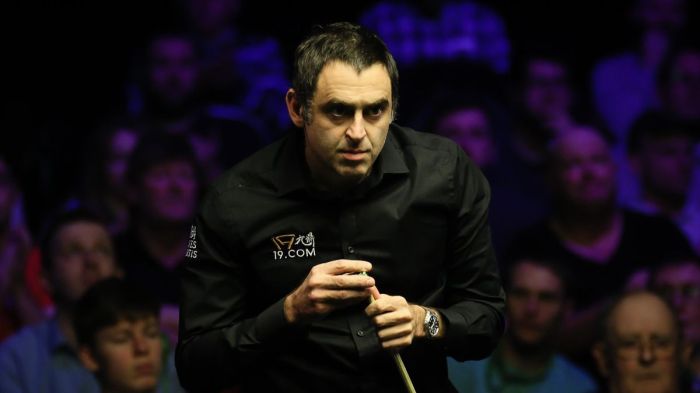 Ronnie O’Sullivan | Snooker | ESP Player Feature Image credit: Getty Images
 Ronnie O'Sullivan