A very interesting article about “rankings” by David Caulfield

The always excellent David Caulfied has shared his views about the debate on events structures and what a good ranking system should “do”

Here it is:

Snooker’s tournament structure debate is about more than flat draws

There are genuine problems with the current tournament structure on the World Snooker Tour, but calls for flat draws and a smaller tour risk addressing the wrong issue.

Former professional Peter Devlin probably didn’t expect his recent criticism of snooker’s tournament structure to generate quite so much attention.

“I didn’t ask for this or expect it when I posted this post while I was on the toilet,” the 30 year-old, who is also a talented rapper, joked on Facebook afterward.

Devlin argued this week that the current tiered system is unfair to those lower down the rankings, pointing to the example of Liam Davies winning 17 matches this season and earning £38,900 compared with Ronnie O’Sullivan winning five ranking-event matches and collecting £48,000.

“Having to win three or four matches to get to the big names, then lose to them, and they earn more points than you is crazy in my book,” Devlin wrote.

He also questioned the logic of qualifying being used as evidence that players are match-sharp and ready for the main event when, in some cases, the two stages are separated by several weeks or even months.

His comments were backed by ranking event winners Gary Wilson and Alfie Burden, while former world champion Shaun Murphy agreed that a flat draw was the fairest option.

Burden, who first turned professional in 1994 but has spent most of his career in the lower section of the rankings, was particularly critical of the lack of exposure for up-and-coming talents.

“The current state of the tournament structure is simply an absolute shambles and disgracefully unfair to the majority of the tour,” last year’s Shoot Out champion said.

“For new pros and young players in the game now, playing in soulless qualifying venues for every tournament is no way to develop young players and give them the experience they require to develop.”

For a young professional trying to establish a career, reaching a major venue can be as valuable as the result itself.

Playing in front of a crowd, dealing with television conditions, and experiencing the atmosphere of the sport’s biggest events are all part of becoming an accomplished professional.

But does that necessarily make a flat draw fairer?

A flat draw is equal in the sense that everyone begins at the same point. A tiered draw, on the other hand, rewards players who have performed well enough to establish themselves higher up the rankings.

Why should the world number one and the player ranked 100th automatically receive exactly the same starting position?

Rankings are supposed to mean something, and there is nothing particularly unusual about higher-ranked players receiving benefits from having established themselves near the top of the sport.

The biggest tournaments also need venues that can accommodate their schedules, broadcasters need predictable programming, and promoters need to sell tickets.

There is an obvious attraction in guaranteeing that the sport’s biggest names will appear at the main venue rather than potentially requiring several rounds before they enter the competition.

That doesn’t mean the current system is beyond criticism. It simply means that removing the tiered structure would create a different set of problems.

It’s worth remembering that the World Snooker Tour not long ago almost wholly adopted a flat-draw system for a decade-long span, and there were plenty of problems and criticisms associated with it.

The draw structure isn’t really the biggest problem here. The ranking system is.

The prize-money-based rankings have created huge differences in how significantly an individual tournament can affect a player’s position.

The 2027 world champion is set to receive a record £625,000 payday compared with £312,500 for this season’s UK Championship winner and £100,000 for Ali Carter’s recent E nglish Open triumph.

Jak Jones, meanwhile, earned £33,000 for triumphing at the season-opening Championship League.

The difference in prize money is of course understandable as the World Championship represents the biggest tournament in snooker, while the Championship League – played behind closed doors – is an entirely different proposition.

But why should the amount of money attached to an event automatically decide how valuable winning it is for the rankings?

That’s the problem with using prize money as the ranking system. A player’s ranking should tell us how well and how consistently he has actually performed.

Neil Robertson came within one match victory of returning to the world number one position last month, but can anyone really say that he has genuinely come anywhere near to being the best player across the last two-year period?

Prize money is affected by commercial considerations, event budgets, and how much a promoter is willing to put into a tournament.

It’s for these reasons that a lot of the Chinese tournaments have grown in importance (never mind the ill-fated Saudi Arabia Masters), with events on the likes of the Home Nations Series deemed less vital as a result of the limited prize funds on offer.

A points-based system, more like the one used in tennis, would offer a much cleaner way of doing it.

The biggest events could carry the most points, with other tournaments given their own set value depending on where they sit in the calendar.

The World Championship could still be vastly more important than a lower-tier event without needing its prize fund to determine exactly how much it counts towards the rankings.

It could also help the very players who are currently complaining about the qualifying system.

If a player lower down the list starts putting together good results, those wins should move him or her up the rankings in a more meaningful way under a well-implemented points system.

Climb high enough and the rewards are obvious – start entering tournaments later, face fewer qualifiers, and get more opportunities to play at the big venues.

In that sense, the answer to a player being stuck in qualifying doesn’t necessarily have to be eliminating qualifying.

It could be providing a better escape out of it.

There is another peculiarity in the current system that makes things even more complicated – the Players Series.

The World Grand Prix, Players Championship, and Tour Championship are among the richest events on the calendar, with qualification based on the one-year ranking list.

Once a player qualifies, however, he receives ranking money even if he loses his opening match.

That’s different from the vast majority of ranking events, where a player’s first-round defeat means no ranking money is earned.

That doesn’t mean the Players Series shouldn’t exist, or that those events aren’t deserving of their lucrative status.

It does, however, add another layer to a ranking system that is already heavily influenced by the financial value attached to individual tournaments.

There is a difference between saying the ranking system is unfair and saying every player should have the same route through every tournament.

The former is increasingly difficult to dismiss. The latter is much more debatable.

That seems an extraordinary trade-off for a sport that is supposed to be expanding globally.

In recent years, snooker has been developing in markets beyond its traditional strongholds, with more players from emerging countries like Poland, Latvia, Ukraine, and Austria attempting to break onto the professional circuit.

Reducing the size of the tour would inevitably make that pathway narrower.

There are genuine questions around the amount of time lower-ranked players spend in qualifying venues, the development opportunities available to younger professionals, and whether the current balance between the top end and the rest of the tour is right.

Those issues could be addressed without abandoning the benefits of having a tiered system.

Ali Carter’s response to the debate was typically straightforward: “As a pro for 30 years, whatever the format – if you are good enough, you will get there.”

Professional sport is built around a hierarchy, and players who establish themselves at the top should receive some benefit from doing so.

The bigger question is why snooker is using prize money as its main way of measuring achievement when the amount of money attached to an event and the difficulty of winning it are not always the same thing.

A points-based ranking system, with properly defined values for different tournaments, could give the biggest events the weight they deserve while also giving players lower down the rankings a clearer opportunity to climb.

That would leave room to look at the qualifying system and find better ways of giving young professionals experience at major venues, without requiring every player to start every tournament at the same point.

Snooker doesn’t need to flatten everything or shrink the tour.

It needs a ranking system that better reflects what actually happens on the table.

I totally agree with David’s analysis and I believe that the answer to those issues exist: an ELO type point system. Basically in this system, the result of a match is a transfer of points from the loser to the winner, and how many points are transferred depends on the ELO rating of both players ahead of the match and the actual outcome of the match, not just who won and who lost, but what the score actually is. At the core of such system is a mathematical probabilistic model. The more “unlikely” a result is ahead of the match1, the bigger the transfer of points. I have already touched the subject on this blog and the biggest objection presented to me was always that it would be difficult to understand by the average fan, and those who bet on matches. Frankly, I couldn’t care less about the latter objection. You don’t want risk to lose money? Don’t bet. It’s that simple. As for the first objection, programs could be developed2 that could present the fans with the various possible “monetary outcome” associated with every possible result.
  1. Based on their previous rating, and results of their previous matches if any. ↩︎
  2. Probably already exist as ELO is used in some other sports ↩︎

Women Snooker News and a VERY interesting article about Women and Snooker

Here is the report shared by WWS:

Bai Yulu Completes UK Hat-Trick to Reclaim Top Ranking

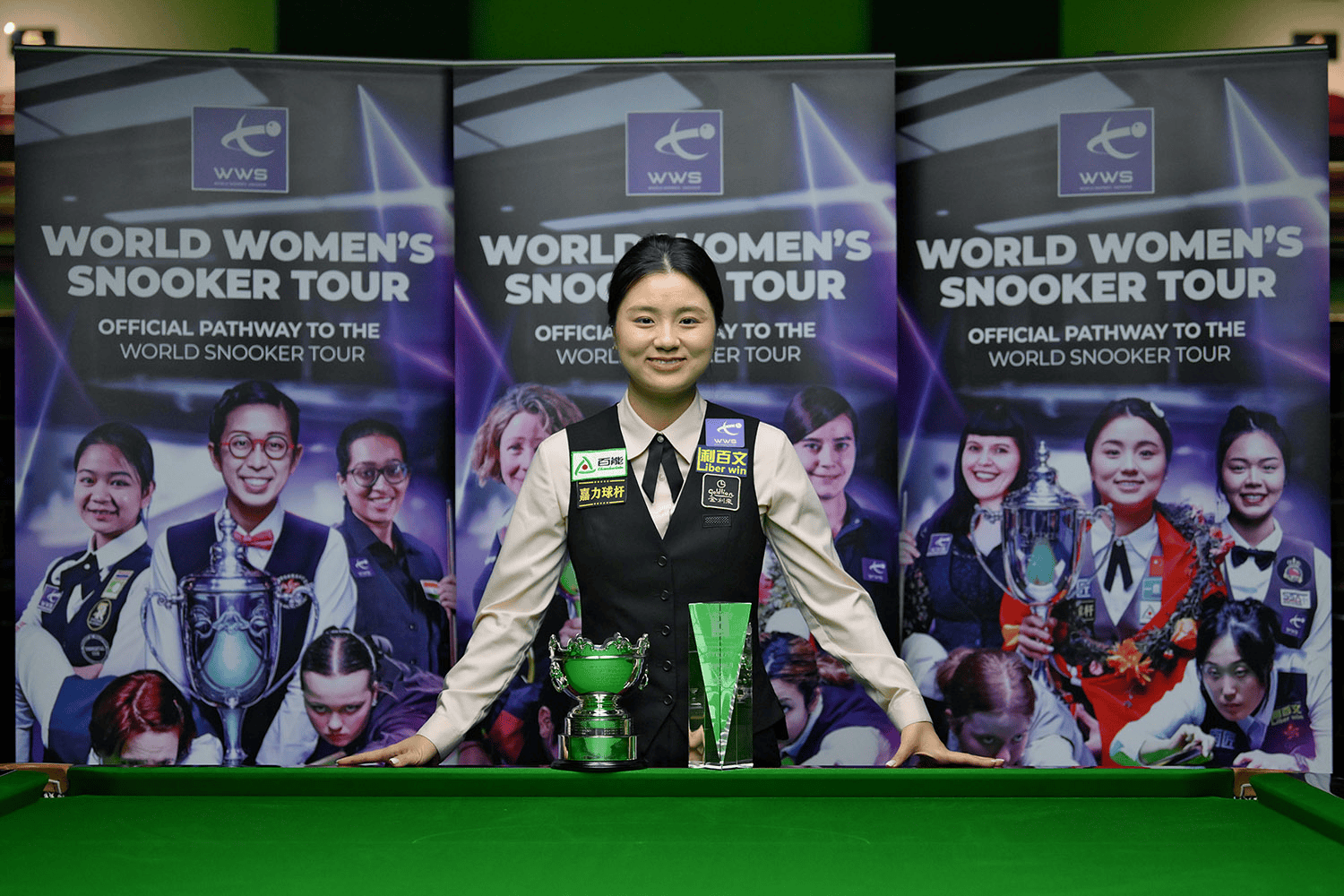
China’s Bai Yulu has defeated Reanne Evans 4-1 to lift the Taom UK Women’s Snooker Championship title for a third successive year and in doing so reclaim the world number one ranking at the Northern Snooker Centre in Leeds, England.

Bai was in dominant form throughout the three-day event as she dropped just two frames from her seven matches and compiled three century breaks during the final day, including a tournament-high run of 125, to move into second position on the all-time list.

Winner of the UK Championship in both 2024 and 2025, Bai extended her winning streak at the event to 18 matches to lift her ninth career ranking title, equalling the total of Thailand’s Mink Nutcharut and in doing so securing enough ranking points to return to the summit of the world ranking list for a second time.

For Evans, defeat in an unprecedented 17th UK Championship final nevertheless represented a strong start to the season and her second consecutive ranking final, following her run to the title match at the World Championship back in May.

The pair progressed from a high-quality field which included all of the world’s top 10 current ranked players and saw an exceptional standard of snooker played with six century breaks across the weekend and several other significant breaks across the three days.

Bai scored notable victories against three-time former champion Tessa Davidson, two-time UK finalist Rebecca Kenna and former US Open finalist Anupama Ramachandran – who had impressed with a comeback from 0-2 down to world champion Panchaya Channoi in the quarter-finals – to reach a fourth UK final.

For Evans, her route included wins against Selina Dean, rising 17-year-old star Liu Ziling and outgoing world number one OnYee Ng in the semi-finals as she eyed a record-extending 13th victory at the second-oldest event on the calendar.

It was Bai who made her intentions clear with a run of 103 in the opening frame, before Evans responded with a top run of 31 to draw level at 1-1.

China’s Bai reclaimed the lead following a close third frame, before adding a blistering run of 117 to move to within a frame of the title, which she would duly seal with a top run of 34 in what would prove to be the fifth and final frame.

Phoemphul, Davidson Defend Titles

In the Under-21 and Seniors titles there were repeat victories for Thailand’s Narucha Phoemphul and England’s Tessa Davidson, who successfully defended their titles from last year.

For top ranked Phoemphul it would be an eighth career under-21 title after she overcame Laura Killington and Liu Ziling – in doing so avenging her defeat to Liu at the last 16 stage of the main competition the previous evening. The win sees her consolidate her position at the top of the Under-21 rankings, for which she was presented with a special award for having finished last season as the top ranked junior.

It was a similar story for Davidson, who overcame Sarah Dunn 2-0 in the final to secure her fourth UK Seniors title and her 21st in total since January 2022, moving her to within two of the all-time record currently held by Jenny Poulter.

In the Challenge Cup competition for players who did not progress to the final day of the main competition, there was victory for Latvia’s Anna Prisjažņuka, who had narrowly lost out to Mink Nutcharut on a pink ball battle at the last 16 stage the previous evening.

The World Women’s Snooker team would like to express its thanks to all who contributed to a landmark event, including our sponsors, venue, live streaming production, commentary and media team for helping to make the weekend possible.

The Tour continues with the Australian Women’s Snooker Open, which runs from 17-20 October at Mounties, Sydney, Australia. Entry for the event is currently open via the ABSC website.

Many fans look down at women snooker with contempt1 and it is true that the standard is nowhere near what is produced by the top male players. The usual explanation by the “male supremacists” is that women are just somehow “inferior beings” …

Here is very interesting piece by about that subject:

Why Are There So Few Female Snooker Players at the Highest Level?

If you watch a snooker table long enough, you notice an undeniable fact: the snooker cue balls do not care who is holding the cue stick, and the pockets do not distinguish between the genders. Regardless of who strikes it, a straight blue ball aimed at the middle pocket presents the same level of difficulty and yields the same result.

Yet, when the spotlight falls on top-tier professional snooker tournaments, the field remains overwhelmingly male. Why is this the case? The simplest explanation might point to physiological differences between men and women, but that overlooks a more significant part of the story. The reality is far more complex and, in many ways, far more hopeful.

Women are not barred from open professional competitions. The World Snooker Tour is gender-neutral, and the World Professional Billiards and Snooker Association (WPBSA) actively encourages men and women to compete against one another. In fact, female players have not only competed in the World Championship and won matches on the professional tour but have also produced high-scoring breaks that would command the respect of any seasoned snooker player.

The issue is not an inability for women to play snooker; rather, it is that historically very few girls have had access to the prerequisites for reaching the elite level: opportunity, encouragement, professional coaching, match experience, and financial support. This distinction is crucial.

After all, if generations start from different positions, it is hardly surprising that the podium ends up dominated by a single group.

It Is Not a Closed Door But a Narrow Pipeline

One of the most important points to understand is that women’s snooker and men’s snooker are not simply two completely separate worlds. The main professional circuit is open to both men and women. In March 2026, the WPBSA confirmed that all players can compete in open tournaments, while World Women’s Snooker provides a dedicated development and competition pathway for women and girls.

This means a talented female player does not need to wait for someone to create a separate professional sport for her; the route to the elite stage already exists. The real challenge lies in getting enough girls onto that path. 

According to World Women’s Snooker, there are currently over 170 players from 30 countries competing on its tour. While this figure is encouraging, the disparity becomes glaring when compared to the vast number of men who have historically participated in competitive snooker.

To a certain extent, competitive sports are a numbers game. If 100,000 boys seriously commit to a sport while only 1,000 girls do the same, the larger group is naturally more likely to produce a greater number of top-tier players. This is not a matter of innate talent, but of opportunity.

1. The Biggest Problem Starts at Grassroots Level

Most world-class snooker players do not suddenly discover the sport and decide to pursue a professional career at the age of twenty; their fundamental skills are usually established much earlier.

Young players spend years mastering their stance and cue action, learning to judge ball speed and control the cue ball, and perhaps most importantly learning to anticipate and plan their shots several moves in advance.

By the time future professionals step onto the stage of major tournaments, they have often logged thousands of hours of practice at the pool table. Historically, however, very few girls have gone through this process.

This creates a simple but powerful cycle:

Fewer girls playing → fewer junior competitors → fewer elite prospects → fewer female professionals → fewer visible role models → fewer girls inspired to start.

It becomes a vicious cycle that is difficult to break. To break it, merely paying lip service to women’s participation is far from enough. They need places to play, coaches who provide serious instruction, a variety of tournaments, and parents who recognize snooker as a genuine sporting opportunity; above all, they need to see people like themselves standing in the spotlight at major events.

2. Where Are the Female Role Models?

This is perhaps one of the most easily underestimated factors. Just imagine the situation for a 10-year-old girl who loves snooker but has never seen a woman competing at the Crucible, the iconic home of the World Snooker Championship.

It is difficult to envision yourself becoming something you have never seen before. That is precisely why players like Reanne Evans, Ng On Yee, Mink Nutcharut, Bai Yulu, and Panchaya Channoi are significant far beyond their individual match results.

They are powerful proof that “anything is possible.” Reanne Evans is perhaps the quintessential example. The English player is the most successful female snooker athlete in history, having won a record 12 World Women’s Snooker Championship titles and 58 WWS (World Women’s Snooker) ranking event titles. Furthermore, in 2010, she successfully navigated the qualifiers to become the first woman to reach the main stage of the World Snooker Championship. This was not merely a footnote in snooker history, but a genuine milestone. Moreover, the story is no longer just about Evans alone.

China’s Bai Yulu has emerged as another pivotal figure. She won the World Women’s Championship in both 2024 and 2025, becoming the first Chinese player to claim the title and thereby earning a professional tour card for the World Snooker Tour (WST). In 2025, she recorded a break of 145 at the International Championship, setting the record for the highest break ever achieved by a female player in a WST event at the time.

Then, 2026 brought another remarkable breakthrough. At just 18 years old, Thai player Panchaya Channoi defeated Reanne Evans 6–2 to claim the 2026 World Women’s Championship title and secure a two-year WST professional tour card. She thus became the youngest women’s world champion since Ann-Marie Farren in 1987.

These stories matter because the next generation needs more than just posters; they need tangible examples.

3. The Professional Gap Is Also a Financial Gap

Becoming a professional snooker player is expensive, involving expenses such as travel, accommodation, tournament entry fees, training time, coaching, and cue equipment. Furthermore, countless hours spent at the table often yield no financial return. For a player striving to break through, the financial pressure presents a challenge every bit as daunting as facing a tricky black ball during a match.

Historically, prize money and commercial exposure in women’s snooker have lagged behind mainstream professional events. This creates a dilemma for aspiring players: how can one maintain professional-standard training when financial means cannot support the daily life of a professional athlete?

A player with financial backing can devote more time to training and traveling to tournaments, whereas another might have to work during the day, squeezing in practice whenever possible and traveling to compete on weekends. Both may be exceptionally talented, but realizing that talent takes time. That is precisely why sponsorship is so crucial.

Increased investment means more than just writing bigger checks for established stars; it means giving promising newcomers opportunities to grow into the superstars of the future. Coaching stipends, youth development programs, travel support, equipment sponsorship, and tournaments with richer prize purses all help broaden the talent pipeline.

4. Competitive Experience Is Difficult to Replace

Snooker is a unique sport because training differs vastly from actual match play. Even if you can make century breaks in practice, you might still lose in the first round of a competitive match; pressure changes everything. The silence of the arena is different, the atmosphere created by the crowd is different, and the sensation of your opponent sitting across from you is different. In an instant, a simple red ball, one you’ve potted five hundred times before, can suddenly seem impossibly out of reach.

It is precisely by navigating these moments time and again that elite players develop. They learn to reset their mindset after missing an easy shot, to close out a frame, to win even when their form isn’t at its peak, and to manage their nerves. For a long time, the small pool of female players meant that women and girls rarely had the opportunity to immerse themselves in such a competitive environment over the long term.

This is why establishing dedicated women’s tournaments is crucial. A robust women’s tour is by no means a “consolation prize”; rather, it acts as an engine for talent development. It provides regular match experience, a ranking system, healthy competition, and a pathway to the professional circuit.

Today, the World Professional Billiards and Snooker Association (WPBSA) recognizes the World Women’s Snooker (WWS) Tour as an official qualification route to the World Snooker Tour (WST). All signs indicate that this system is already yielding results.

For the 2026/27 season, Channoi and Bai Yulu have been nominated to compete on the World Snooker Tour (WST) alongside established professionals Ng On-yee and Reanne Evans, a perfect example of the kind of bridge the sport needs.

5. Does Physical Difference Matter?

Some think physical differences explain the disparity; others think physical differences don’t matter, and the truth is more nuanced. Snooker is not a sport where strength determines victory or defeat. Precision, timing, concentration, tactical judgment, cue ball control, and consistency are very important. 

However, physical characteristics can affect certain aspects of the game. On average, men are taller and stronger than women. Sometimes, more reach can make a particular shot more comfortable, and extra power can be produced when the shot calls for it.

But it would be a mistake to take these average differences as a comprehensive explanation of the occupational gender gap. There are many players in snooker whose success relies on touch rather than brute force. Smaller players can use technique, balance, cue extension, table knowledge and smart shot selection to overcome physical limitations.

The evidence from women’s snooker itself tells an important story. Female players regularly produce strong drives and high-level positional play. Reanne Evans has twice shot 140 on the WWS rankings, while Bai Yulu has scored at an elite level on the Open Pro Tour.

So, biology can influence certain physical properties, but biology cannot explain the entire situation. Far more importantly, it does not explain why so few girls start playing seriously in the first place.

6. What About the Cueing Stance and Body Shape?

There has also been a long-running claim that women’s body shape makes certain aspects of cueing more difficult. This is an area where caution is needed. There is no good reason to suggest that women’s bodies inherently prevent them from developing an effective snooker technique.

Players will naturally adjust their stance, bridge, cue position and alignment to fit their body shape. Every player is slightly different. Some are very tall. Some are very short. Some people have very broad shoulders. Some are very slim. Some people have very long arms. Others rely on compact movement.

Good coaches find a repeatable technique that works for each player rather than forcing everyone into the same pattern. In other words, the question shouldn’t be: “Does a woman’s body prevent her from playing snooker?” It should be: “Has she received enough instruction and practice to discover a technique that works for her?” That’s a more useful question.

7. The Importance of Starting Young

If there’s one lesson other sports have taught us, it’s that elite development takes time. Players who start training seriously at the age of eight or ten have a huge head start over players who start playing competitive snooker at 18 years old.

This doesn’t mean that people who start late can’t succeed. They can. Nutcharut Wongharuthai is a good reminder that development does not always follow a clear timeline. But the sooner players receive quality coaching and meaningful competition, the better chance they have of developing elite habits.

That’s why junior snooker deserves serious attention. If the sport wants to have more women at the top in 10 or 15 years, it needs more girls around the snooker table today. Not next year. today.

8. Women’s Snooker Is Already Producing Elite Talent

There is no need to make snooker easier for women; there is no need to change the tables, there is no need to change the rules, there is no need to pretend that competition doesn’t matter. What the sport needs is a bigger, stronger, more supportive pathway for women to meet the same standards. The available evidence gives us good reason to believe it will happen.

It is easy to talk about the problem and forget the progress. That would be a mistake. The women’s game has produced players with extraordinary records.

Reanne Evans has dominated women’s snooker for more than two decades. Ng On Yee became the first player from outside the UK to reach world number one in the WWS rankings in 2018. Mink Nutcharut became world number one in 2023. Bai Yulu reached number one in 2026 and became a two-time world champion. And in May 2026, 18-year-old Panchaya Channoi became world champion after defeating three previous world champions on her way to the title.

That is not a sport without talent. It is a sport with a talent pool that is still growing.

9. The Numbers Are Moving in the Right Direction

There is another reason to be optimistic. The women’s game is becoming increasingly international.

The current WWS rankings feature players from England, China, Hong Kong, Thailand, India, Mongolia, Australia, Latvia, Iran and other countries. That matters.

Snooker becomes stronger when talent is discovered in more places. China is an especially interesting example. Bai Yulu’s rise demonstrates how investment, local interest and a growing competitive environment can help produce elite players.

The 2026 World Women’s Championship was staged at a purpose-built venue in Dongguan Changping, with the event secured at the venue for a longer-term period through 2031. This is how a movement grows, not overnight, not with a marketing campaign, but by building an ecosystem.

10. What Would Help More Women Reach the Top?

There is no single magic trick. Instead, the sport needs to strengthen several parts of the pathway at the same time.

More Girls Playing at Grassroots Level

Schools, clubs and junior programmes can introduce snooker to girls before the old stereotypes have a chance to take root. The earlier snooker becomes “a sport I play” rather than “a sport boys play”, the better.

Better Access to Coaching

A promising young player needs someone who can spot potential and teach the fundamentals properly. Good guidance can save years of trial and error.

More Female Role Models

Young players need people to look up to. Every time Evans, Bai, Channoi, On Yee, or Nutcharut appears on a major stage, another young player can think: “Perhaps I could do that too.” That thought is worth more than it sounds.

Stronger Financial Support

More sponsorship and prize money would allow more women to treat snooker as a serious professional career rather than an expensive hobby.

More Media Exposure

The sport needs to tell the stories behind the players. A viewer may not understand every safety exchange on their first night watching snooker. But they can understand ambition. They can understand pressure. They can understand a teenager chasing a dream. They can understand an experienced champion refusing to give up. Stories bring people into sport.

The Future Should Not Be About “Men Versus Women”

Perhaps the most important change is the way we frame the discussion. The goal should not be to prove that women are “better” than men or that men are “better” than women. That misses the point. The real question is: How much female talent has never been discovered because the opportunity to develop it never existed? We simply do not know the answer. And that is precisely why the future is exciting.

If more girls start playing at eight, nine or 10 years old, if more girls receive quality instruction, if more girls compete regularly, if more girls can travel and practice, if more girls see women succeeding on the biggest stages, then the talent pool will get deeper.

Then, and only then, will we have a much clearer picture of how close the very best women can come to the very best men in open professional snooker. Perhaps the next great female player is already out there. Perhaps she is eight years old, holding a cue for the first time. Perhaps she has just made her first decent break and is quietly thrilled because the white ball finished exactly where she wanted it. Perhaps nobody has noticed her yet. That is where the real opportunity lies.

Choosing the Right Snooker Cue for Female Players

If there’s one thing that deserves clarification, it’s this: there is no “women’s snooker cue” that every female player should use. A good snooker cue should fit the player, not the label.

Women can and do play snooker with standard full-size cues, and many experienced female players are perfectly suited to using 57″ or 58″ snooker cues. A better question is not “Which cue is made for women?” but “Which cue allows me to cue naturally, comfortably, and consistently?”

This distinction is important, especially for younger players, beginners, and people of smaller stature. Prompts that feel too long or awkward can make a technically difficult game feel harder than it needs to be. The right pool cues, on the other hand, feel like an extension of your arm: balanced, predictable, and reassuring.

Start with Height and Cueing Position

Height is one of the most useful starting points when choosing a snooker cue, although it should not be considered an absolute rule.

The length of a standard snooker cue is usually around 57 inches to 58 inches, which is a perfect length for many adult players. However, smaller players may find a 56-inch cue more comfortable, especially if they are learning to establish a stable stance and bridge.

The goal is simple: When you hit the ball, you should be able to assume a natural position without feeling like you’re stretching your body to control the cue.

A shorter cue can be especially helpful if you regularly find yourself:

  • Struggling to maintain a comfortable stance
  • Feeling that the butt of the cue gets in the way during your backswing
  • Crowding the table when addressing certain shots
  • Finding it difficult to keep your cue arm and bridge hand relaxed
  • Losing consistency because you are concentrating more on handling the cue than playing the shot

For junior and smaller-stature players, this becomes even more important. A 51″ or 53″ junior snooker cue can provide a much more manageable starting point than immediately handing a young player a full-length cue.

Cue Weight: Control is More Important Than Numbers

Weight is another aspect of personal preference that is very important. There is no magic cue weight that automatically makes a cue better for female players. Naturally, lighter players may prefer lighter cues, but body size alone won’t dictate what feels best. Some women enjoy a substantial cue because it gives them a solid, planted feeling through the shot, while others prefer something lighter and more responsive.

What matters is whether you can successfully deliver the prompt. A cue that feels too heavy may cause unnecessary tension in the cue grip and cueing arm. One that feels too light can sometimes feel less stable, particularly when playing longer shots or applying more pace.

For growing players, balance and control are often more useful considerations than simply chasing a specific number on the scale.

Is a 9.5mm Tip Suitable for Female Players?

For traditional snooker, 9.5mm is a very suitable cue tip size for both male and female players. The smaller tip than many American pool cues allows for precise contact with the cue ball and provides ample control for positional play, spin shots, stun shots, and delicate touches.

The key is not whether the player is male or female. This is a hint as to whether it is appropriate for the game you are playing. The well-prepared 9.5mm tip provides a useful balance between control and forgiveness, especially for players learning to manage the motion of the cue ball. Players looking for a different feel can also consider the professionally installed ELK Master Tip upgrade.

  1. although they wouldn’t look down with contempt at their boobs when they are down on the shot, if given the opportunity. 😎 ↩︎

Ronnie reflects on the “disease” in his game

This was shared on Chinese social media yesterday:

O’Sullivan fights to cure ‘disease’ that has plagued his game

Xinhua, September 1, 2026

Seven-time snooker world champion Ronnie O’Sullivan says he has a “disease.”

It is not a medical diagnosis. It is how he describes a technical problem he has spent nearly four years trying to cure, one he says has robbed him of the power, direction and confidence that once made him the dominant player in world snooker.

“I call it a disease because it feels like the method that I took on has ruined me,” the 50-year-old said after reaching the semifinals of the World Snooker Wuhan Open last week. “I‘ve got no cue power, got no sense of direction. I don’t know where the balls are going.”

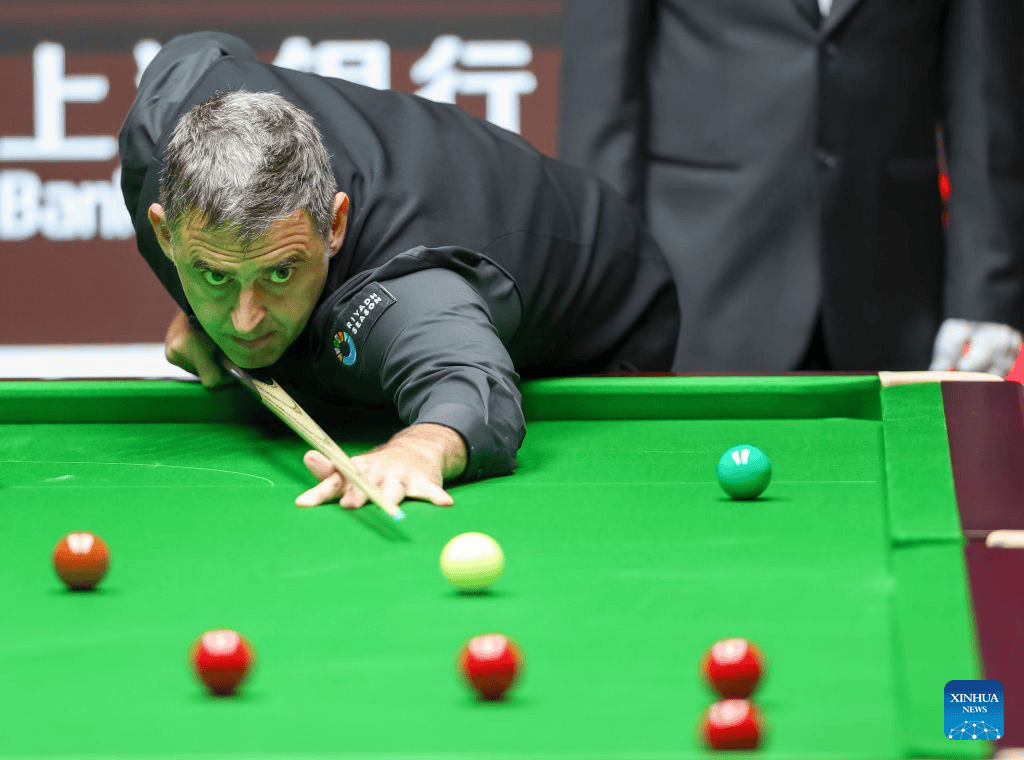
Ronnie O’Sullivan of England competes during the first round match between Ronnie O’Sullivan of England and Liu Linhao of China at the World Snooker Shanghai Masters 2026 in Shanghai, east China, July 27, 2026. (Xinhua/Chen Haoming)

His latest withdrawal from the British Open, which begins Monday in Cheltenham, came for medical reasons. But just days earlier in Wuhan, O’Sullivan was still wrestling with the technical problem that has increasingly defined this stage of his career.

Last Thursday, in an all-English quarterfinal against four-time world champion Mark Selby at the Wuhan Open, O’Sullivan fell 2-0 behind before winning three frames in a row. Selby leveled at 3-3, but O’Sullivan finished the match with breaks of 80 and 129 to win 5-3.

Sky Sports called it “his most impressive performance of the season yet.” O’Sullivan called it ugly.

“To be honest, I don’t really have much hope to regain the kind of level that I was at before,” he said at the news conference afterward. “But as it stands, it’s pretty ugly out there for me, and maybe ugly for you guys to watch me play.“

The next day, the difference between what O’Sullivan saw and what others saw became even more striking.

In the semifinal, he faced China’s 24-year-old Chang Bingyu, whom he had coached about a decade ago.

This time, O’Sullivan seemed to lose his connection with the table. Several important shots caught the edge of the pocket and bounced away. At one point, a frustrated O’Sullivan swung his cue through the air, then sat down and shook his head. He eventually lost 6-3.

“Just embarrassing,” he told Xinhua. The “disease” in his game, he added, had “come back big time.“

According to O’Sullivan, the problem dates back six years. At 44, he could have relied on decades of experience and continued playing largely as he always had. But he didn’t. Instead, he decided to learn a technique called “SightRight,” a coaching method designed to help players align their eyes correctly with a shot.

“A lot of people kind of thought it was good,” O’Sullivan said. “It kind of turned against me after three or four years of doing it. So I’m trying to unlearn that, which is really hard to do.”

For most players, experience is supposed to provide something to fall back on when a shot goes wrong. But O’Sullivan said he has lost that safety net.

“As a player, you always have some anchors to hang onto,” he said. “I used to have four or five where if one wasn’t working, I’d try another one, and then that would just get me going. But at the moment, I just have nothing. I haven’t for four years, so it’s just been like a nightmare.“

O’Sullivan has not won a ranking title since January 2024. His seventh world championship came in 2022. Before Wuhan, he had won only one match at each of the Shanghai Masters and China Open this season. He even described himself as a “very poor snooker player.”

Yet there are contradictions in that diagnosis. A player who says he has no sense of direction remains No. 14 in the world, while a player who calls his own technique ugly can still beat some of the biggest names in the sport.

For Wuhan spectator Chen Can, the O’Sullivan he watched was very different from the player O’Sullivan described.

“He beat Carter 5-2, downed Yao Pengcheng 5-1, knocked out Maguire 5-2 and defeated Selby 5-3,” Chen said. “I feel he still has it. His attacking game is still smooth, and he can adjust quickly when he is in trouble.“

Some British fans commenting online offered a simpler diagnosis, saying O’Sullivan “can’t cure it. It’s called ‘age’.”

But O’Sullivan does not buy that explanation. At an age when many players have long since retired, he is still taking his game apart and trying to rebuild it.

“I’ve been trying to do it for a year. I thought I was there, but I wasn’t, and now I’m kind of back to the drawing board,” he said.

He has also sought advice from Steve Davis and Stephen Hendry, who told him they continued playing for perhaps a decade after entering similar slumps.

“I give myself 18 months, maybe, to get into the 2028 world championships, to see if I can get somewhere back to how I used to hit the ball,” he said. “If I hit the ball half decent, then I can still win tournaments.“

An eighth world title in 2028 would give O’Sullivan the outright record for modern-era world championships, moving him beyond Hendry’s seven.

“I’ll try my hardest,” he said. “We’ll have to wait and see.”

I had wondered for some time when this would come out. I eventually did. Not that I knew anything, but Ronnie has always been an instinctive player and trying to “rationalise” his game” was always unlikely to work well for him. I hasn’t.

Also, the “sightright” method was all the rage a few years back from now but It seems to have disappeared from the headlines for some time now, and I haven’t heard any player mentioning it nor have I spotted Steve Feeney at any event for quite a while.

Hopefully Ronnie can rediscover his fluency and starts enjoying his snooker again. Win or loose … but just rediscover joy in his game.

Can Ronnie still win a Tournament?

Desmond Kane has been asking the question to Stephen Hendry and Neil Robertson

Can Ronnie O’Sullivan end title drought at Wuhan Open as Stephen Hendry and Neil Robertson highlight key Rocket asset.

Ronnie O’Sullivan won the last of his record 41 ranking titles in January 2024 when he claimed the World Grand Prix. The snooker GOAT has appeared in three major finals since then, but has yet to end his 31-month trophy drought despite putting in the hours in practice ahead of the Wuhan Open.

O’Sullivan described himself as “a very poor snooker player at the moment” after losing to 6-4 to world No. 27 Noppon Saengkham in the second round of the China Open in Taiyuan last week.

Upon reflection, it was a defeat that was probably not that bad, with the inspired Thai potter also brilliantly seeing off Judd Trump (6-3), Shaun Murphy (6-4) and Zhou Yuelong (6-5) before losing the final 10-6 to Mark Selby.

O’Sullivan returns to the table when he opens his Wuhan Open campaign against Ashley Carty on Monday morning at 02:30 am…

The Essex player has come up short three times in finals, losing at the 2024 Tour Championship (10-5) to Mark Williams, last year’s Saudi Arabia Masters against Neil Robertson (10-9) and the World Open (10-7) to Thepchaiya Un-Nooh in March.

O’Sullivan is not faltering through lack of preparation, with world No. 2 Robertson praising the work ethic of O’Sullivan during his run to the quarter-finals of the China Open.

“I was watching Ronnie O’Sullivan on the practice table the other day, he was there for three-and-a-half hours,” said the Australian.

“I was on the other table and I felt that if he is still putting the hours in at the age of 50, then I should be too.

“I feel I have done everything right for this trip, and it’s nice to get the results.“

….

Fellow seven-time world champion Stephen Hendry feels it is only a matter of time before O’Sullivan comes good in a blue-chip event providing he can minimise the misses.

“I’m going to make a prediction: I think Ronnie will win a tournament this year. There will be a week when he just hits form,” said Hendry, speaking to World Snooker Tour.

“We know at his best he can produce unbelievable performances and if he can string them together, I think he will win a tournament.

“Which is not the greatest of predictions. He seems to be working his n*** off. He is pounding the practice table as soon as he is out of the tournament.

“All of a sudden he misses something you can’t believe out of nowhere, like John Higgins and Mark Williams, and it’s those unforced errors on easy shots which cost him.

“The concentration has to weaken a bit, the ability to keep that massive focus through a whole match or tournament, that has to waver as you get older.

“It is just natural. These easy misses and mistakes get punished more than they used to, Ronnie has always been quick to blame himself when he is not playing well.“

After Wuhan, the snooker roadshow moves back to the UK, with the British Open in Cheltenham and English Open in Brentwood.

I wish I had their confidence in such prediction … but, no, right now I can’t see it. That said, those two guys are/were professional snooker players and are multiple ranking event winners and former World Champions. They are probably better judges than me … hopefully they, and Ronnie, prove me wrong.

So far this season, Ronnie has played in two events, losing in round two both times, and on both occasions the player who beat him went on to reach the final. They were clearly playing very well. On both occasions, I feel that Ronnie showed some very good stuff in patches and could have won those matches, but was guilty of the odd mistakes that cost him dear. And it wasn’t even the hardest balls he missed either, and that kind of “silly” errors are typically caused by lapses in concentration. I’m not sure what the answer is if that is indeed the main issue. Time waits for no one …

The 2025 English Open – Day 5 … and an interesting interview with Neil Robertson

This is WST report on what happened in Brentwood yesterday

BetVictor English Open Day Five

Shaun Murphy produced a phenomenal burst of 457 unanswered points to beat Zak Surety 4-0 at the BetVictor English Open in Brentwood.

The Magician was on the cusp of a historic display and total shutout. He fired in three century runs of 125, 135 and 133 in the opening three frames to blitz to the verge of victory. However, two misses in the fourth did allow Surety to get eight points on the board.

Murphy was aiming to join Neil Robertson, who was the only other player to win a best of seven with four centuries and denying his opponent a single point. The Australian achieved that feat in 2013 against Ahmed Saif.

Although Murphy didn’t achieve that feat, it was an emphatic triumph for the Englishman. He recently lost his place in the top 16 of the Johnstone’s Paint World rankings for the first time in 19 years. On this evidence it won’t be long until he’s back, he now faces Fan Zhengyi.

Murphy said: “One of the negatives of me also having a broadcast career is that I am aware of these types of moments or stats. I know that 4-0 with four centuries and without my opponent scoring a point is special.

“It is the performance that you dream of. When you practise for all of those hours you dream of playing like that in front of a crowd like tonight.”

Mark Selby scored a comprehensive 4-1 win over Liam Highfield to get his bid for a third English Open crown underway.

Selby’s victory in 2022 saw him beat Luca Brecel 9-6 in the final. It was a momentous triumph for the Leicester cueman, who was battling mental health struggles away from the table and hadn’t lifted silverware for 19 months on it.

Today’s encounter saw Highfield claim the opening frame, before breaks of 52, 101 and 103 helped Selby to four on the bounce and the win. He now plays Scottish Open champion Lei Peifan.

Selby said: “It was huge to win in 2022. There would have been positives if I’d lost the final, but I’d probably not have seen it that way. When you lose a final it is raw and tough to take. Having won that and turned a corner was a huge asset for me mentally. I think going forward it was important to my snooker career.”

Belgium’s 2023 World Champion Luca Brecel scored a nerve shredding 4-3 win over Iranian number one Hossein Vafaei. Next up for Brecel is Si Jiahui.

Robbie Williams stunned Kyren Wilson 4-2 to book his progression and a meeting with Pang Junxu.

As always all the detailed results are available on snooker.org

I don’t have much to add as, for once, the matches featuring in the report are those I watched. Kyren Wilson had a bad day in office and Robbie Williams can play. Of course he can … all those who qualified for the main tour can play at a very high level

Other than that, Phil Haigh shared a very interesting interview with Neil Robertson

Neil Robertson hopes player power brings more transparency from snooker chiefs

Neil Robertson hopes increased player power can help provide more transparency on how snooker is funded.

The Professional Snooker Players Association (PSPA) has emerged as an independent players’ union, with four-time world champion John Higgins as its chairman and with a string of big names involved.

It is early days for the new association, but they have outlined a number of issues they want to address with World Snooker Tour (WST) and the World Professional Billiards and Snooker Association (WPBSA), mainly surrounding player welfare.

There is concern that the PSPA will clash with the established powers that be, including WPBSA Players, the existing players board, of which Robertson is a member.

However, the Australian has dismissed the idea of infighting becoming an issue between the players and welcomes the new association.

‘I don’t see that happening,’ Robertson said of potential clashes. ‘The (WPBSA) Players board is very small. It’s myself and a handful of others.

‘As far as I know, there’s meant to be a meeting between us to see how we can move things forward and do the right things for the players and for the game. Watch this space, I suppose.’

On whether he could be a member of both WPBSA Players and the PSPA, he said: ‘I’m not too sure what I am allowed to do or not allowed to do, but I’m not completely opposed to the idea at all. I think the Players Board is very good for what it does, but I’d be lying if I didn’t say that I think the players should have more power.’

Robertson was motivated to join WPBSA Players to help resolve a number of issues he sees in the game, one of the most significant being more transparency on revenue streams in the sport.

The former world champion feels players should be made aware of the finances surrounding television and sponsorship deals, so they can better understand the way the sport is funded.

‘The main thing is players want a lot more transparency with what’s going on,’ he said. ‘When there are these massive deals that are happening, the TV deals etc, I think that the players are certainly within their rights to find out how much these deals are actually worth.

‘When Barry Hearn took over, we were just so grateful to be playing the sport again and to be playing in a lot of tournaments. But that doesn’t mean that the players should be blind to all these deals and sponsorship deals that are coming into these events.

‘That’s probably one of the big issues is that the players just want to know, okay, the prize money breakdown is this. How much was actually contributed by the promoter or the sponsor?’

Another major alteration that Robertson wants to see is around scheduling of tournaments as he feels the calendar should be organised with geography more firmly in mind.

Chinese events are not played consecutively on the calendar, chiefly because promoters want them separated in order to stand out and be more prestigious, but Robertson feels other factors are more important.

‘The scheduling, long-term, is something I want fixed,’ he said. ‘I don’t want us bouncing all over the world. There’s jetlag, but not only that, players are having to pay out double or triple the travel expenses that we really need to. That could be condensed.

‘I’m sure we could get a situation where the calendar is better structured in and around the Asian events and then we work our way back to the UK.

There’s no reason to fly to Shanghai and all of a sudden you’ve got a week gap out of nowhere. Then you go into Saudi and then you go back to UK, then you’re going back to China again. Then you’re going back to UK and then you’re going back to China again.

‘It’s too much and there aren’t many sports which put that kind of demand on players. Just because a promoter says that they want it this way, I don’t think is really enough.

‘These kinds of things we’re trying to get done and change. A bit more empathy towards the players and their travels and all these sorts of things.’

The “bold” highlight is my doing because I feel this is very important ant it’s something I have been saying for years. The players health and wellbeing should come first and bouncing back and forth through time zones isn’t contributing positively to them. and Also, if one does not want to have weeks of “qualifiers” one after another, and then months without a thing for some players, it would force WST, WPBSA and China to accept that events are played in one go, from round one with all 128 players involved at or close to the main venue. Just like the current English Open is right now. That is how it should be. And I will add, there should be a “Mainland Europe” group of events as well, with Belgium, Germany and Poland as obvious candidates to host some tournaments. Scandinavia should certainly be considered too.

…

Stephen Hendry’s Top Five

Stephen Hendry was asked about his snooker “Top Five” and here is his answer, as shared by WST:

Hendry Names All-Time Top Five

Stephen Hendry names his all-time top five players in the latest episode of Snooker Club podcast. Download the episode NOW on Apple, Spotify, Linktree or wherever you get your podcasts.

Seven-time World Champion Hendry was asked to pick his top five. He said: “I’ll put Ronnie O’Sullivan top, obviously because of the success he has had, but also for his cue ball control which is the best I’ve ever seen. 

“He is an artist with the cue ball, I love watching him making breaks, maybe when the black and pink are out of commission and there are balls on cushions, when he is at his best he still finds a way to clear the table. Also his safety game – he never plays a safety shot plain ball, he is always using side to manipulate the cue ball. And under pressure, his bottle is unquestionable. 

“After that, it’s very close between Mark Williams and John Higgins, I’d prefer to have them joint second. I’ll go with Mark just because of his recent record against John at the Crucible. He is a freak of nature, he has the best temperament of any sportsman I have seen. He maybe hasn’t got the cue power of others, but he has great touch and he is just a brilliant potter. 

“Third is John – maybe the greatest match player of all time. If I had to pick a player to clear up from 50 behind with five reds left, I’d take John. He has made over 1,000 centuries and his scoring is phenomenal.

“Mark Selby is fourth, he is one of all time greats. In terms of ball striking, not many are above him, the work he gets on the cue ball. He has the tactical game and he can win when not as best. I hated playing him, he’s so tough. 

“In fifth could be Judd Trump because of what he has won and his centuries, but he only has one world title. So I’m going for Steve Davis based on his utter domination of the 1980s. People will say that the players weren’t as good back then, but I don’t care. He’d still be in the top 16 today. He was the ultimate winning machine and I learned a lot from him.” 

Stephen Hendry (2).jpg

Judd will not be happy. He will say that he treats every event with the same respect and all credits to him for doing that but the World Championship with its longer format remains the benchmark by which a player is judged by someone like Hendry and one can’t argue with the fact that it poses a unique challenge.

At the 2025 Crucible … Day 1

Kyren Wilson , the defending Champion, bowed out of the tournament on the opening day …

Here is the report shared by WST:

Debutant Lei Stuns Wilson As Crucible Curse Strikes Again

Kyren Wilson became the 20th first-time Crucible champion to fail to defend the title the following year as he suffered a dramatic 10-9 reverse against debutant Lei Peifan on the opening night of the Halo World Championship.

…

In a match of momentum swings, Wilson won six frames in a row to lead 6-2, then lost seven in succession to trail 9-6, before a late fight-back, only to lose the decider. Having conquered the Crucible 12 months ago, it’s a massive blow for the 33-year-old who had high hopes of retaining the title after a prolific season in which he has won four trophies. Wilson becomes the eighth first-time Crucible champion to lose in the first round the following year, and it ends a streak of nine consecutive years in which he has reached at least the second round.

Early Exits

First time champions to lose their opening match the following year 

Terry Griffiths 1980
Steve Davis 1982
Dennis Taylor 1986
Graeme Dott 2007
Neil Robertson 2011
Stuart Bingham 2016
Luca Brecel 2024
Kyren Wilson 2025

China’s 21-year-old Lei won his first ranking title earlier this season at the BetVictor Scottish Open, but said that tonight’s win was the biggest of his career so far as he rose to the occasion on his maiden appearance at snooker’s most famous venue. From 6-2 down, he hit his opponent with a barrage of high scoring, and after a late wobble he regained his composure to make an excellent break in the deciding frame. 

The world number 39, who nearly missed out on the Crucible as he had to come from 7-4 and 9-8 down to beat Gao Yang 10-9 in the final qualifying round, is through to the last 16 and will face Zhao Xintong or Jak Jones from Friday next week.

“It feels amazing. The Scottish Open was my first title and this was my Crucible debut — both moments are very special to me. The emotions were just as intense,” said Lei.

Lei trailed 6-3 after the first session but dominated from the start tonight, firing breaks of 50, 53, 60, 75 and 89 to take the first four frames and lead 7-6. After the interval, Wilson had the first scoring chance in frame 14 but made just 19 before missing a red to a top corner and Lei punished him with 69. Another Wilson missed red to a corner pocket early in the 15th proved expensive as his opponent compiled a superb 92 for 9-6.

World number two Wilson pulled one back with a break of 106. In the 17th, Lei was two pots from victory on a run of 60 when he over-cut the third last red to a top corner, and Wilson later cleared with 45 to close the gap to 9-8. Lei led 40-10 in the 18th when he missed a mid-range red and Wilson’s 60 drew them level.

Kettering’s Wilson had one clear chance in the decider but made just 14 before failing to split the pack off the blue. He later made a safety error and Lei’s tremendous break of 66 made him the first player to beat a defending champion in their debut match at the Crucible since Stuart Bingham knocked out Stephen Hendry in 2000.

Wilson said: “It’s really hard to take, it really hurts. Lei potted some incredible balls and held himself together in the end, he seems like a cool character and I wish him all the best. It has been a long season, I have done so much. I am proud of the way I have handled it and hopefully I have given you guys (the media) plenty to write about. We are all trying to grow the game, make it more popular and help the younger generation to see it as a great sport to get into.“

Lei added: “I didn’t think I had much chance when the draw came out. But the moment I stepped into the arena and saw the crowd, I just felt so excited. It really lived up to what I saw on TV all those years ago. I was definitely feeling pressure towards the end. I calmed myself down and told myself not to over-think — just to let go and play freely.

“I really enjoyed playing here – the crowd, the lighting, the whole atmosphere was amazing. I was fully immersed and happy throughout the match. In the deciding frame when the curtain came up, it felt like I was in a final. I used to watch that scene on TV when I was a kid – now it was real, I was actually sitting next to that table. It brought back so many childhood memories. And of course, it made me want to win even more – I’ve worked hard to get here, and I wanted to give something back to the fans and to myself.“

On the other table, Barry Hawkins took a 5-4 lead over Hossein Vafaei. World number 11 Hawkins, runner-up here in 2013, top scored with 93 in taking a 3-1 lead. After the interval, Iran’s Vafaei rallied with breaks of 56 and 123 to restore parity at 3-3. Hawkins pulled away again to 5-3, but Vafaei made an important 64 in the last of the evening to trail by just one frame overnight.

Kyren Wilson has been a fantastic World Champion all season, a great ambassador for his sport. Yesterday he came up short, just, against an inspired Lei Peifan. Lei is very strong under pressure, he showed that earlier this season, the way he won the Scottish Open, his first ranking title. Obviously, Kyren must be very disappointed right now but he should be proud of himself and of the way he represented his sport. I hope that, in a few days, he can see how well he did as a first time World Champion. Thank you Kyren.

Hereafter, the ES pundits, including Ronnie, discuss various topics, among other things, why/how the Crucible is special and Zhao Xintong’s as well as Judd Trump’s, Mark Selby an John Higgins’ chances. This was before the evening session . Zhao starts today…

Ahead of Zhao Xintong match today there was a lot of animosity on social media. I want to remind those people that Zhao was NOT found guilty of fixing any match, he was found guilty of not reporting intended “fixes” he was aware of as well as of betting on snooker as detailed in the relevant WPBSA statement.

Zhao served his ban, came back hungry, regained his tour card via an official route, and earned his invite via an official route as well. He deserves to be here.